The regional table / New Hampshire
Corn Chowder
Every chowder needs something to be made of. On the coast that is clam liquor; inland it is the cobs you were about to throw away.
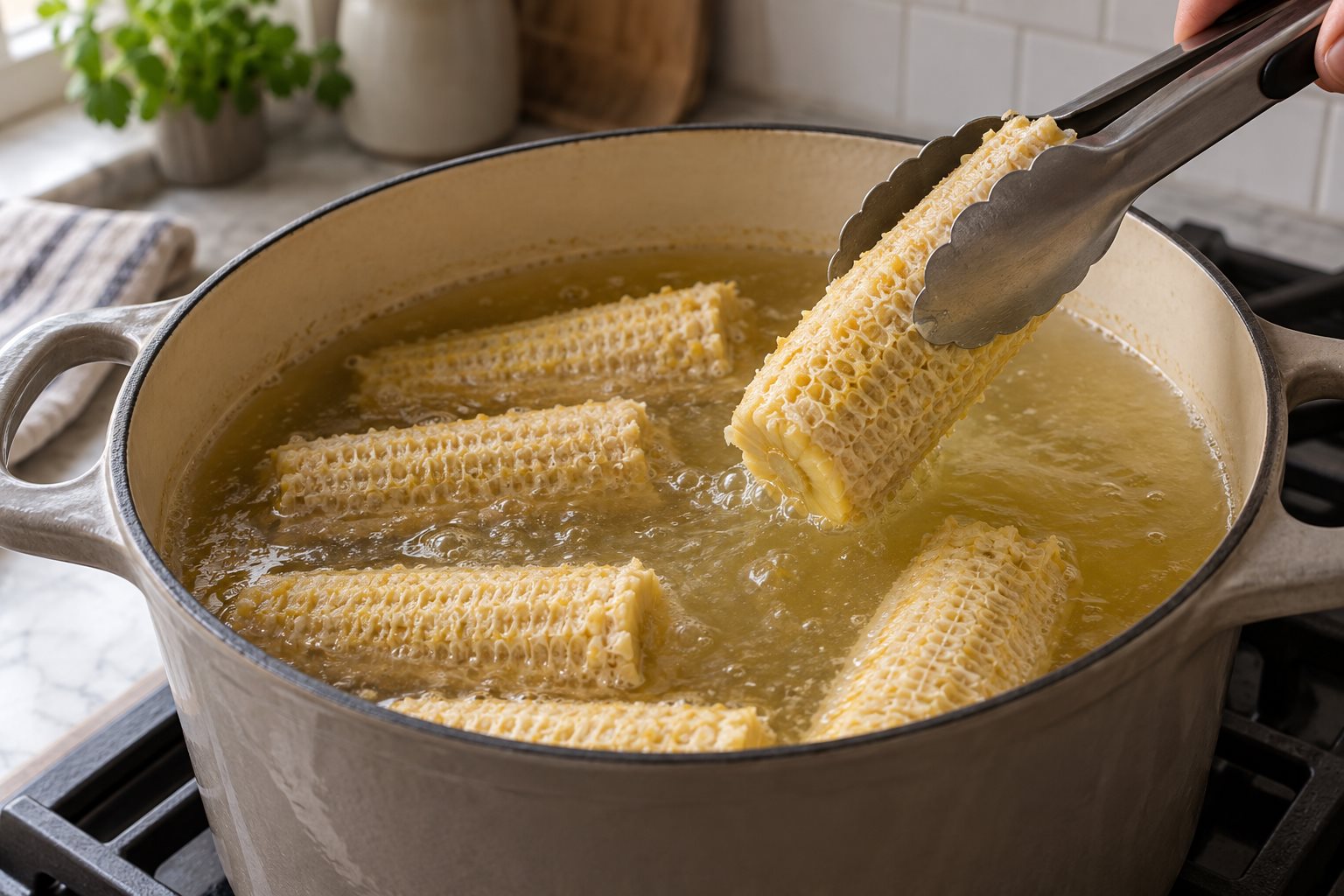
Corn chowder is the chowder of the places where there were no clams, and the substitution it makes is not corn for seafood — it is corn cob for clam broth. The instruction is in print in Mrs. Lincoln's Boston Cook Book, by Mary J. Lincoln, 1884, on page 157, and it is the first thing the recipe says: scrape the raw corn from the cob, boil the cobs twenty minutes in water enough to cover them, then skim them out. What is left is the liquid the chowder is built in. After that it is the same pot as any other chowder on the New England coast — a two-inch cube of fat salt pork, an onion fried in the fat and the fat strained into the kettle, a pint of sliced potatoes, the corn, salt and white pepper, fifteen minutes of simmering, then butter and a pint of milk and crisped crackers. There is no flour in it. There is one oddity worth reporting because it is in both the 1884 and the 1888 printings: the ingredient column carries a pint of sliced tomatoes that the method never mentions again.
Fannie Farmer's version twelve years later, on page 127 of The Boston Cooking-School Cook Book of 1896, is the first recipe in her chowder chapter, ahead of the fish and the clam, and it is a winter dish — it opens with one can of corn, and it thickens with eight common crackers split and soaked rather than with flour. That is the honest shape of this chowder's history, and it does not match the story usually told about it. In the New Hampshire newspaper run searched for this article — the Keene papers, digitised by the New Hampshire State Library, which reach back to 1799 — the phrase corn chowder does not occur at all before 1898, while fish chowder is there in 1842 and clam chowder runs to hundreds of mentions in the same decades. The first hit is a church supper reported in the Keene Evening Sentinel of 13 December 1898, at which, the paper notes, there was "fish chowder, clam chowder and corn chowder" on the bill of fare. Keene sits in the southwest corner of the state, about as far from salt water as New Hampshire gets, and it was serving all three. Corn chowder may well be the older thing in the pot; as a name in print it is the latecomer, and the record here says so plainly.
Why this version works
No flour, no roux. Neither 1884 nor 1896 thickens this chowder with flour, and it does not need it. The cob broth is already faintly viscous, the potatoes shed starch into it, and a few kernels crushed against the side of the pot will carry the rest. What you get is a chowder that stays translucent and tastes of corn instead of one that tastes of paste.
The cobs are the stock. A stripped cob is full of starch and sugar and the milky sap the kernels sit in, and twenty minutes of simmering pulls all of it into the water. Skip it and you are making potato soup with corn in it. This is Lincoln's first instruction in 1884 and it is still the single thing that separates a good corn chowder from a dull one.
Milk in last, off the boil. Corn and potato are forgiving; milk is not. Add it at the end, bring the pot only to the point where it steams and one bubble breaks at the edge, and take it off. Boiled milk in a corn chowder curdles into grains exactly as it does in a clam one, and there is no fat or flour here to hold it together.
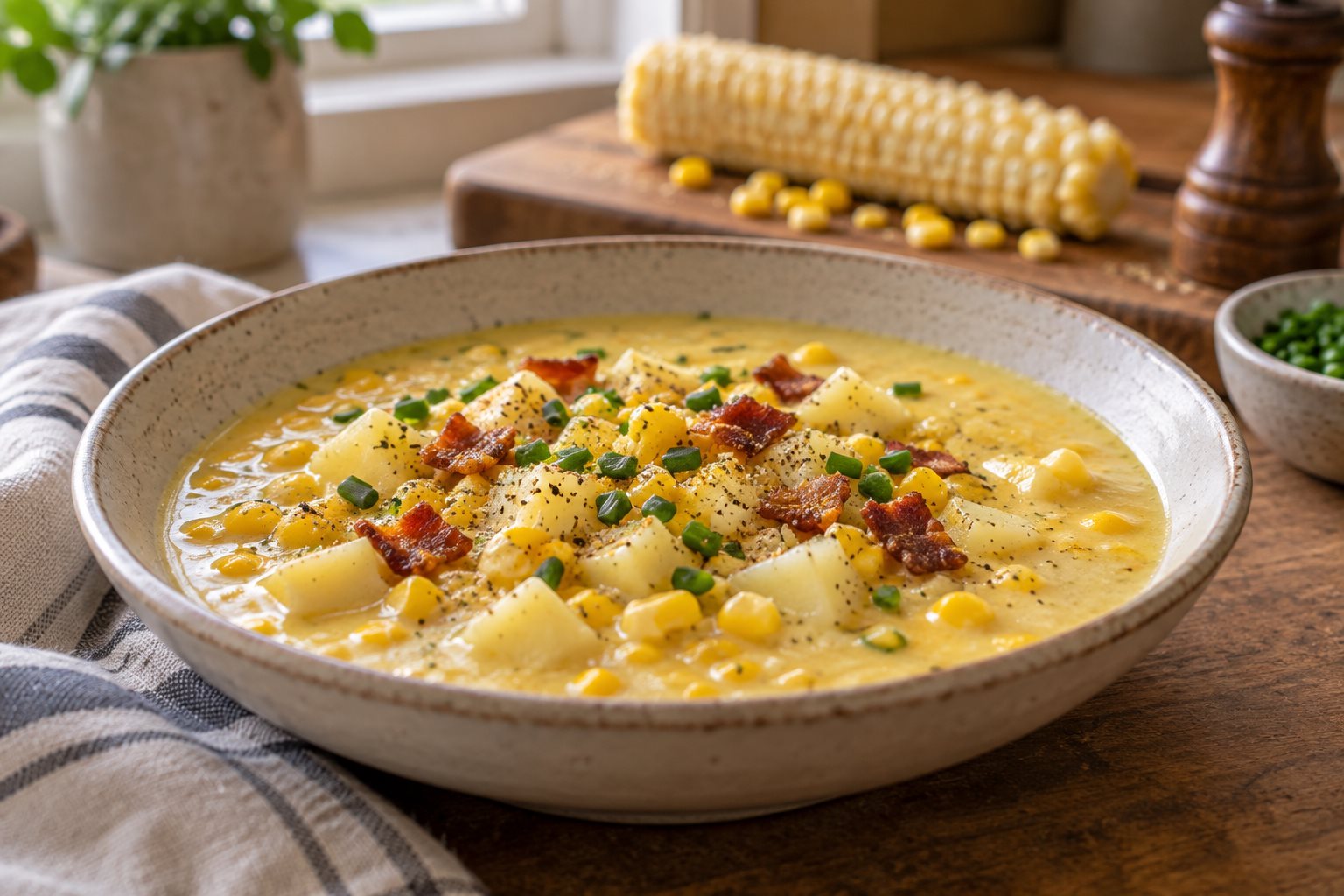
Salt pork for the fat, kept for the top. The pork is rendered, the onion is cooked in its fat, and in Lincoln's recipe the fat is strained into the kettle and the scraps left behind. Keep the scraps. They go on top of the bowls, where their crunch and salt land on the surface rather than dissolving into the milk, and they are the only seasoning this chowder needs beyond pepper.