The regional table / Florida
Tampa Cuban Sandwich
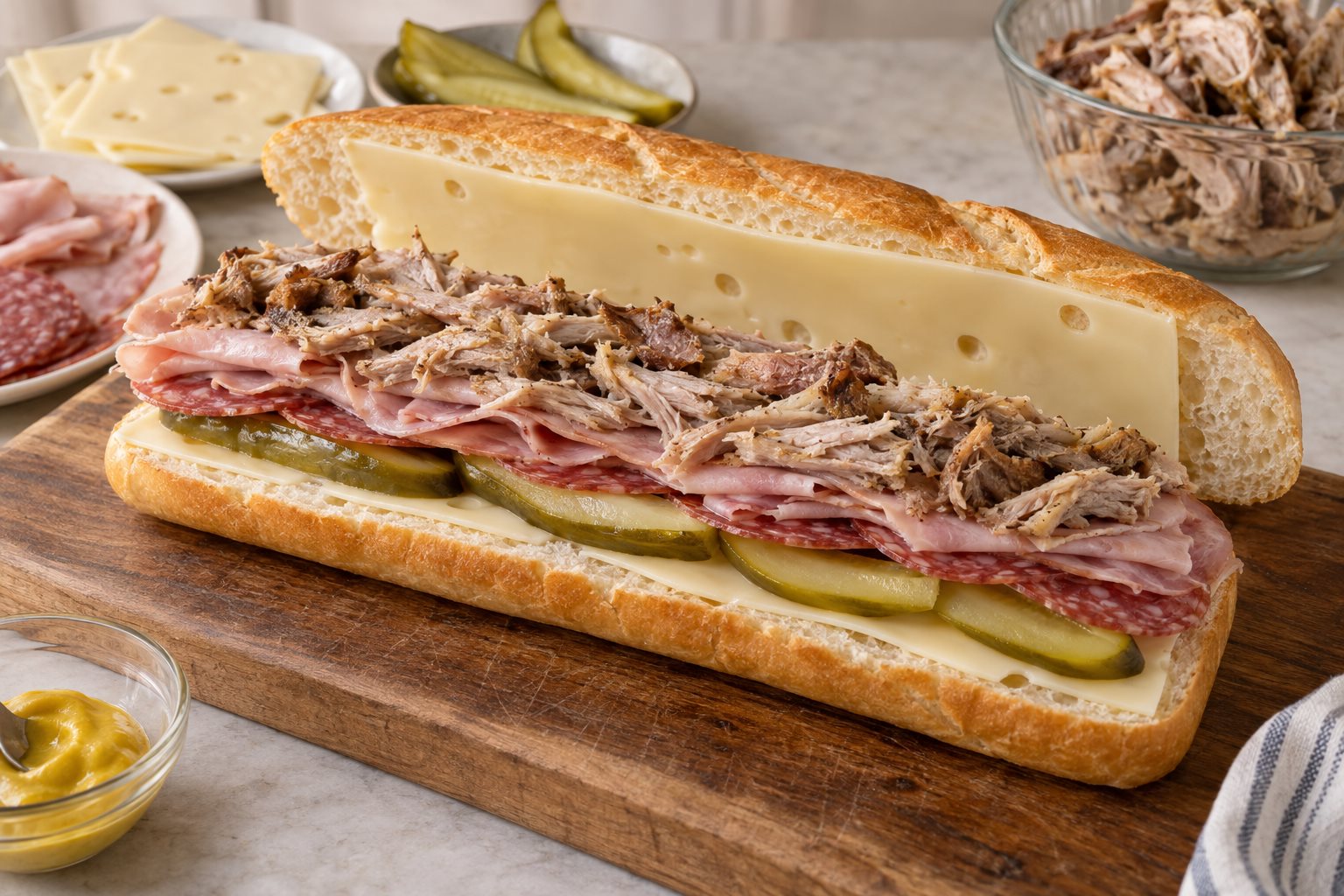
Tampa puts Genoa salami in it and Miami does not, and that one slice is the whole argument about where this sandwich comes from.
The sandwich is an account of who was standing in Ybor City, and the clearest published description of that crowd is a federal one. The National Park Service's Teaching with Historic Places lesson on Ybor City, drawn from the National Historic Landmark nomination for the district, puts it this way: "Ybor City developed as a multiethnic community where English was a second language for many of its citizens. Cubans made up the largest group, about 15 percent of them were African Cubans. Next were the Spaniards, who came in large numbers after 1890. Together these two groups dominated the cigar industry and set the cultural tone for the community. Ybor City also attracted Italians, mostly Sicilians, who had first come to work in the sugar cane fields in Louisiana. Some Italians worked in the cigar industry, but many operated restaurants and small businesses or farmed for a living." The lesson adds Germans, Romanian Jews and a small number of Chinese to the list. The landmark nomination itself dates the buildings from 1886, calls the district the largest collection of cigar factories in the United States, and records a neighbourhood that grew "until well into the late 1920s, by which time it was a thriving community that encompassed a 2-square-mile area with a population approaching 20,000." Cuban pork, Spanish ham, Italian salami, German mustard, a pickle: the sandwich is not a metaphor for that list, it is a receipt from it, and the Italians who "operated restaurants and small businesses" are the reason the salami is there and not in Miami.
The dated paper trail is thinner than the story, and it is worth saying what is actually on it. Chronicling America answers automated requests with 403, so the newspaper work here went through the Florida Digital Newspaper Library run by the University of Florida, which is open. The earliest dated mention of the sandwich it turned up is not from Tampa at all: the Brooksville Argus of 6 November 1924, in a high-school column, reports that "a bunch of Juniors, while coming back from Sarasota Sunday A. M, stopped in and cleaned a small restaurant in Ybor City. We all bought a 'Cuban Sandwich' on top of all this." By then the bread was ordinary Florida grocery stock — Stark's bakery in Wauchula advertised "Fresh baked Light Bread, Cuban Bread, Boston Brown Bread, Whole Wheat and Rye Bread" in the Florida Advocate of 28 March 1924. No printed recipe from before 1931 came up anywhere, in Tampa or out of it, so the quantities below were worked out for this page. What is a matter of record is the ruling: on 19 April 2012 the Tampa City Council designated the Historic Tampa Cuban Sandwich the signature sandwich of the city, and the ingredient list it authenticated includes the Genoa salami.
Why this version works
Salami is a layer, not a garnish. One thin course of Genoa salami between the ham and the pork does something no other slice in the sandwich does: it brings fermented tang and black-pepper heat into a stack that is otherwise sweet, fatty and mild. Leave it out and you have Miami's sandwich, which is a perfectly good sandwich and a different one.
The pork is marinated, not sauced. Mojo is an acid-and-garlic marinade that goes in before the roast, not a dressing poured over after. Sour orange juice loosens the shoulder over twelve hours so the garlic and oregano end up inside the meat; pouring the same liquid over sliced pork at assembly only makes the bread wet.
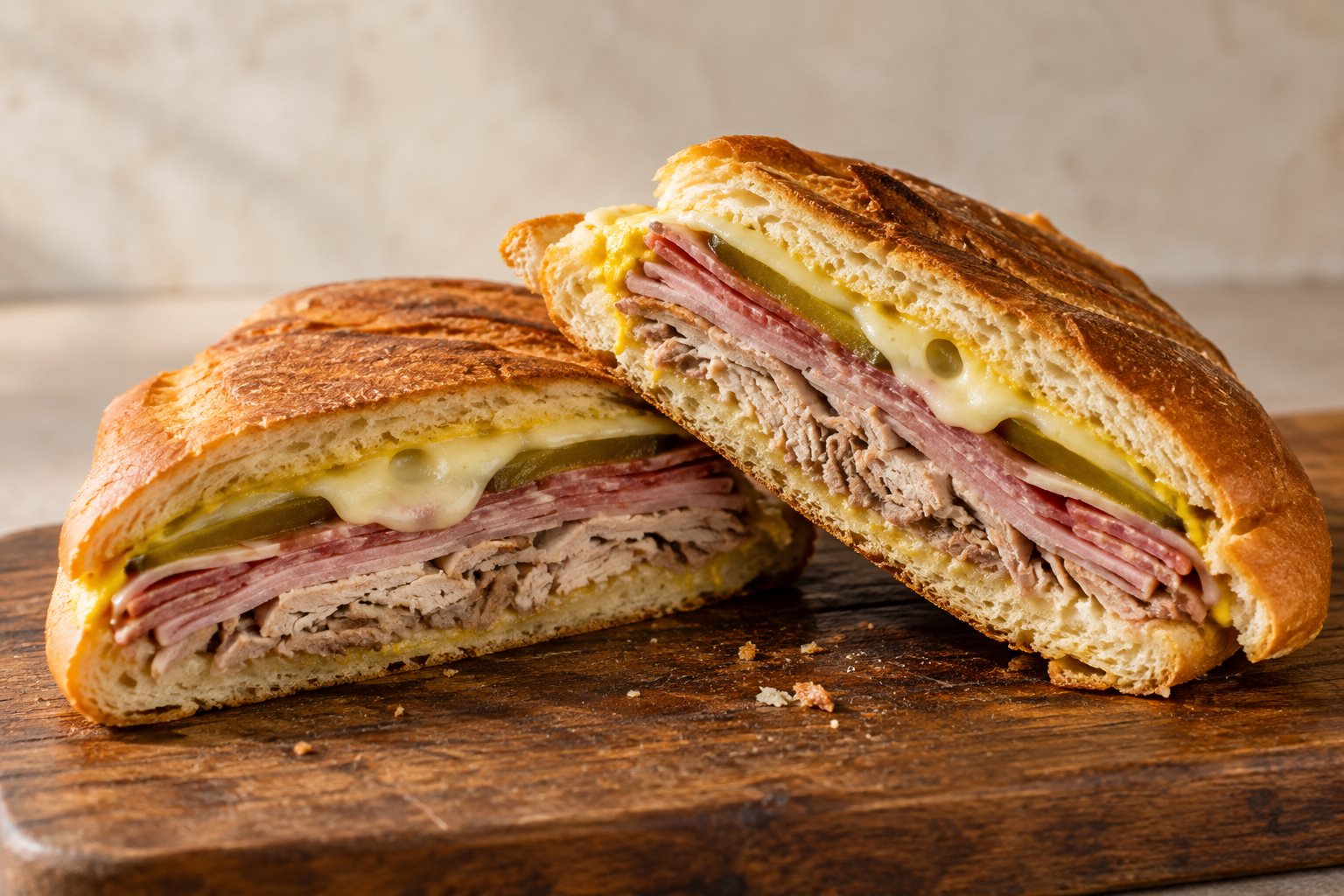
Pressing is cooking, not squashing. The sandwich goes into a dry hot pan under weight, and the weight does two jobs — it forces the top crust down onto the cheese so the cheese melts from conduction rather than air, and it compacts the crumb so it toasts instead of steaming. Done right, the crust cracks along the length of the loaf. That crack is the finish line.
Mustard on both faces and nothing else. Yellow mustard is the only condiment, and its job is as much structural as it is flavour: spread thin on both cut faces it seals the crumb against pork juice, so the inside of the loaf stays dry while it is pressed. Mayonnaise softens, splits under heat and turns the press into a mess.