The regional table / Florida
Smoked Mullet Dip
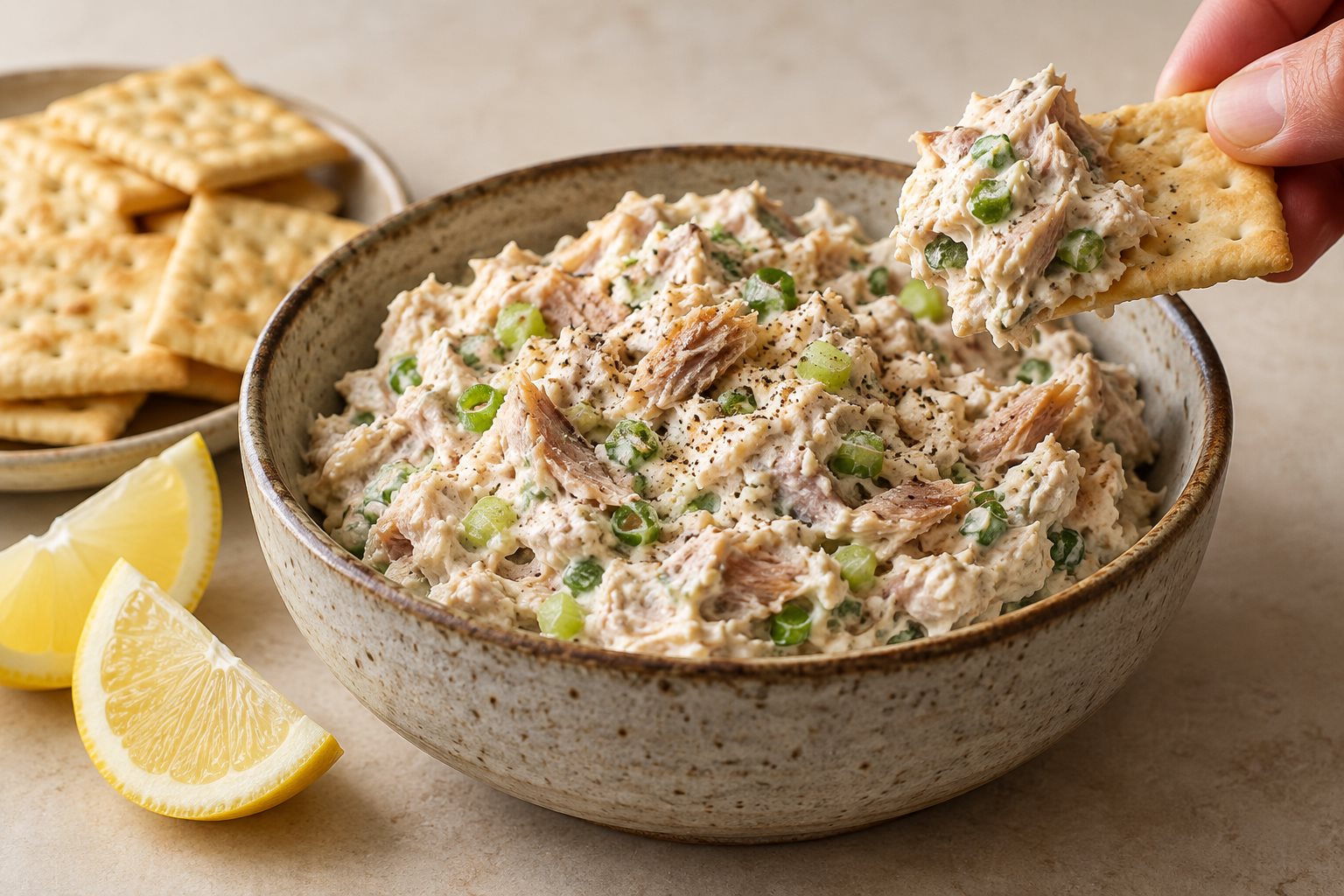
Every roadside smokehouse on the Gulf coast sells this in a tub, and the fish it is made from was once worth so little that nobody bothered to smoke it for sale at all.
The federal record on smoked mullet is a single sentence and it says the trade did not exist. R. Edward Earll wrote Part IX, "The Mullet Fishery," for Section V of George Brown Goode's The Fisheries and Fishery Industries of the United States, printed by the Government Printing Office in 1887, and having gone through every way the country then put up a mullet — fresh, iced, salted in kegs and kits, dried, pressed, pickled in vinegar and spices — he disposed of smoking in one line: "At New Smyrna, Fla., and in a few other localities, according to Mr. J. F. McCarthy, mullet are smoked to a limited extent for family use, though none are prepared for market in this way." Nineteen years later somebody was selling it. The Metropolis of Jacksonville carried a classified advertisement on 12 January 1906 that read, in full, "WANTED—You to try smoked mullet; ask your grocer for them." That is the whole distance this dish travelled: from a thing families did behind the house to a thing a grocer stocked, and then to the tub on the counter of every fish house from Cedar Key to Everglades City.
The smoking method is on the state's own printed record. Florida Seafood Cookery, compiled by the Federal Writers' Project of the Work Projects Administration and issued by the Florida Department of Agriculture in February 1944, calls the fish "Florida's 'money fish'" and gives the process plainly: "Take fresh mullet in season, clean carefully, and split down back. (Heads, tails, and fins may be left on). Salt over night, or at least for 2 hours. Wash again in clean water and allow to drip. When dry hang in smokehouse." The house it describes is sheet tin, eight feet square and five feet high, with draft holes low at the door and high on the opposite wall, and wooden racks with nails at close intervals "which are thrust through mullet heads." The fire is "preferably of hickory wood, which gives the best flavor," lit on the floor and then "smothered with sawdust to insure plenty of smoke," and the fish hang two to ten hours. The bulletin adds the warning worth copying down: "Oak wood burns too fast, and pine makes too much smoke or soot." What the bulletin does not have, anywhere in ninety-odd pages of Florida seafood, is a dip. The spread is later than the record and nobody printed it in time to be recovered, so the proportions below were worked out for this page; the smoke that goes into it is the state's.
Why this version works
Brine first, always. Salt drawn into the flesh before smoking does three separate jobs: it firms the protein so the fillet does not fall through the rack, it pulls moisture to the surface where it dries into the tacky film that smoke actually sticks to, and it seasons the inside of a fish you cannot season later. The 1944 bulletin gives its mullet a night in salt for a reason.
Low and slow, not hot and fast. The target is 175°F to 200°F in the chamber for two hours, which cooks the fish through while the smoke does its work. Run the fire hotter and the oil renders out and drips away, taking the flavour with it and leaving grey, grainy flesh behind — which is the most common fault in home-smoked mullet and cannot be corrected in the mixing bowl.
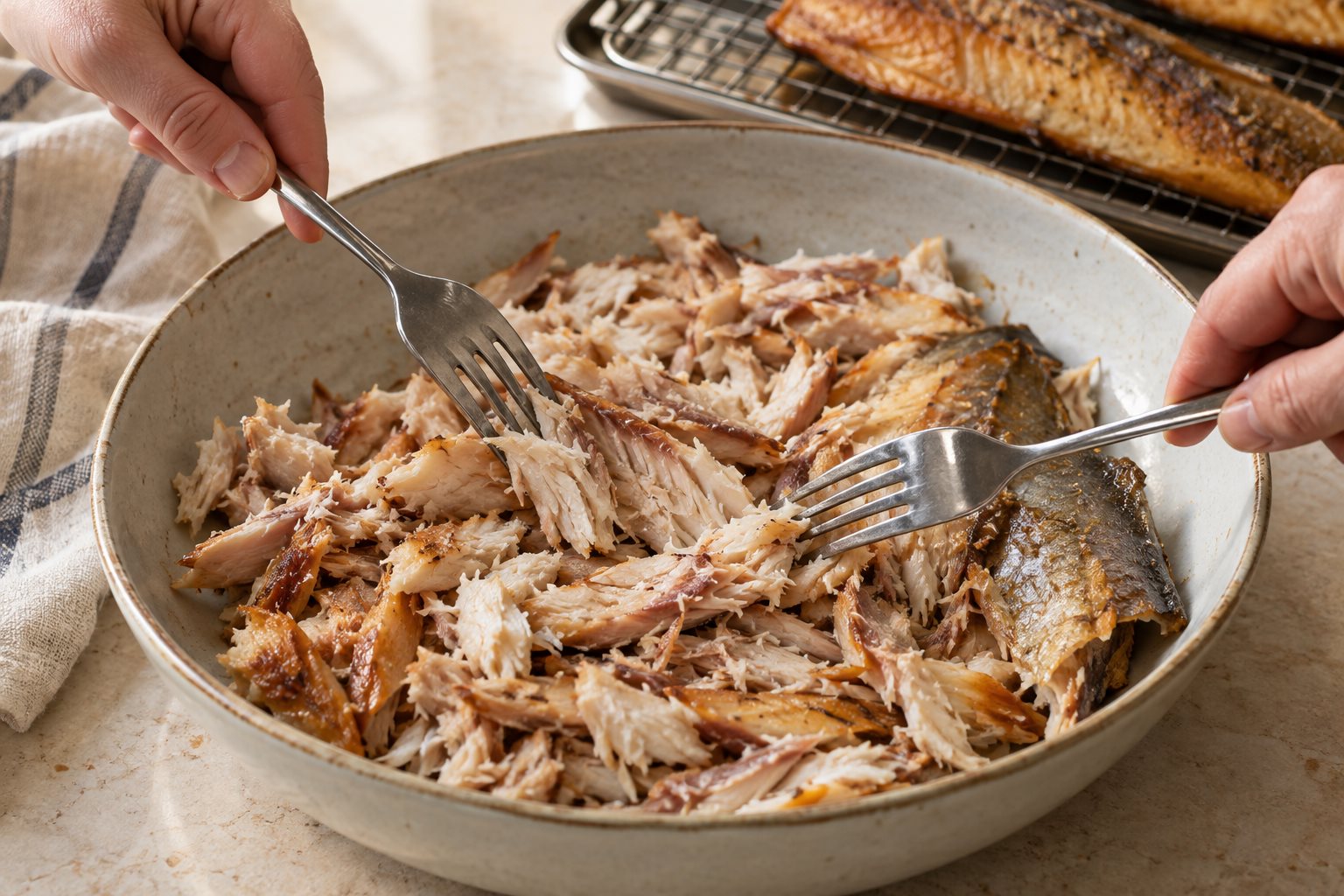
Flaked by hand, bound by cream cheese. A food processor turns smoked fish into paste in about four seconds, and paste is a different food. Flaking with two forks and folding it into softened cream cheese keeps strands of fish intact, so the dip has texture to chew and the smoke arrives in bursts rather than as a uniform background hum.
Mullet is a fat fish and that is the point. A mullet carries its oil through the flesh rather than in a layer, so it bastes itself over a long low smoke instead of drying out — the state bulletin notes in the same breath that "the fat of the mullet prevents burning and imparts a delicious flavor." A lean fish smoked the same way turns to jerky. If you substitute, substitute fat for fat: mackerel, bluefish, amberjack.