The regional table / Mississippi
Slugburger
The soy flour is not a confession. It is the recipe, and there is a federal document from 1918 that spells out exactly how it works.
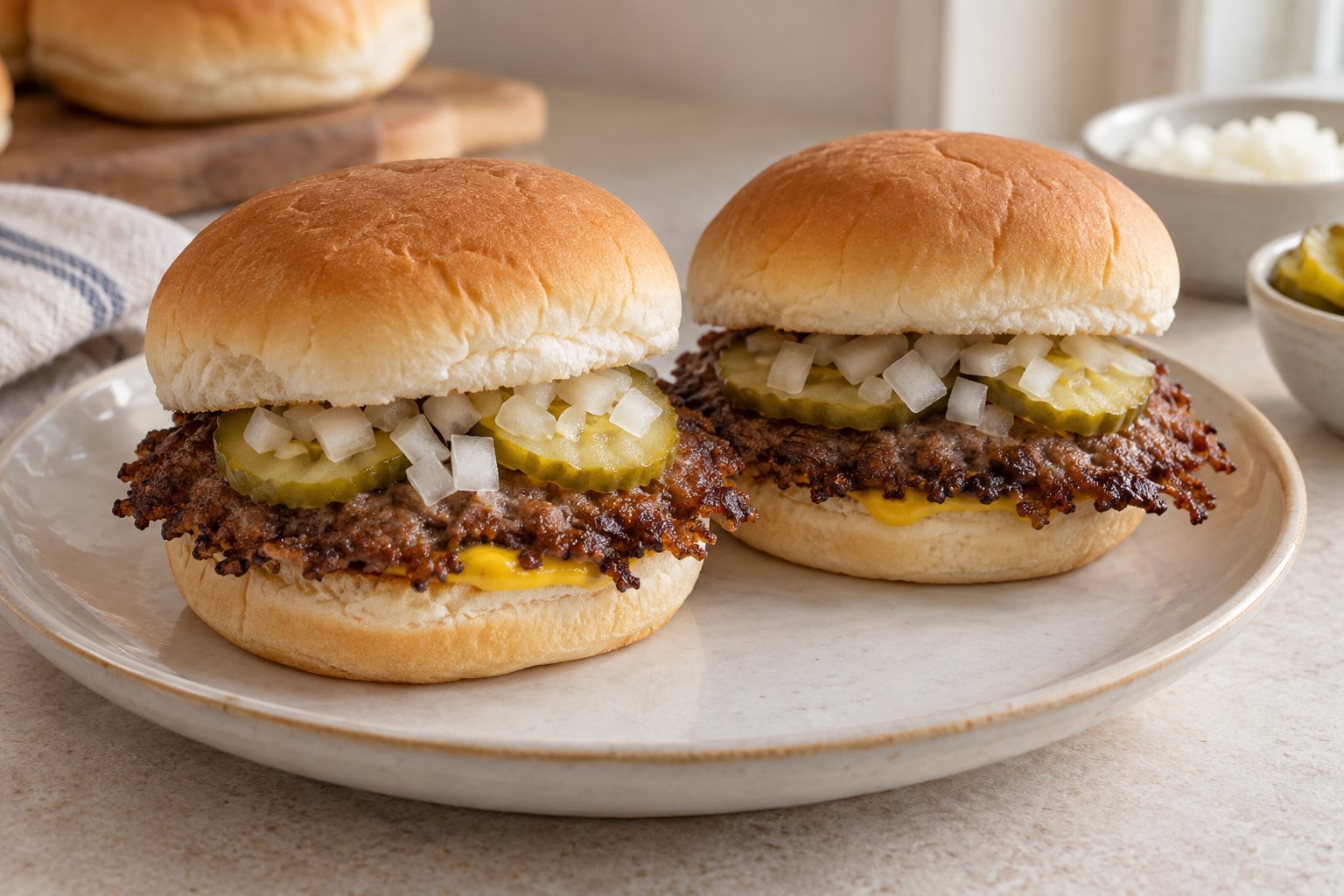
Order a slugburger in Corinth and you get a small patty of beef cut with something cheaper, fried hard in deep fat and handed over on a soft bun under mustard, pickle and raw onion. The something cheaper is the whole point of the dish, and it has a paper trail. On 2 May 1918 the United States Department of Agriculture, Office of the Secretary, issued Circular No. 113, a four-page contribution from the States Relations Service under its director A. C. True, titled "Use Soy-Bean Flour to Save Wheat, Meat, and Fat." Soy-bean flour, it explains, is the press cake left after the oil has been squeezed out of the bean, ground up; it is rich in protein, so it "can replace a portion of the meat and thus serve as a 'meat saver.'" Then it prints the thing itself, under the heading Soy-Bean Meat Loaf: one cup of chopped meat, one cup of soy-bean mush, two cups of mashed potatoes, onion, dried celery leaves, salt — and the line that matters, that it "can be baked as a loaf or shaped into small cakes and fried in drippings." Meat, soy, potato, small cakes, fried in fat. That is a slugburger, printed by the federal government and sold by the Superintendent of Documents for five cents, in the same decade the sandwich is supposed to have reached north Mississippi.
What the circular cannot tell you is how it got to Corinth or why it is called that, and on those two questions the record thins out fast. The Mississippi Encyclopedia entry, written by Fred Sauceman of East Tennessee State University, calls the slugburger one of the most misunderstood and maligned dishes in southern food: a specialty of north Mississippi diners, drugstores and cafés, made by stretching scarce ground beef with bread, cornmeal or cheaper meats in the way that was ordinary all over America in the 1920s and 1930s, with soybean meal the common extender now. He names the White Trolley Café and Borroum's Drug Store in Corinth, and he is blunt that the patties "never contain even a trace of crawling gastropod." On the name, the story he reports as most commonly accepted is that the burgers sold for a nickel and that slug was slang for a five-cent piece; the alternative he records is that overindulgence leaves a diner feeling slugged in the stomach. The Southern Foodways Alliance oral history project "A Hamburger by Any Other Name" follows the same patty across the lower Tennessee Valley under a dozen names — doughburger, cerealburger, potatoburger, Weeksburger, and plain hamburger at counters that never called it anything else — names one arguable origin point as First World War federal rationing of red meat, and records Willie Weeks of Booneville crediting his forebear John Weeks, who is said to have got the mix from a German immigrant and carried it to Corinth. Dates attach themselves to that story in later retellings and I could not verify any of them, so none is given here. No café has published its formula and none of the documents contains a working recipe, so the quantities below were worked out for this page from the 1918 ratios.
Why this version works
Deep fat, not a griddle. Half an inch of fat surrounds the patty and blows the rim out into a lacy, brittle fringe that a flat griddle cannot make. The encyclopedia notes that animal fat was the preferred medium before vegetable oils took over, and lard is still better here — it runs thinner at frying heat and leaves less weight behind on the patty.
The extender does real work. Defatted soy flour is roughly half protein and it holds several times its weight in water. Cooked to a mush and worked into ground beef, it keeps a patty pressed to a quarter inch from drying to grey chalk in the two minutes it spends in hot fat. All-beef at that thickness is a cracker. This is why the dish survived the end of the hardship that made it.
Mashed potato buys the softness. The 1918 loaf carries two cups of potato to one of meat, and potato is doing what soy cannot: it goes gelatinous and slightly sticky, so the inside stays tender and faintly sweet against a hard-fried outside. Sauceman describes the finished patty as crunchy outside and soft inside, and the potato is most of the soft.
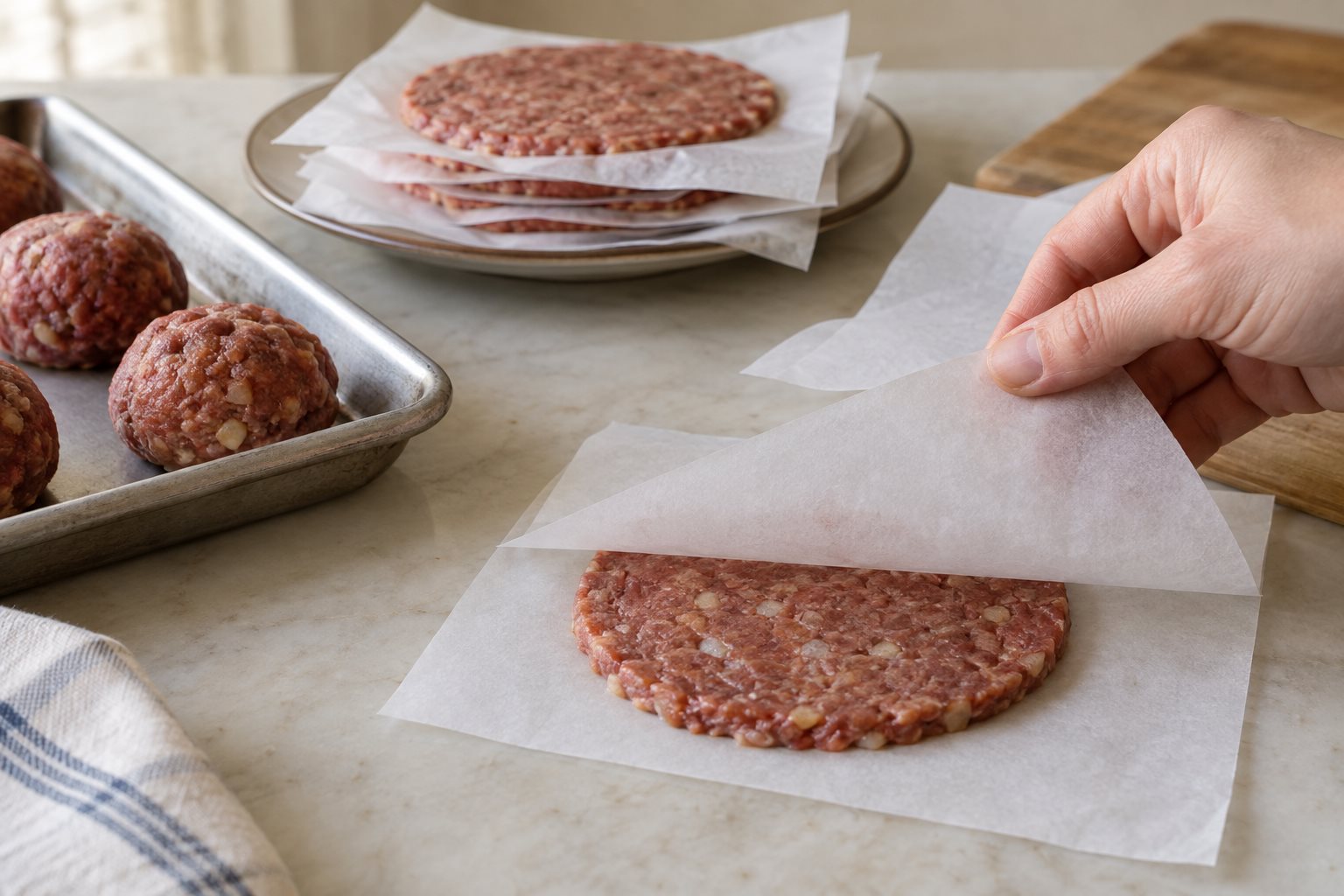
Pressed thin, so it is nearly all crust. A quarter-inch patty in deep fat is almost entirely surface. Thickness here gains you nothing but a pasty middle; the entire argument of the sandwich is the ratio of fried edge to interior, and you raise it by pressing harder, not by cooking longer.