The regional table / Nevada
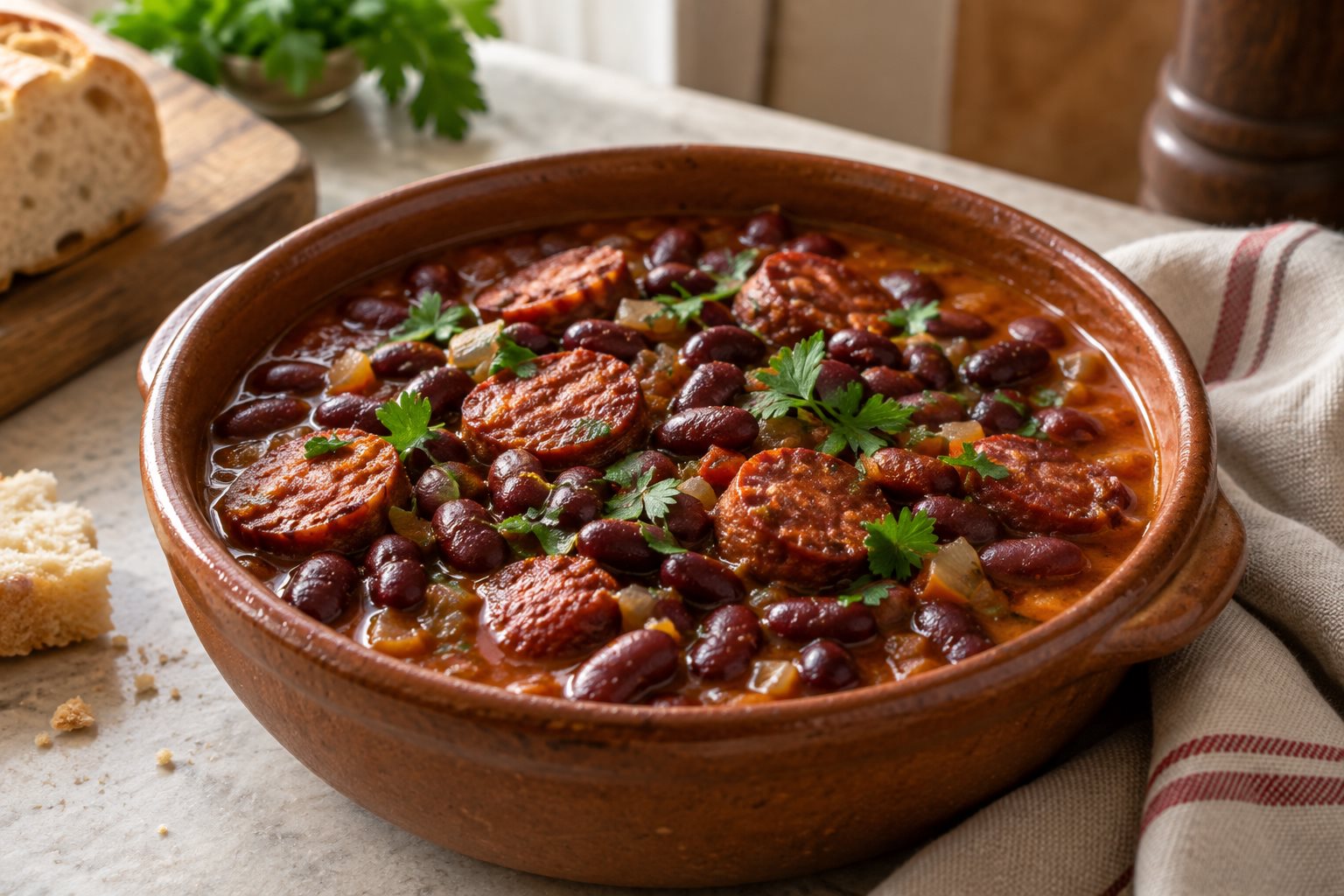
Basque Beans with Chorizo
Chorizo appears exactly once in the entire Code of Federal Regulations, and the reason it is there says everything about how the sausage works.
Federal meat law has no standard for chorizo. Part 319 of title 9 defines frankfurters, bologna, scrapple and a hundred other things, and the word chorizo is not in it; the only place chorizo appears anywhere in the current Code of Federal Regulations is 9 CFR 424.23, a rule about what may be added to meat. That section forbids any substance that "conceals damage or inferiority or makes the product appear to be better or of greater value than it is", and then draws the line in exactly the place a cook would care about: "Paprika or oleoresin paprika may not be used in or on fresh meat, such as steaks, or comminuted fresh meat, such as chopped and formed steaks or patties", but it "may be used in or on chorizo sausage". In every other fresh meat, paprika is presumed to be hiding something. In chorizo it is the point of the sausage, and the federal government concedes it in a single clause.
Behind the sausage in Nevada is a Basque household economy that an oral history records directly. Janet C. Inda, the daughter of a Basque sheepherder, was interviewed for the University of Nevada Oral History Program in 1981 and published in 1982. She was taught, she says, "from the time we were kids that you just didn't waste anything", and she remembers what that meant in practice: "we cleaned the pigs guts for chorizos when we were little kids. I never liked that job then and I like it even less now." The sausage was a winter job — her brother "loves the chorizos when we make chorizos, in the wintertime" — which is what you would expect of a family killing a pig in the cold months and putting the year away. The beans have a name in the language too: in A Candle in the Night, the University of Nevada's 2007 oral history of forty years of its own Basque Studies Program, one interviewee reaches for her favourite dish on camera and lands on "babarrunak [beans]". The proportions below were worked out for this page; no public-domain Basque-American cookbook is reachable and none is pretended here.
Why this version works
Salt late, acid later. Salt early is fine on a modern bean, but acid is not: tomato, vinegar or wine added before the beans are soft will keep the skins tough for hours. Everything sour in this pot goes in at the end, off the heat.
A bare shiver, with the lid ajar. A boiling pot burst-splits the beans and turns the broth to sludge. You want a surface that blips once or twice a second and a lid set slightly off, so the liquid reduces just enough to thicken from the starch the beans themselves give up.
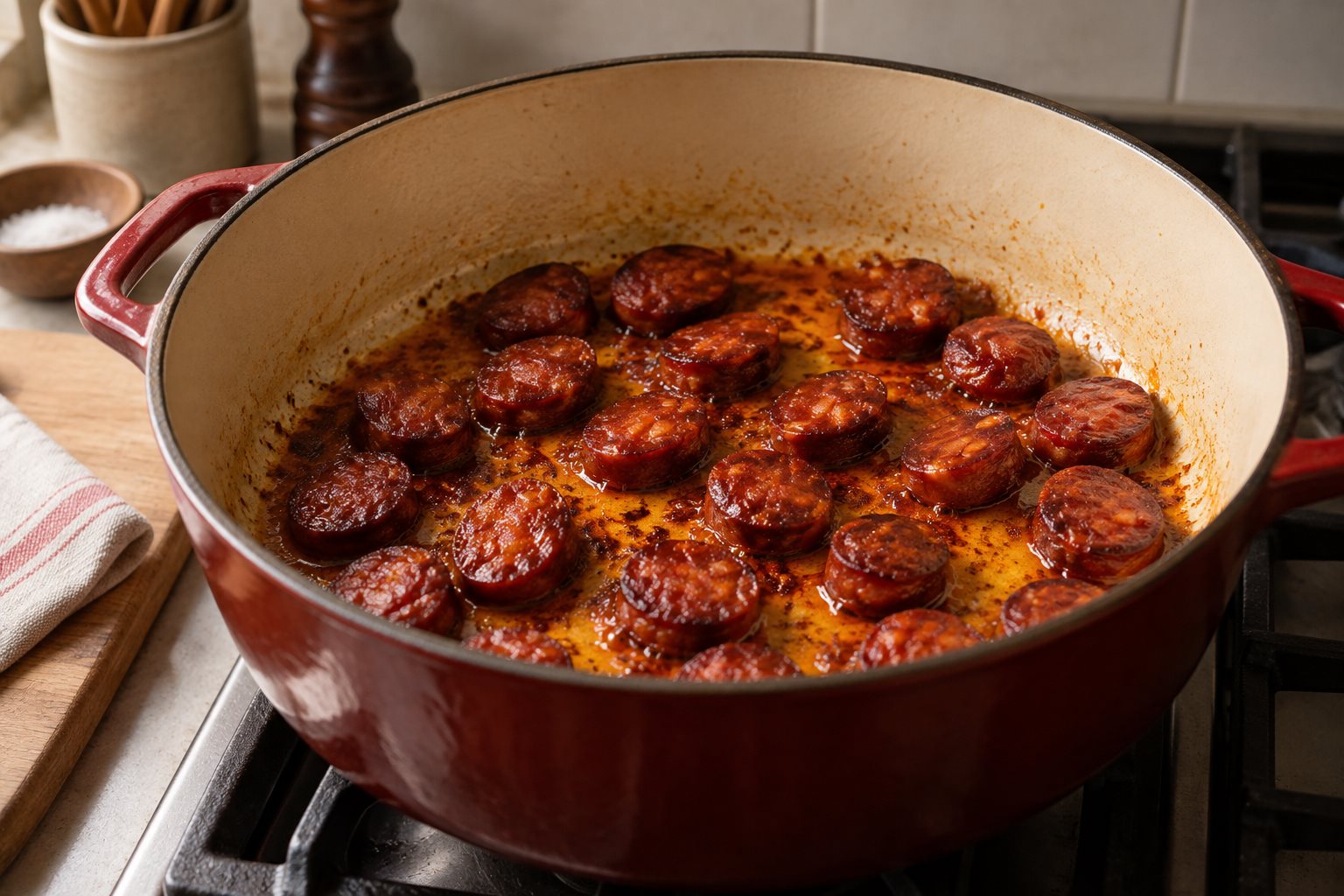
The sausage is the fat and the fat is the dish. Nothing is browned in oil at the start. The chorizo goes into a cold pot over gentle heat and renders its own fat, which is stained orange by the paprika inside it, and that fat is what cooks the onions and colours the broth. Frying the aromatics in olive oil first gives you a duller, greyer pot.
Beans cooked in their own liquid, never in fresh water. Soak and then cook in the soaking water. The colour and a good deal of the flavour of red beans leaches straight into that liquid overnight, and tipping it away is throwing out the broth before you have made it.