The regional table / Mississippi
Mississippi Mud Pie
Two desserts and a cake go by this name and the sources do not agree on any of them. This is the one Mississippi prints.
The plan sent me to Mississippi church and community cookbooks for this one, and that corpus is real and well kept. The Mississippi Community Cookbook Project, working with Jennifer Brannock, Curator of Mississippiana and Rare Books at the University of Southern Mississippi, has assembled over two hundred community cookbooks published in Mississippi before 1970 — books from Amory, Belzoni, Booneville, Clarksdale, Bay St. Louis, Bogue Chitto, a list that runs the length of the alphabet — and its own scope note is candid that the inventory is incomplete and that dozens and perhaps hundreds of these books have simply been lost. Surviving copies sit at Southern Miss, at the University of Mississippi, at Mississippi State, the land-grant university, and at the Mississippi Department of Archives and History. What that corpus stops at is 1970, and every account that puts a date on Mississippi mud pie puts it later than that: the first printed use of the phrase is usually given as 1975 on the authority of the Oxford English Dictionary, which is a paywalled dictionary I could not open to check. So there is no old document behind this pie, I am not going to imply there is one, and the quantities below were worked out for this page.
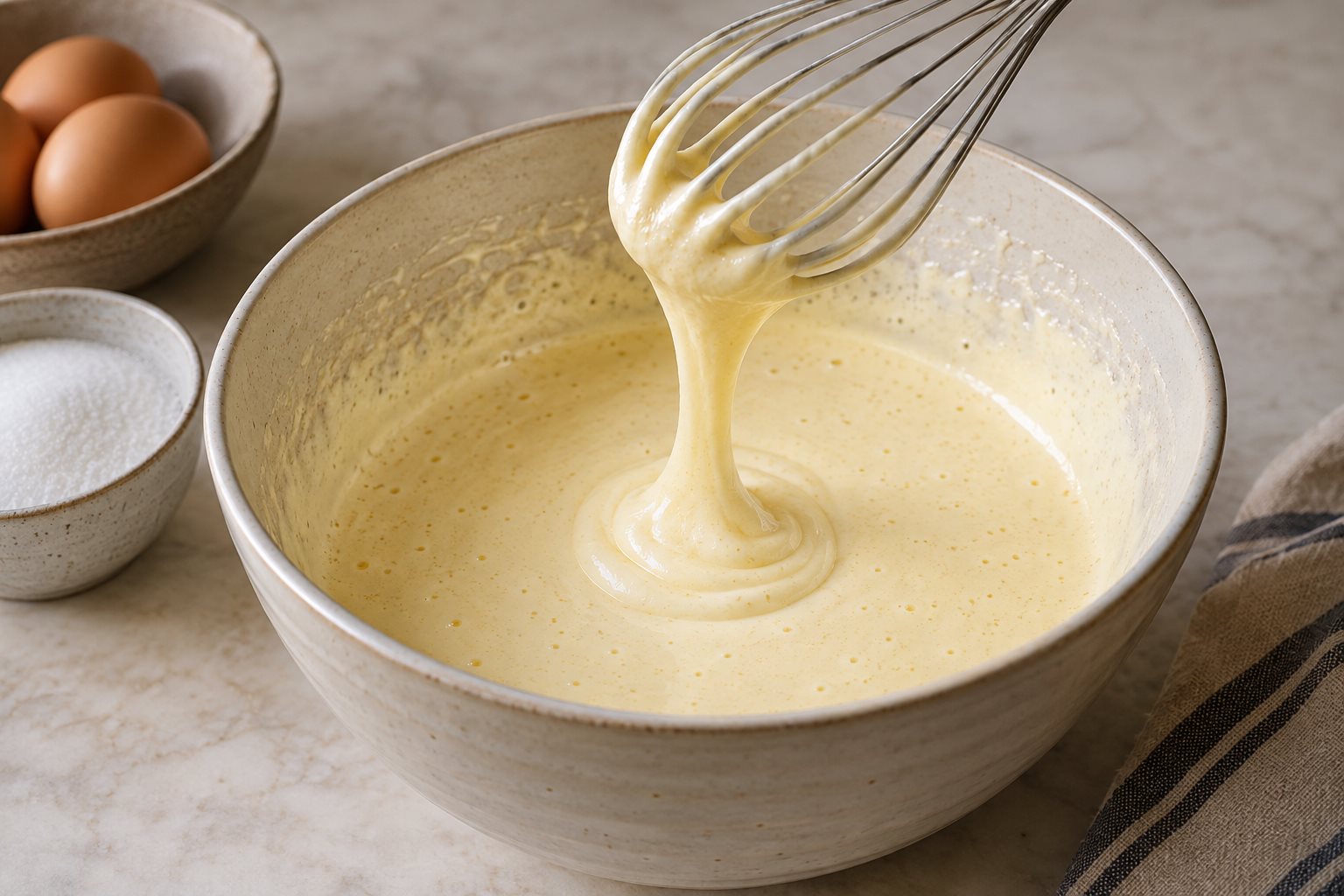
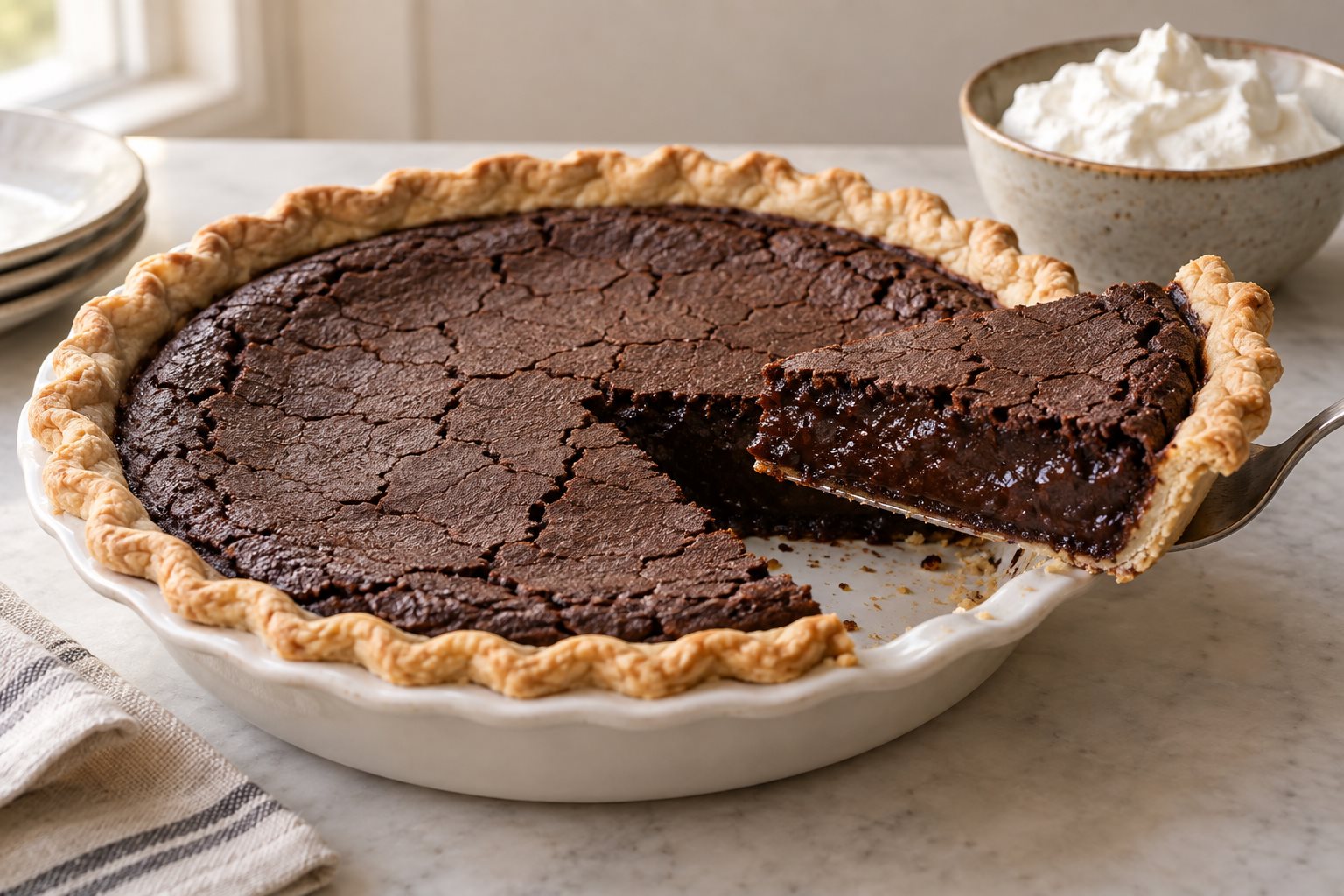
What there is, is a short entry in the Mississippi Encyclopedia by Mark F. Sohn of Pikeville College, and the most useful thing about it is what it declines to do. It names no inventor, no town, no decade and no origin story at all. It explains only the name — out of the oven the pie looks like Mississippi River clay that the sun has parched, crusted and cracked — and then goes straight to the method: whisk together sugar, melted butter, chocolate and eggs, pour the filling into a pie shell, bake at moderate heat, and expect a crunchy top over a soft, chewy center. Mississippians serve it, he writes, with whipped cream, boiled custard, vanilla yogurt or vanilla ice cream, and may add sliced bananas and strawberries. That is a dense baked fudge pie in pastry, and it is not what the name usually buys you elsewhere, where it attaches to a chilled layered pie on a chocolate-crumb crust finished with ice cream, and to Mississippi mud cake, a sheet cake that is a different dessert wearing the same words. Food writing repeats origin stories for all of it — the Vicksburg and Natchez country in the 1920s, a waitress who said a melting chocolate pie looked like the banks of the river, even a restaurant in San Francisco — and not one of them arrives with a dated recipe or a document anybody can point at. Faced with that, the sensible thing is to cook the version the state itself prints and to say plainly that the rest is unsettled.
Why this version works
A pastry shell, blind-baked. The filling is wet and heavy and goes into the oven cold, so an unbaked shell steams from above and never crisps. Twenty minutes of blind baking first is the difference between a crust you cut through and a wet seam at the bottom of every slice.
Bar chocolate and cocoa together. The bar brings cocoa butter, which is the set and the gloss. Cocoa powder brings color and the bitter edge that keeps a cup and a quarter of sugar from tasting like candy. Either one alone gives you a worse pie: all bar is sweet and soft, all cocoa is dry and dusty.
The crack on top is the doneness gauge. Sugar dissolved into beaten egg rises to the surface during baking and dries into a thin, pale, brittle sheet. As the soft interior settles that sheet crazes, and the parched-clay look the pie is named for arrives on its own. If the top is still glossy and unbroken, the middle has further to go.
It is a fudge pie, not a mousse or a custard. Melted chocolate and butter beaten into sugar and eggs with only a quarter cup of flour sets the way the middle of a brownie sets — by egg and cocoa butter, not by starch. That is what produces the chewy center Sohn describes, and it is why the flour has to stay small. Add half a cup and you have baked a cake in a pie shell.