The regional table / Iowa
Loose Meat Sandwich
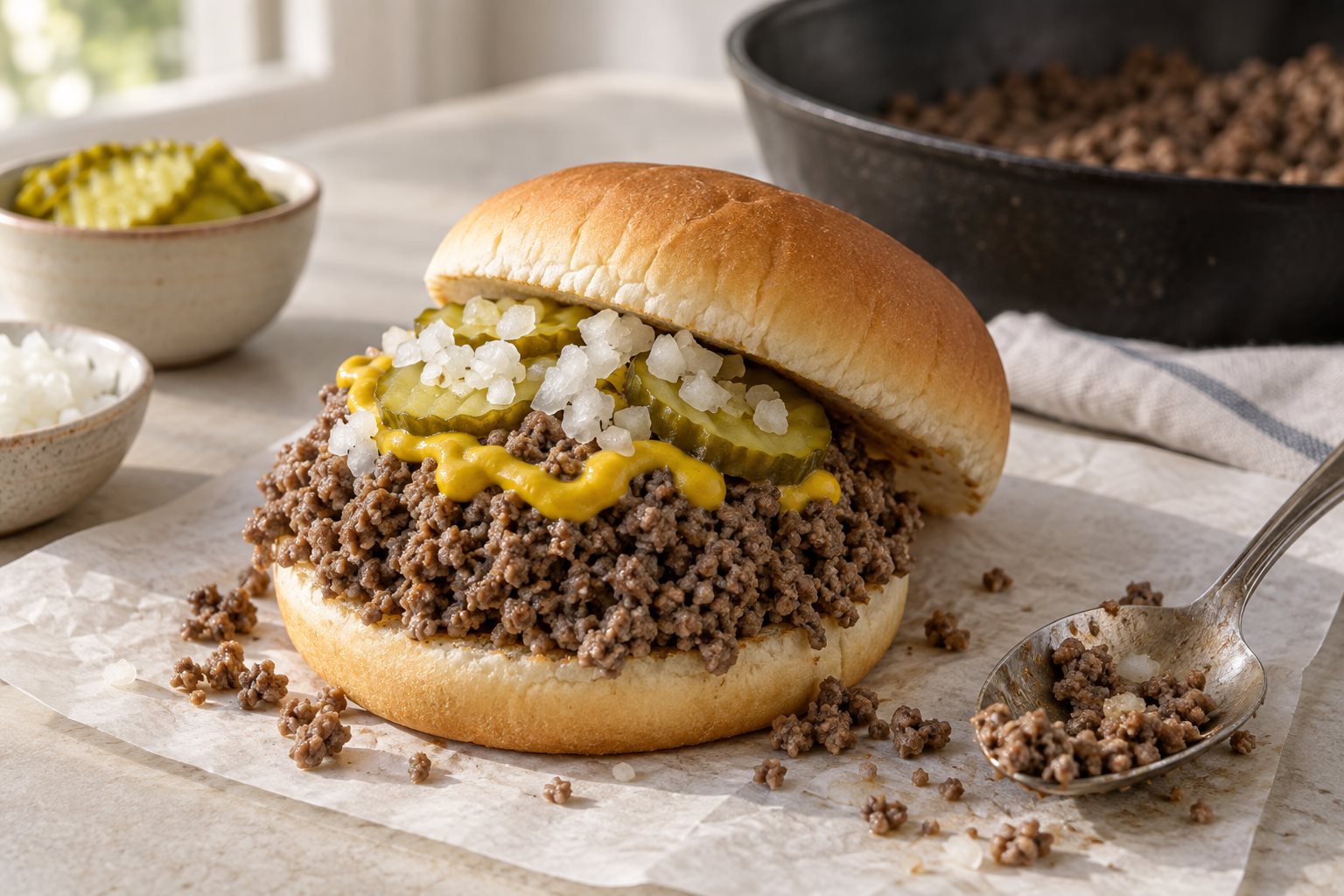
Nothing in this sandwich is browned, and that single refusal is what separates it from a hamburger that fell apart.
The name on most of the signs in Iowa is a registered trade mark of a company still trading, and this page has nothing to do with it: it makes the food, not any company's product, and no company's recipe is reproduced below. The name is worth writing about all the same, because the company is where the paper trail starts. The earliest printing anyone can reach in an open Iowa archive is not a newspaper story at all but a telephone directory: the Cedar Rapids book of 1 May 1927 lists, among the cafes and lunch rooms, "Maid Rite Hamburg Stand, 209 S 10", telephone 2666, and the November 1927 book carries the same entry in its alphabetical pages. In Marshalltown the Times-Republican mentions a "Maid-Rite hamburger stand, in South Third av-" on 18 February 1928, and on 9 March that year the stand bought a full advertisement of its own: "STOP! LOOK! LISTEN! Don't Miss the Opening Day at the Maid-Rite 'Hamburg Station', 107 South Third Avenue, SATURDAY, MARCH 10. On Opening Day We Will Give a Cup of Hot Coffee or an Ice Cold Drink FREE With Every Sandwich. Something new and different. A whole meal for a dime. Parking space for all. Drive in, park while you eat." It is signed "Maid-Rite Hamburg Co. of Marshalltown, Iowa". Two years later the same paper prints the city council's business under the headline "Taylor's Bond Approved": "The bond of Cliff Taylor, owner of the Maid-Rite sandwich shop, 105 South Third avenue, to sell cig-". A stand, a street number, a dime, and then a licence — that is as close to a birth certificate as a sandwich gets.
The year everybody repeats is 1926, in Muscatine, and it cannot be tested from here. Muscatine's digitised newspaper run holds 1889, 1890, 1896, then nothing at all until 2002 — the whole 1920s are missing, and no amount of searching will conjure them. Of the two 1926 hits the other Iowa archives offer, the Cedar Rapids Evening Gazette of 19 November and the Clinton Advertiser of 25 September, neither contains the words anywhere in its page text; both are optical-character mirages of the kind these fuzzy indexes throw off by the hundred. What does exist, dated and in the company's own words, is a franchise advertisement in the Ames Tribune of 26 November 1982: "For 56 years the maker of the delicious and unique loose meat 100% beef sandwiches". Fifty-six years back from 1982 is 1926, so the claim is the company's and it is on the record as a claim — and that advertisement is also the earliest use of the phrase "loose meat" itself that survives checking in any of these archives. The food is older than its name by half a century. The federal rules are indifferent to the argument: 9 CFR 319.15(b) says hamburger is chopped beef with no added water, phosphates, binders or extenders and not more than thirty percent fat, and says nothing whatever about shaping it. No document anywhere prints quantities, so the ones below were worked out for this page.
Why this version works
No patty, ever. The meat is broken down while it is raw and broken down again while it cooks. Press it into a disc at any point and you have made a hamburger, which is a good thing and a different thing. The whole texture of this sandwich is that it collapses.
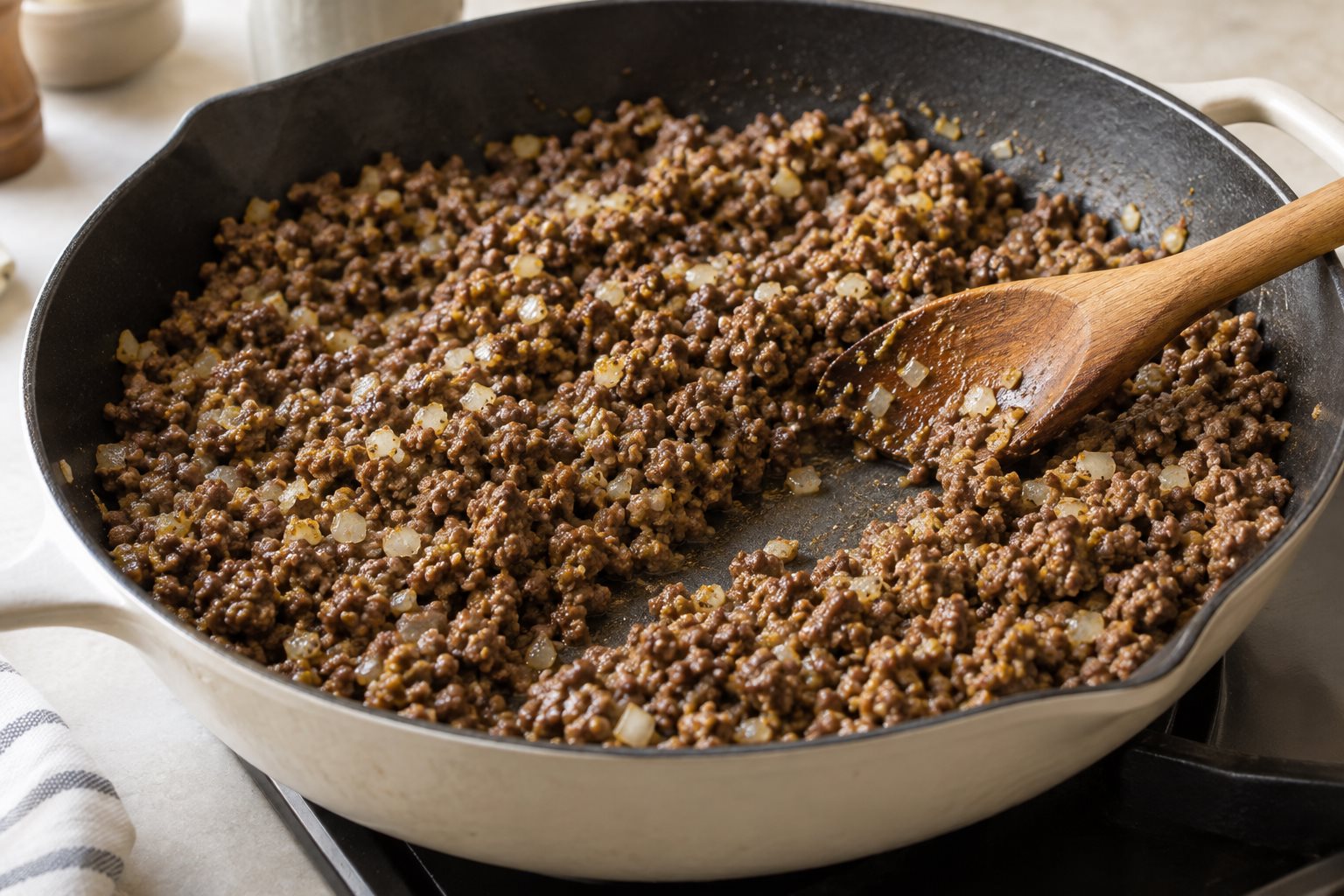
It steams, it does not brown. The beef goes into liquid, not hot fat, and stays under a lid. Browning welds the crumbs into sheets and pebbles that never come apart again; steam keeps every grain separate and soft enough to hold sauce. If you hear a sizzle in the first ten minutes, there is not enough water in the pan.
The bun is steamed, not toasted. A toasted bun is a shell and the juices run straight off it. A bun held over the pot for a minute goes soft and slightly tacky inside, and that surface grips the loose meat instead of shedding it.
Finely chopped onion cooked in with the meat. Onion cut small enough to vanish gives the sandwich its sweetness and most of its liquid. Sliced rings sit on top and slide out of the bun; minced onion becomes part of the meat and stays there.