The regional table / New Hampshire
Indian Pudding
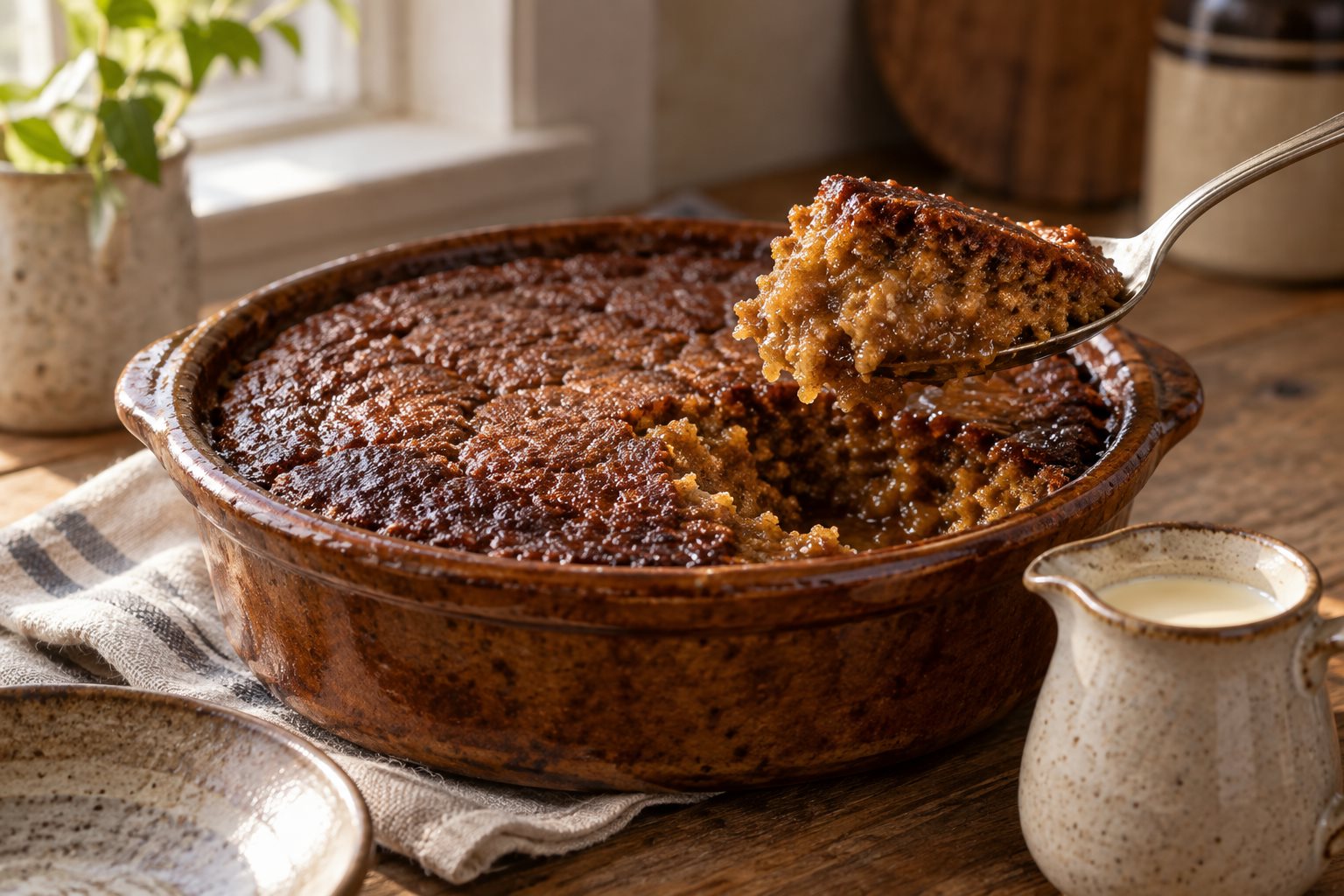
Three hours in a slow oven for a quart of milk, a cup of cornmeal and a teacup of molasses. Nothing about this dish has ever been in a hurry.
Indian pudding is genuinely old, and the books prove it. It is in the first cookbook written by an American, Amelia Simmons's American Cookery of 1796, under the heading "A Nice Indian Pudding", and she gives three of them. No. 1: three pints of scalded milk, seven spoons of fine Indian meal stirred in while hot, left to stand till cooled, then seven eggs, half a pound of raisins, four ounces of butter, spice and sugar, baked an hour and a half. No. 2: three pints of scalded milk to a pint of salted meal, cooled, with two eggs, four ounces of butter, "sugar or molasses and spice" to taste, two and a half hours in the oven. No. 3 has no eggs and no oven at all — salt a pint of meal, wet it with a quart of milk, sweeten it, tie it in a strong cloth or seal it in a brass or bell-metal vessel or a stone pot, keep the water out and boil it twelve hours — and the errata page at the back of the book corrects even that: "A nice Indian pudding, No. 3; boil only 6 hours." One thing worth saying, because it is usually said the other way round: molasses is not what makes this pudding in 1796. It appears once, as an alternative to sugar, in one receipt out of three.
The pudding people actually mean today — dark, spiced, molasses through and through — is a generation younger and it is just as well documented. Lydia Maria Child's The American Frugal Housewife of 1832 prints a baked Indian pudding of a quart of scalded milk, "(skimmed milk will do,)" seven table spoonfuls of sifted Indian meal, a teaspoonful of salt, a teacupful of molasses and a great spoonful of ginger or sifted cinnamon, baked three or four hours, with a line that solves a problem most modern recipes do not even mention: "If you want whey, you must be sure and pour in a little cold milk, after it is all mixed." Sarah Josepha Hale's The Good Housekeeper of 1839 gives the same dish as Plain Baked Indian Pudding — half a pint of sifted meal and a teacup of molasses to a quart of scalded skimmed milk, salt and ginger or cinnamon, left to stand an hour or two, baked three or four hours in a buttered earthen pot, with half a teacup of cold milk poured in and stirred through as it goes into the oven. The Indian in the name is the grain, not the dish: Indian meal is cornmeal, and maize and the cooking of it were Native American before any of these books existed. That the pudding belonged to a New Hampshire winter needs no cookbook at all — the New Hampshire Sentinel of Keene printed a set of verses on 19 December 1818 in which a writer measures the south's watermelons, terrapin stews and soft crabs against his own country and picks "the dark Indian pudding" and a pot of baked beans.
Why this version works
A slow oven, and a long one. Three or four hours is what both 1830s books say, and they are cooking in a cooling brick oven. At 300°F a quart of milk thickened with a cup of meal has time to set without the edges breaking into curds, and the long heat is what turns the molasses from sharp to deep. A hot oven gets you a scrambled skin over a thin middle.
Molasses, not sugar, carries it. Sweetness is the least of what molasses does here. It brings acid, which sets the milk a little; bitterness, which keeps the dish from tasting like dessert custard; and the colour the 1818 verse was talking about. Use unsulphured cooking molasses. Blackstrap is a different and much harsher thing and it will take the pudding over completely.
The meal is cooked before it is baked. Cornmeal takes a long time to soften and it will not do it properly suspended in a cold oven dish. Simmons stirs hers into scalded milk and lets it stand till cool; Hale scalds the milk and then lets the mixture stand an hour or two. Twenty minutes of stirring over low heat does the same work faster and is the single thing that separates a smooth pudding from a gritty one.
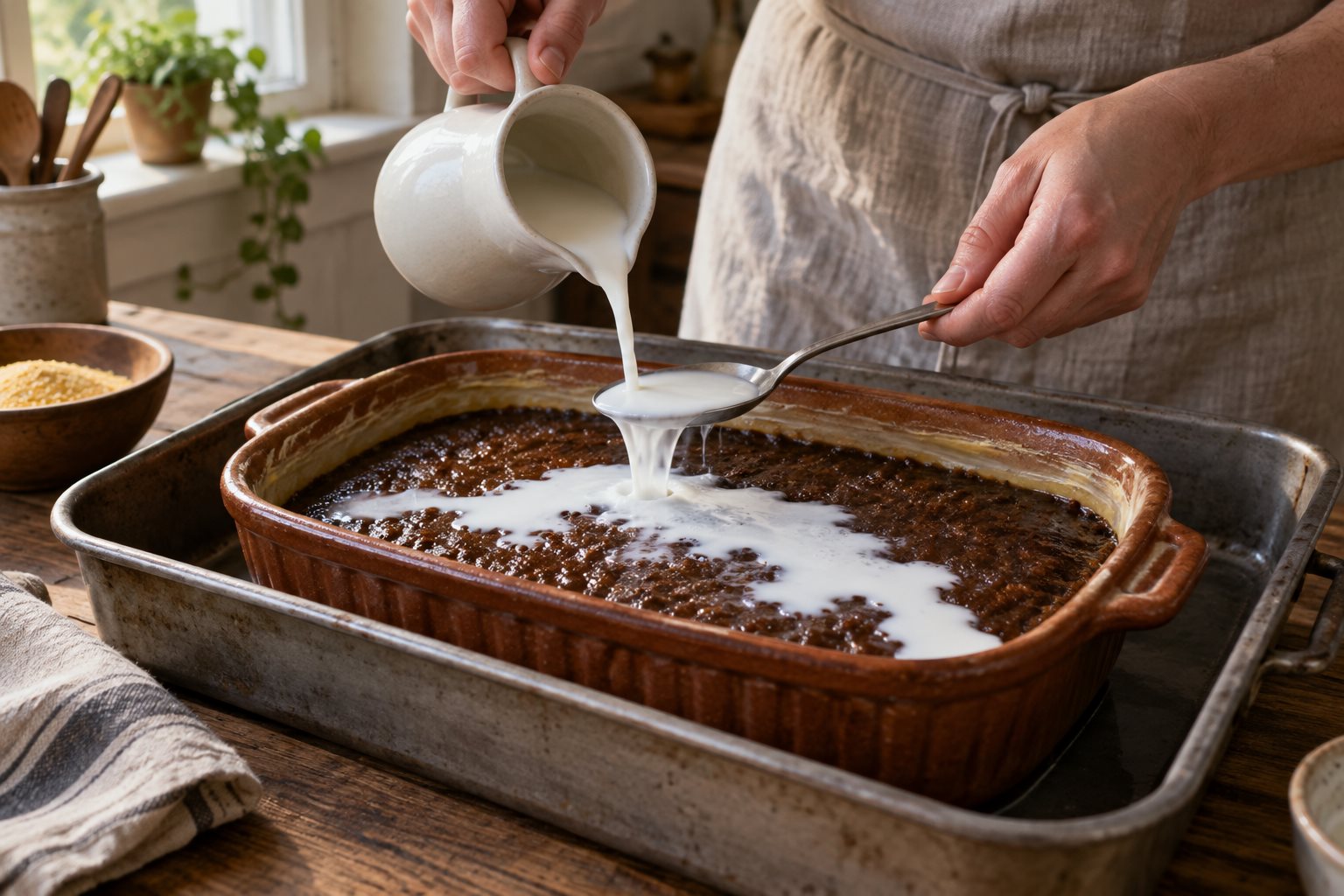
The cold milk is a technique, not a garnish. Pour a cup of cold milk over the pudding before it goes into the oven and it stays a little apart from the rest through the baking, leaving a soft, almost liquid layer under the crust. Child calls it whey and says to pour it in if you want it; Hale stirs hers through. Either is correct, and doing nothing at all gives you a firmer, plainer pudding, which is also correct.