The regional table / Georgia
Georgia Peach Cobbler
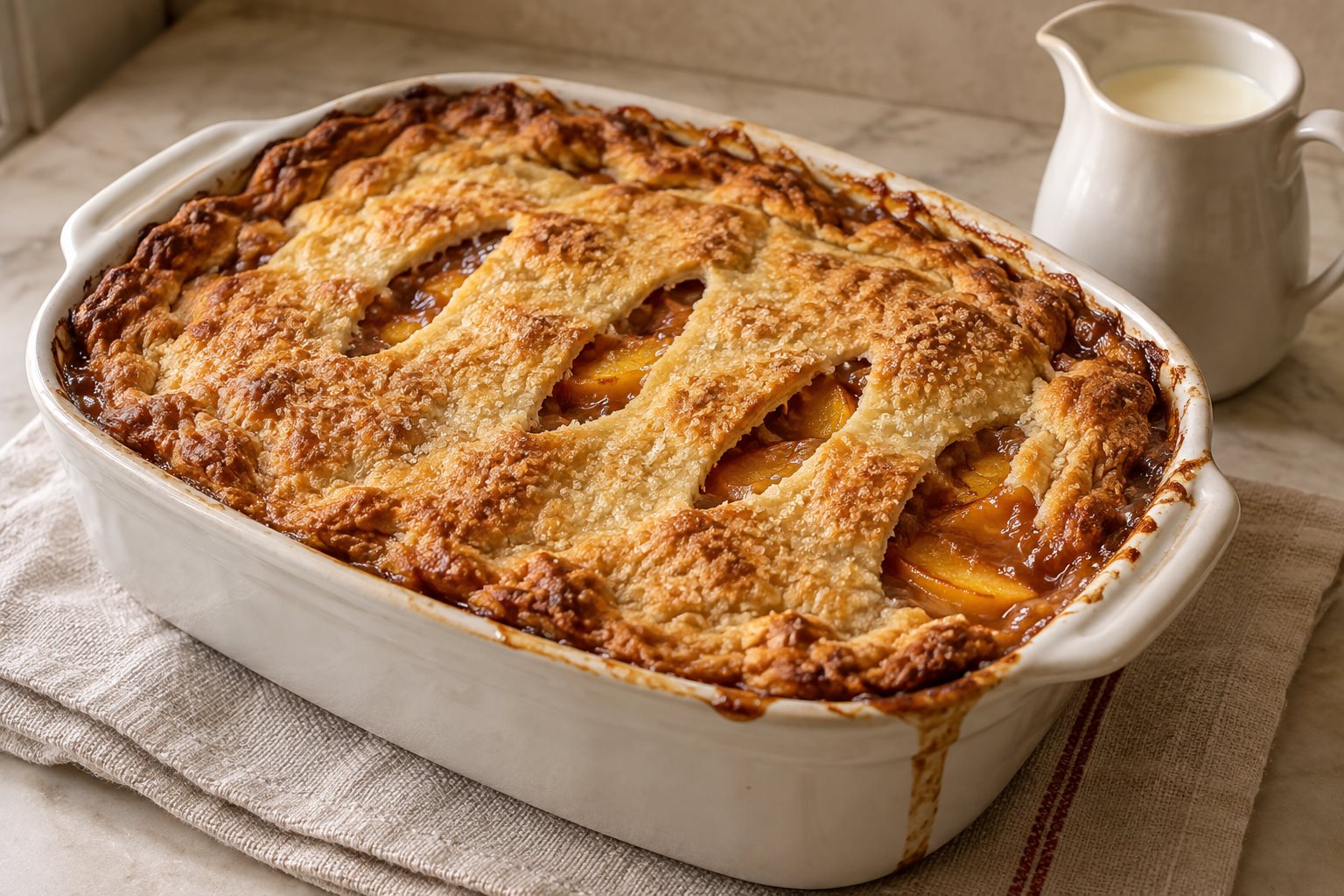
One crust on top, no crust underneath, and enough peaches that the dish is heavy when it goes into the oven.
The oldest Georgia instruction I could find for this is not called a cobbler. Mrs. A. P. Hill of Georgia — the title page of her New Cook-Book names her as the widow of Hon. Edward Y. Hill, and the receipts carry over from her 1860s book — gives it at No. 595, under Peach Pie: "There is a very popular pie for common, every-day use, called 'Cut and Come Again.'" Line the inside of an oven with risen dough or paste, she says, fill the oven with good ripe juicy peaches sliced thin, put in a little water, cover with a crust and bake in a moderate oven until the crust is done; then remove the upper crust, sweeten and spice the fruit, spread it upon that crust and lay the side crust around. It is best cold, keeps several days in a cool place, and is eaten with cream sauce. The oven she means is a Dutch oven, the lidded iron pot that sat in the coals. Everything that defines a cobbler today is already there: a lot of fruit, one sheet of dough, and no pretence of being a pie.
The fruit is the part Georgia made famous, and the timeline is well kept. The New Georgia Encyclopedia entry on peaches, written by Kathryn C. Taylor of the University of Georgia, dates the first peaches on the coast to Franciscan monks on St. Simons and Cumberland islands in 1571, credits Raphael Moses of Columbus with shipping and selling Georgia peaches outside the South from 1851 — in champagne baskets, which kept the flavor — and records that in 1870 Samuel H. Rumph of Marshallville raised the variety he named Elberta after his wife, a yellow freestone that shipped well enough to carry the industry until 1960. By 2014 the state ranked third in the country with 35,500 tons, most of it from the fall-line counties of Crawford, Peach, Taylor and Macon. Middle Georgia built festivals on it: the Leader-Tribune and Peachland Journal of Fort Valley described the 1924 peach festival on 3 April that year, with a pageant called "The Peach of the World" and a barbecue for thousands, and the Jackson Herald of 6 August 1925 reports Georgia Belle peaches from the Hardman orchards at Commerce handed round at the end of an association dinner. For the fruit itself, the University of Georgia's Circular 1063, "Home Garden Peaches," by Dario Chavez and Jeff Cook, puts the Georgia harvest from late April to late August and says to judge ripeness by a yellow background color, firmness and "a wonderful aroma" — not by the red blush, which is variety, not ripeness.
Why this version works
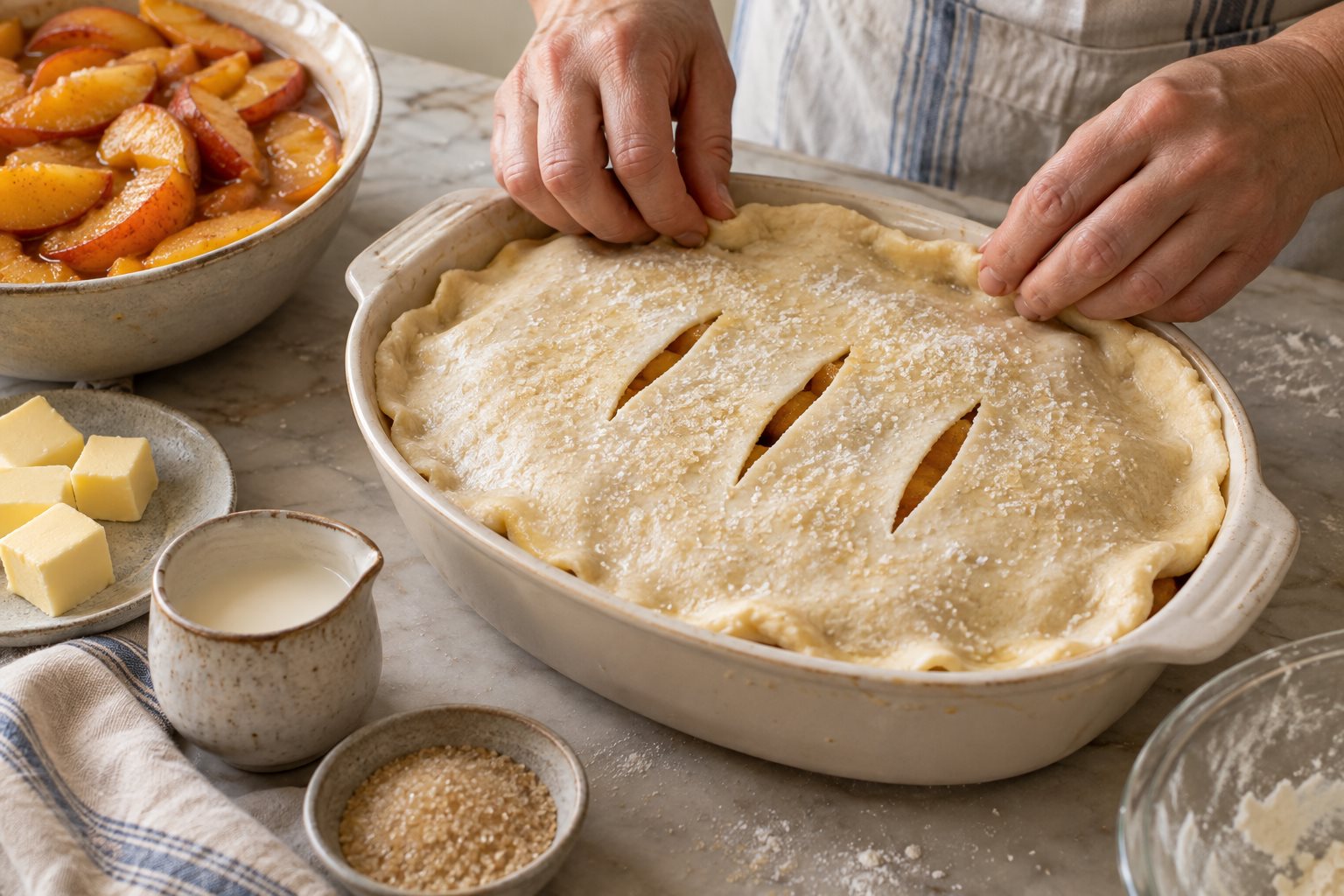
Vents cut wide. Steam has to leave. Three or four generous slashes let it out and let the juice boil up through the openings, where it reduces on the hot crust into a sticky glaze. A sealed lid traps steam underneath and softens the pastry from below, which is the difference between a crisp cobbler and a soggy one.
One crust, on top. A bottom crust under two pounds of juicing fruit steams rather than bakes and arrives grey and slack, which is why the old receipt bakes the fruit under a lid and then lifts it off. Keeping a single sheet on top gives you pastry that crisps in dry oven heat and fruit that cooks in its own steam underneath.
Sugar late and light. The 1867 method sweetens after baking, and there is sense in it: sugar draws water out of peaches on contact, so a heavily sugared filling goes watery before it ever reaches heat. Tossing the fruit with sugar right before it goes in the dish, and keeping the quantity modest, leaves you tasting peach rather than syrup.
Thin slices, no water. Mrs. Hill adds "a little water" because her fruit went into an iron pot in coals. In a modern oven ripe peaches give up more liquid than the dish needs. Sliced half an inch thick they collapse into a dense layer instead of floating in juice, and the only liquid in the dish is the one the peaches made.