The regional table / Mississippi
Fried Catfish with Comeback Sauce
The fish is tasted for flavor before it is ever caught, and the sauce is made the day before. What happens between those two facts takes about fifteen minutes.
Almost every catfish fillet sold in this country comes out of a pond, and most of those ponds are in Mississippi. The Mississippi Encyclopedia entry on catfish farming, written by Terry Hanson of Mississippi State University, dates commercial production in the state to about 1965 and puts 85 percent of the acreage in the Delta, where the alluvial aquifer sits close enough under the clay to fill a levee pond and the clay is tight enough to hold it. The scale is still there in the federal numbers: USDA's National Agricultural Statistics Service, in the Catfish Production report released on 15 July 2026, counted 27,900 of the 41,100 water surface acres in the three major producing states in Mississippi alone. What makes that worth knowing at the stove is a detail from the Mississippi State Extension Service, the land-grant service for the state that grows the fish. Before a pond is harvested, a sample goes to the processor and is cooked and tasted by people employed to taste it — two weeks out, the day before, and the day of. Fish that come back positive for the earthy compounds geosmin and 2-methylisoborneol, which pond algae make and which are harmless but unmistakable, are refused and the pond goes back on the schedule until it clears. The fish are taken off feed two or three days before harvest. From live tank to ice, Extension puts the whole processing run at under thirty minutes.
The sauce is a Jackson story and a Greek one. Malcolm White's entry on comeback sauce in the Mississippi Encyclopedia opens by saying there are nearly as many spellings of the name as there are recipes and theories of origin, and it is careful about what can be shown: paper records for a family salad dressing are scarce, and the oral histories point to Five Points. Most accounts land on Alex Dennery, born John Alexander Tounaris in Greece, and his Rotisserie on US 49, a converted drive-in at a junction of five streets with a door on each; the date usually given is 1936, and the encyclopedia says "supposedly" when it gives it. Mike Kountouris of the Mayflower Café is quoted there on why Greek immigrants were behind the counter in the first place — with no English, kitchen and busboy work was the work available. This was never a large community: Ted Ownby's entry on Greeks in Mississippi counts 117 people of Greek birth in the state in the 1910 census, 207 in 1920, 342 in 1930. A few hundred people gave the state its house dressing. No old book holds the measurements, so the ones below were worked out for this page against what the record does agree on — mayonnaise, chili sauce, a great deal of garlic, and enough of it that the bottle goes back to the kitchen empty.
Why this version works
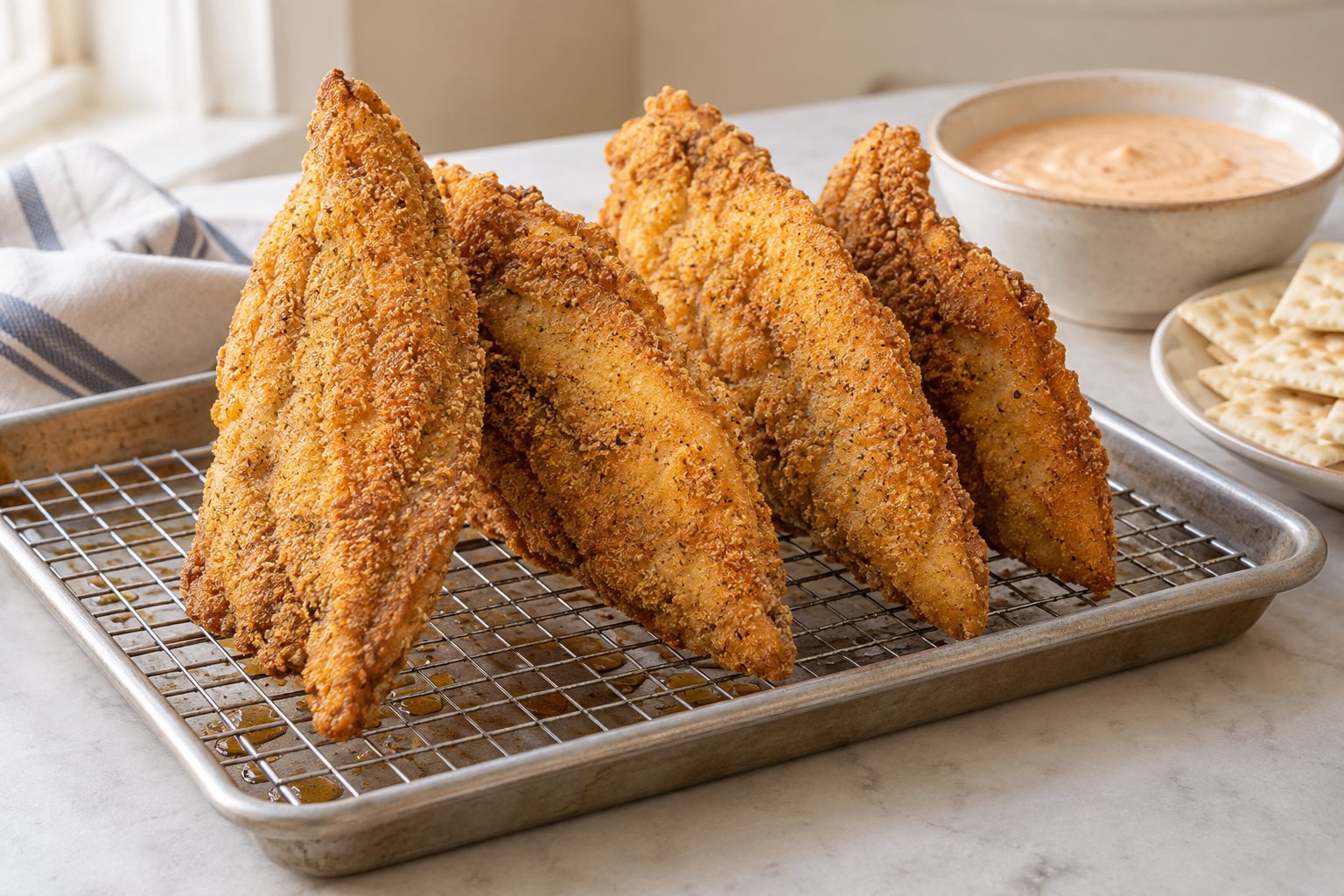
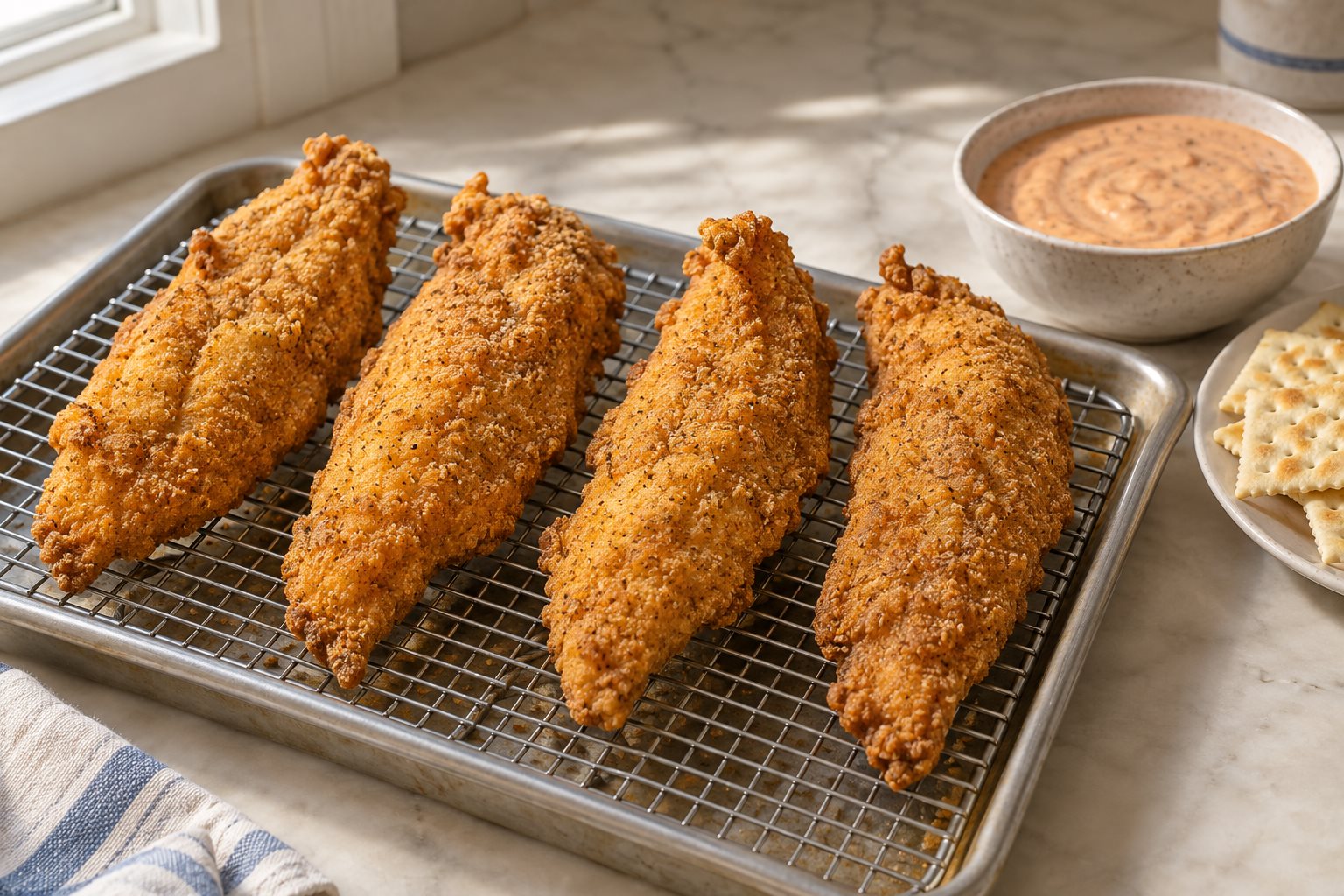
Cornmeal alone, no batter. A wet batter puffs, traps steam against the fish and slumps within a minute of leaving the oil. Dry fine cornmeal held on by buttermilk fries into a thin sandy shell that stays crisp long enough to get to the table, which is the only test that matters when you are cooking four fillets in two batches.
The oil at 350°F, and back to 350°F. Fillets an inch thick at the shoulder need six or seven minutes, and at 350°F the crust colors at about the rate the center cooks. Four fillets dropped at once will take the fat down to 300°F and hold it there, and cornmeal that sits in cool oil drinks it. Fry two at a time and let the pot recover between batches.
The sauce is made first and left alone. Grated raw garlic and grated onion are harsh for the first hour in mayonnaise and round out by the next day. An overnight rest is the difference between a sharp orange mayonnaise and the thing people eat off crackers while they wait for the salad.
Buttermilk with hot sauce, twenty minutes. Long enough to leave the surface tacky so the meal grips, short enough that the acid does not start firming the flesh. Catfish is mild and slightly sweet, and the vinegar in the hot sauce gives the crust something to answer to.