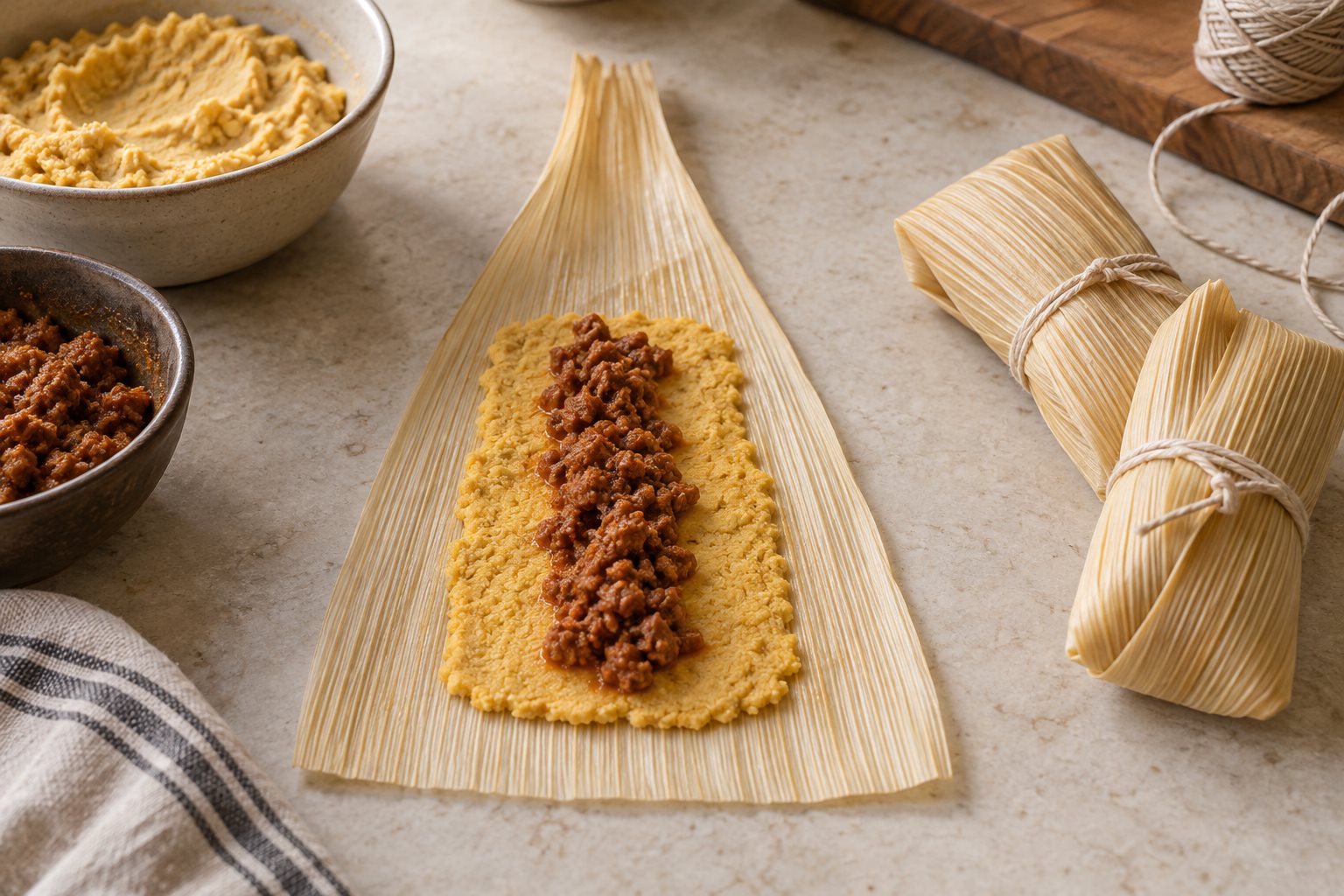
The regional table / Mississippi
Delta Hot Tamales
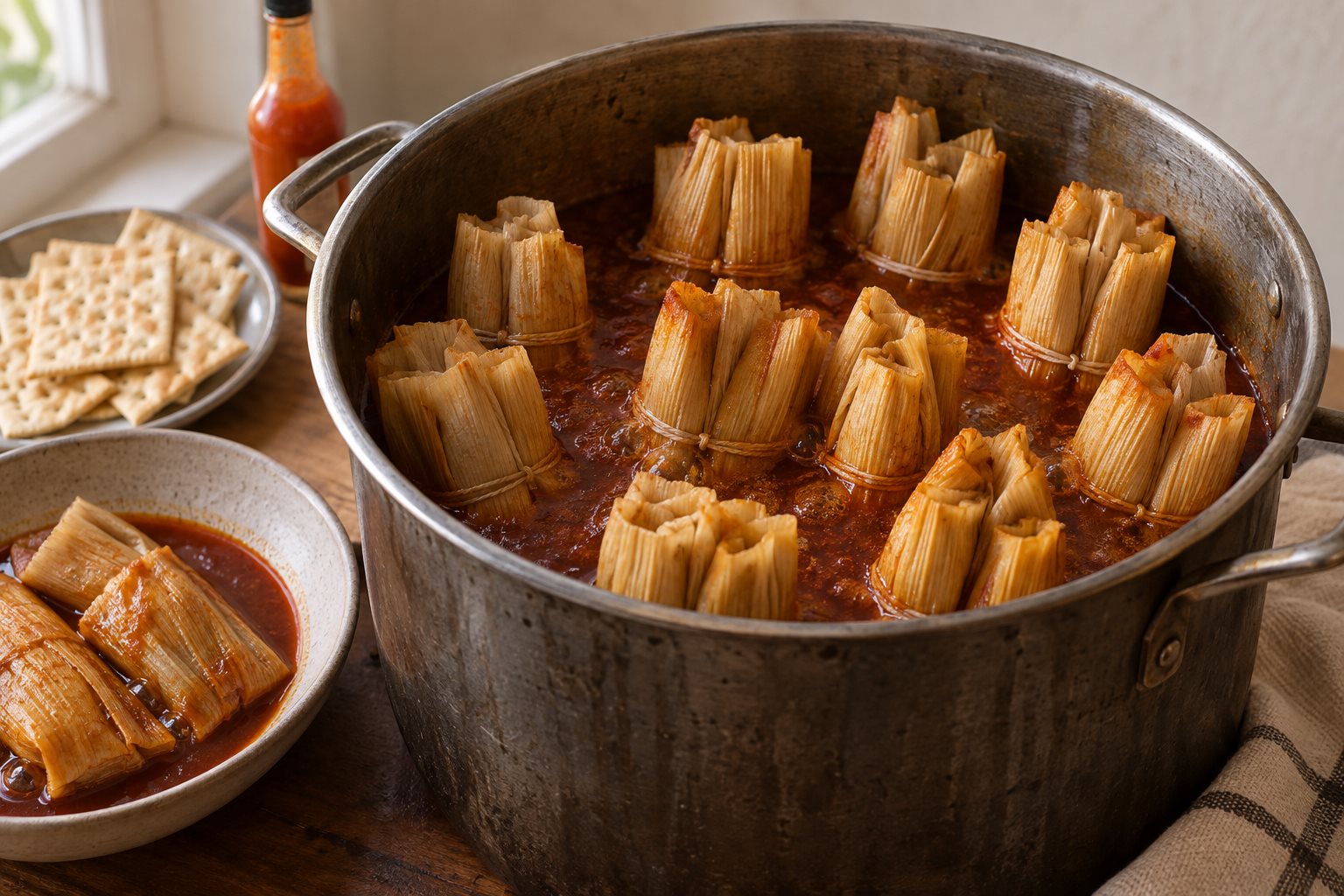
Three things make a Delta tamale a Delta tamale: plain cornmeal instead of masa, a simmer instead of a steamer, and the juice it simmered in, poured over the top.
The hot tamale belongs to the Delta's labor history, and the labor history has two peoples in it. Julie M. Weise, writing the Mississippi Encyclopedia entry on Mexicans and Mexican Americans in the Mississippi Delta, traces the arrival: the lumber industry recruited Mexican workers as early as 1908, and after the First World War, with Black workers leaving for northern and western cities, Delta planters turned to Mexico and to Texas for cotton pickers. The migration peaked in 1925 — that autumn a Catholic priest in Clarksdale reckoned five thousand Mexican and Tejano pickers were working plantations around Clarksdale, Greenwood, Greenville, Cleveland, Tunica and Hollandale, and wrote that more were arriving daily. Cotton paid about four dollars a day in Mississippi against a dollar seventy-five in Texas. When cotton collapsed from 16.78 cents a pound in 1929 to 5.66 in 1931, most of those families were left to pay their own way back. What stayed was the tamale. It was taken up above all by Black Delta cooks and vendors, who had cornmeal and pork already and who, as the Southern Foodways Alliance puts it, had a food that travelled, kept its heat in a cold field at picking time and could be sold from a cart after the harvest. African Americans have been the tradition's principal keepers ever since.
The document for this dish is not a cookbook but an oral history project. In 2005 the Southern Foodways Alliance, working with Viking Range, published the Mississippi Delta Hot Tamale Trail: interviews with tamale makers and vendors from Tunica to Vicksburg, gathered by the oral historian Amy C. Evans. Her introductory essay is honest that the origin will not resolve — migrant pickers in the early twentieth century, soldiers home from the U.S.–Mexican War, descent from the Mississippian mound cultures, or a kinship with cush, the seasoned-meal dish that the Yazoo City vendor Lumumba Ajanaku describes as cooking meal so well that it tasted as though meat were in it. What the interviews do settle is the method, and that is what I have followed. Delta tamales are smaller than Mexican ones, made with plain cornmeal rather than corn flour, spicier, simmered rather than steamed, and served with the liquid they cooked in. Seasoning goes into the meat, the meal and the water alike. The Mississippi Encyclopedia entry on tamales says steamed; the people who make them for a living say simmered, and they are the ones I would believe. No old printed recipe stands behind any of it, so the quantities below were worked out for this page against what the makers describe.
Why this version works
Lard worked into the meal. Fat is what makes the dough close around itself in the shuck instead of crumbling apart in the pot. Half a cup to three cups of meal is the working ratio: any less and the tamales fall open in the liquid, any more and they go greasy and slack.
Plain cornmeal, not masa harina. This is the single line that divides a Delta tamale from any other, and it is texture more than flavor. Cornmeal is ground coarse and has not been nixtamalized, so it stays faintly gritty and does not go pillowy the way masa does. It also drinks liquid slower, which is why the meal wants hot broth and time to sit before it will roll.
Simmered standing up, not steamed. Stood on end with the liquid halfway up them, the bottoms cook wet and the tops cook in steam, and the whole bundle takes on the seasoning of the pot. This is also how the cooking liquid becomes the sauce, which is the part visitors always miss — it is not thrown away.
The pot is seasoned as hard as the filling. Chili powder, cayenne, salt and a spoonful of lard go into the water. Tamales simmered in plain water taste of their filling and nothing else; simmered in a seasoned pot, the meal takes color and heat right through, which is why a Delta tamale is red at the edge when you unwrap it.