The regional table / Nevada
Basque Lamb Stew
The men who made this dish are on the federal statute books by name, forty-three of them in a single 1954 act of Congress.
Basque sheepherders reached the Great Basin in numbers the government never counted properly, and the government said so itself. The Immigration Commission's Dictionary of Races or Peoples, printed by Congress in 1911, gives the Basques their own entry and then admits the bookkeeping is hopeless: "Basques are counted in with Spanish or French by the Bureau of Immigration in case they speak these languages. It is known, however, that but few are coming to the States." That last clause was wrong within a generation, and the record of how wrong is in the private bills. Senate Report No. 1337 of the 80th Congress, dated 17 May 1948, carries a Department of Justice letter of 12 September 1947 laying out the facts on three men: Gaspar Ybarzabal "entered the United States in 1931 at the port of New York as a deserting seaman. The alien is a sheepherder by occupation." The same letter explains why such bills kept arriving — "The great need for competent sheepherders in the United States and the individual record of each alien have been major factors in the consideration of private bills involving alien sheepherders."
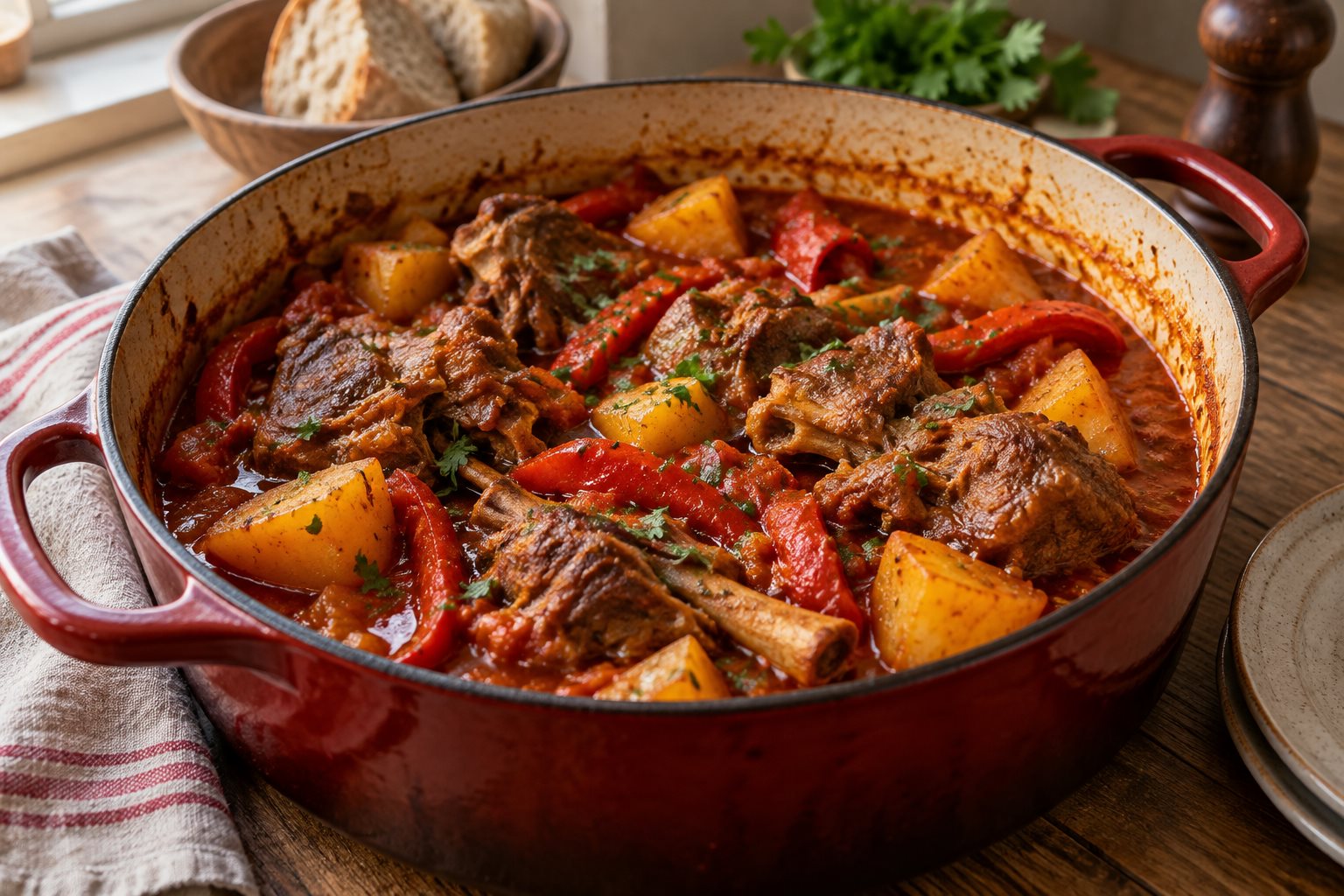
Congress eventually legislated in bulk. Public Law 587 of 30 June 1950, 64 Stat. 306, is titled "To provide relief for the sheep-raising industry by making special quota immigration visas available to certain alien sheepherders", and it caps itself at two hundred and fifty visas. Four years later came Private Law 936 of 31 August 1954, headed "For the relief of certain Basque sheepherders", which orders the Attorney General to discontinue deportation proceedings against forty-three men listed by name — Aguirre, Abaunza, Arronte, Echevarria, Goicoechea, Madariaga, Uriarte, Urruchurtu. Those are the men who ate this stew, in camps and in the Basque hotels of Elko and Winnemucca, and the isolation of the work is documented too: Dr Leslie Moren, in his University of Nevada oral history Fifty Years an Elko County Doctor, describes being sent to examine a Basque herder facing trial in Elko District Court and getting nowhere, because "he spoke no English and I spoke no Basque". The stew below is lamb, onion, sweet pepper and paprika, cooked long. The exact quantities were worked out for this page; what the documents give is the meat, the method and the men.
Why this version works
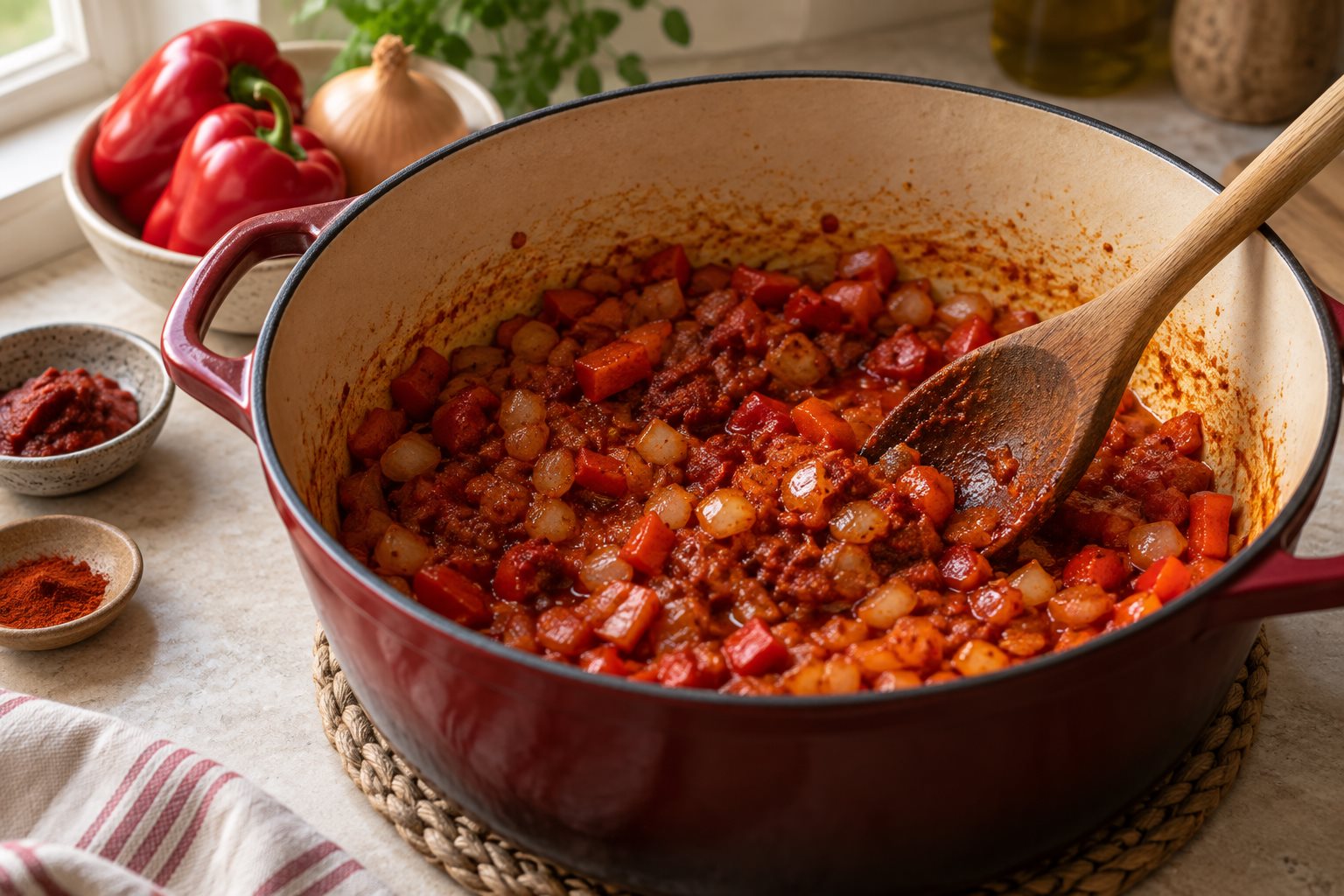
The peppers cook twice. Half the peppers go in early and dissolve into the sauce; the rest go in for the last half hour and stay in strips. That gives you a sauce that tastes of pepper and a stew that still has something to chew, which one addition alone will not do.
Paprika goes in off the heat. Sweet paprika is the colour and half the flavour, and it scorches into bitterness in seconds on a hot pan. Pull the pot off the burner, stir the paprika into the softened onions and peppers, and put it back only once the liquid is in.
Shoulder, and nothing leaner. Lamb shoulder is the cut with enough collagen to turn to gelatin over two hours and enough fat to keep the meat from seizing. Leg goes grey and tight in the same pot. If you can get neck, take it — it is the sweetest meat on the animal and the sheep camps used it, though you will not find it on any federal cut list.
Brown in batches, and brown properly. Everything this stew tastes of past the second hour comes off the bottom of the pan in the first fifteen minutes. Three batches, a real crust on two sides of each piece, and no crowding. A pale browning gives you boiled lamb with peppers in it.