The regional table / Iowa
Steak de Burgo
Every argument about this steak is about what goes in the butter, and almost none of it is written down anywhere you can check.
This is a restaurant dish from Des Moines and it is younger than any public-domain cookbook, so there is no old printing to hold it to. What there is, is a paper trail in the Iowa community newspaper archives, and it starts in the advertisements rather than in the food pages. The Ames Daily Tribune of 18 February 1978 carries a restaurant's panel on West Old Highway 30 listing that week's specials — "Veal Sweet Breads, Seafood De Jour, Steak De Burgo", for the week of 20 to 25 February. Nobody explains what it is, which means nobody in Ames needed telling. The Boone News-Republican of 18 January 1981 prints a dinner menu where Steak de Burgo heads a list running on through fresh sea scallops, walleye pike almondine and bacon-wrapped petite filet mignon at $4.95. By then the dish is simply a thing an Iowa restaurant serves.
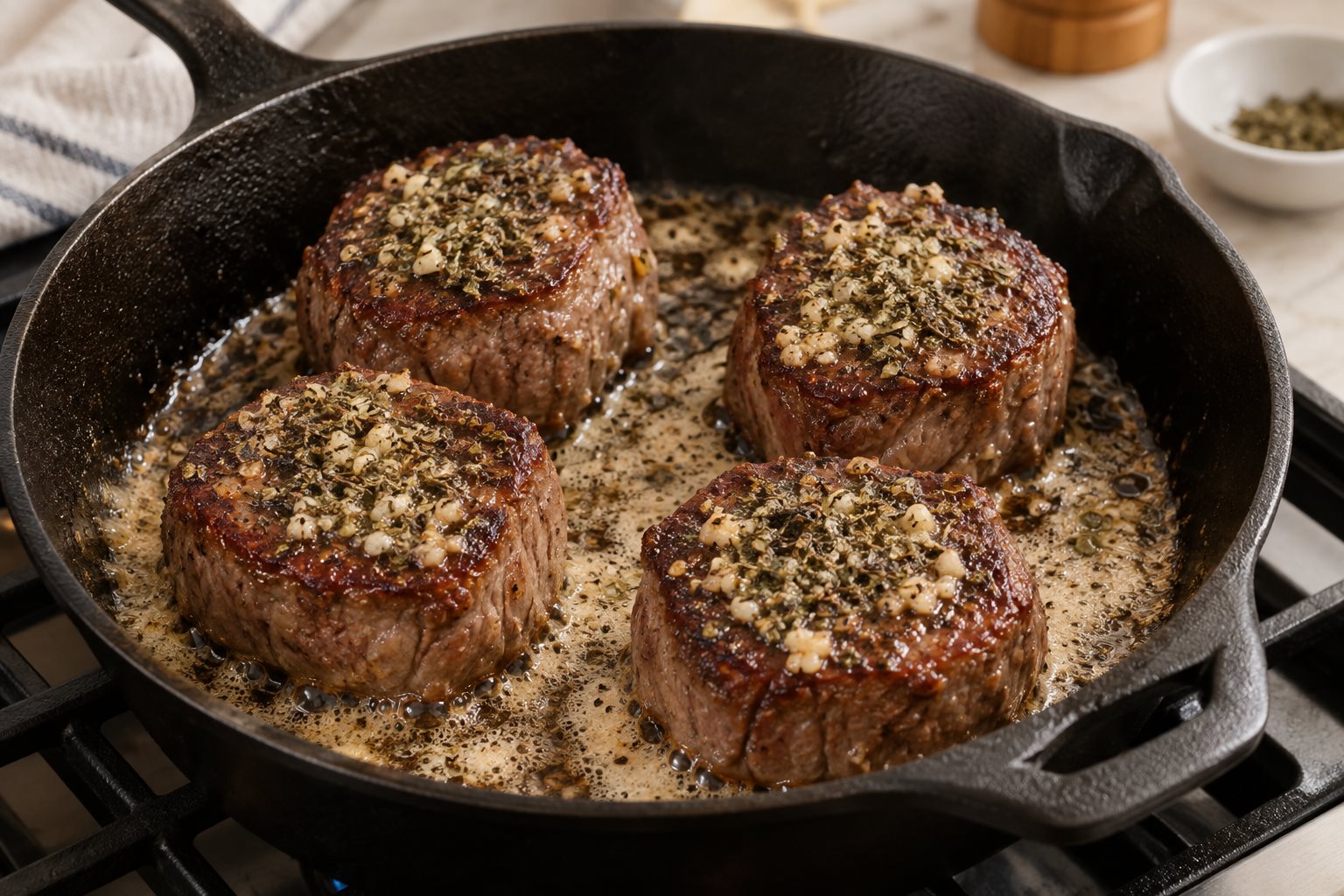
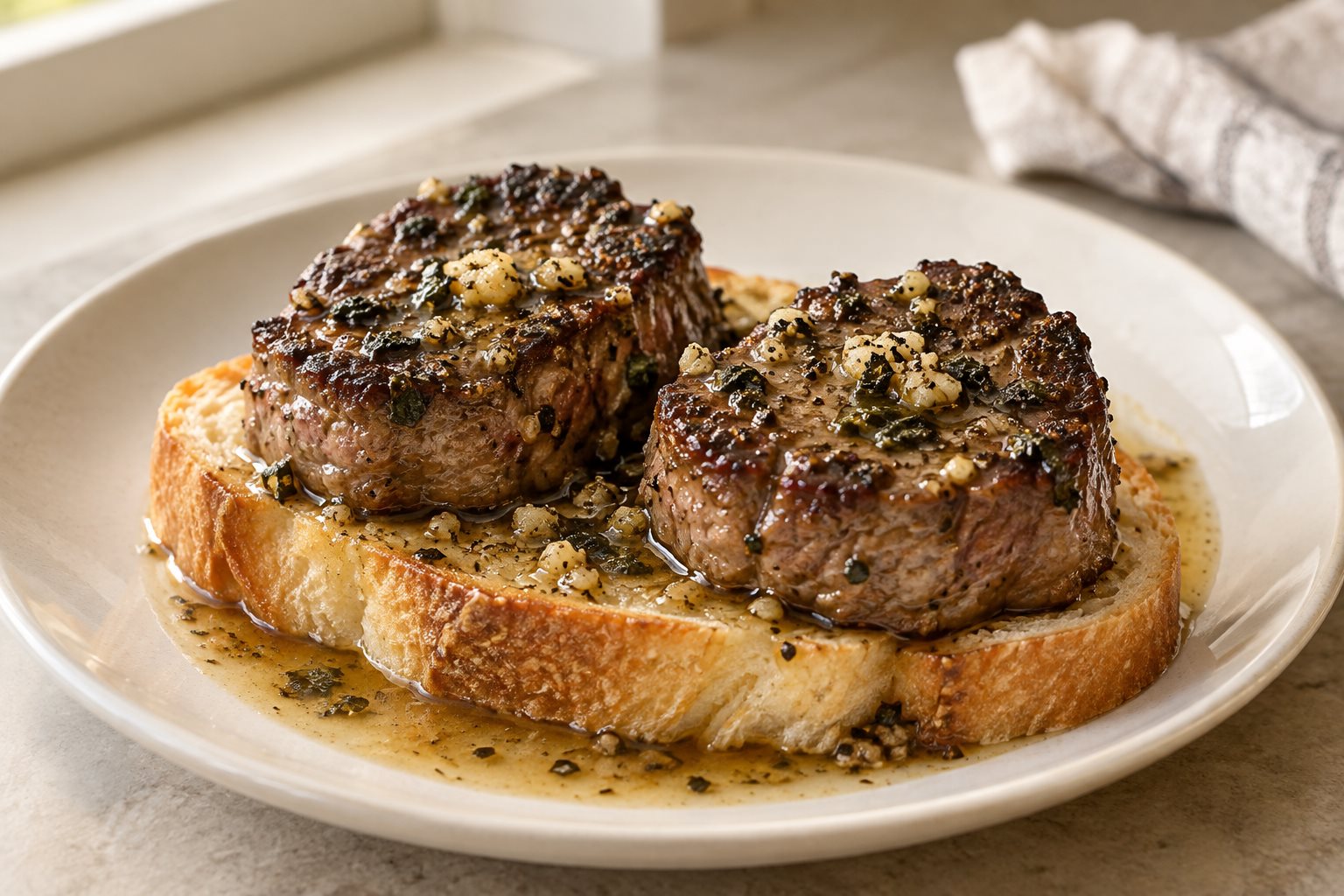
The one dated Iowa printing of the recipe itself that could be opened is in the Cedar Rapids Gazette of 16 October 1984, in a page of recipes from a working chef, John Greve, alongside his coquilles St Jacques and his halibut à la Niçoise. His Steak de Burgo is a quarter stick of butter, three cloves of garlic "minced and mashed with side of knife", a tablespoon of sweet basil, the juice of a lemon, two teaspoons of freshly cracked black peppercorns, half a cup of dry white wine and two pounds of beef tenderloin cut into four-ounce medallions. The method is fast and blunt: butter sizzling in a large pan over medium-high heat, the beef laid in with as much room between the medallions as possible, a little wine poured over each and the same with the lemon juice, the garlic smeared on, pepper and basil over the top, then turned and seasoned again — "when done, flip them over a couple of times and set upon slices of French bread", pan juices drizzled over, served immediately. Basil, then, in the printed Iowa version; the cooks who insist on oregano may well be right about their own kitchens, but nothing reachable here dates that camp. The same goes for the origin. Two Des Moines restaurants are each given the credit in the popular telling, and the Des Moines paper is in no open archive — the city's community archive holds 1889, 1890, 1896 and then nothing until 2002, and the phrase returns not one hit in it. So no house is crowned on this page, and the quantities below were worked out for this page against the 1984 printing.
Why this version works
Butter first, oil alongside. Butter is the flavour and it is also what scorches. A spoonful of neutral oil with it raises the smoke point enough to get a real crust, and the milk solids brown rather than blacken.
The garlic goes on the meat, not into the fat. Smeared onto the surface of a medallion already in the pan, garlic toasts against the beef and stays sweet. Dropped into hot butter on its own it burns in under a minute and turns the whole pan acrid — which is the single most common way this dish is ruined.
Tenderloin cut into medallions, not left whole. Four-ounce pieces an inch and a half thick give you eight seared faces instead of two and cook through in the time the butter takes to brown. A whole roast tenderloin is a different dish and the pan sauce never gets concentrated enough.
Wine and lemon in the pan, not in a sauce made later. Both go in while the meat is cooking, so they lift the fond and reduce into the butter on the spot. There is no separate sauce in this dish and no cream — what reaches the plate is what was in the pan when the steaks came out.