The regional table / Nebraska
Reuben Sandwich
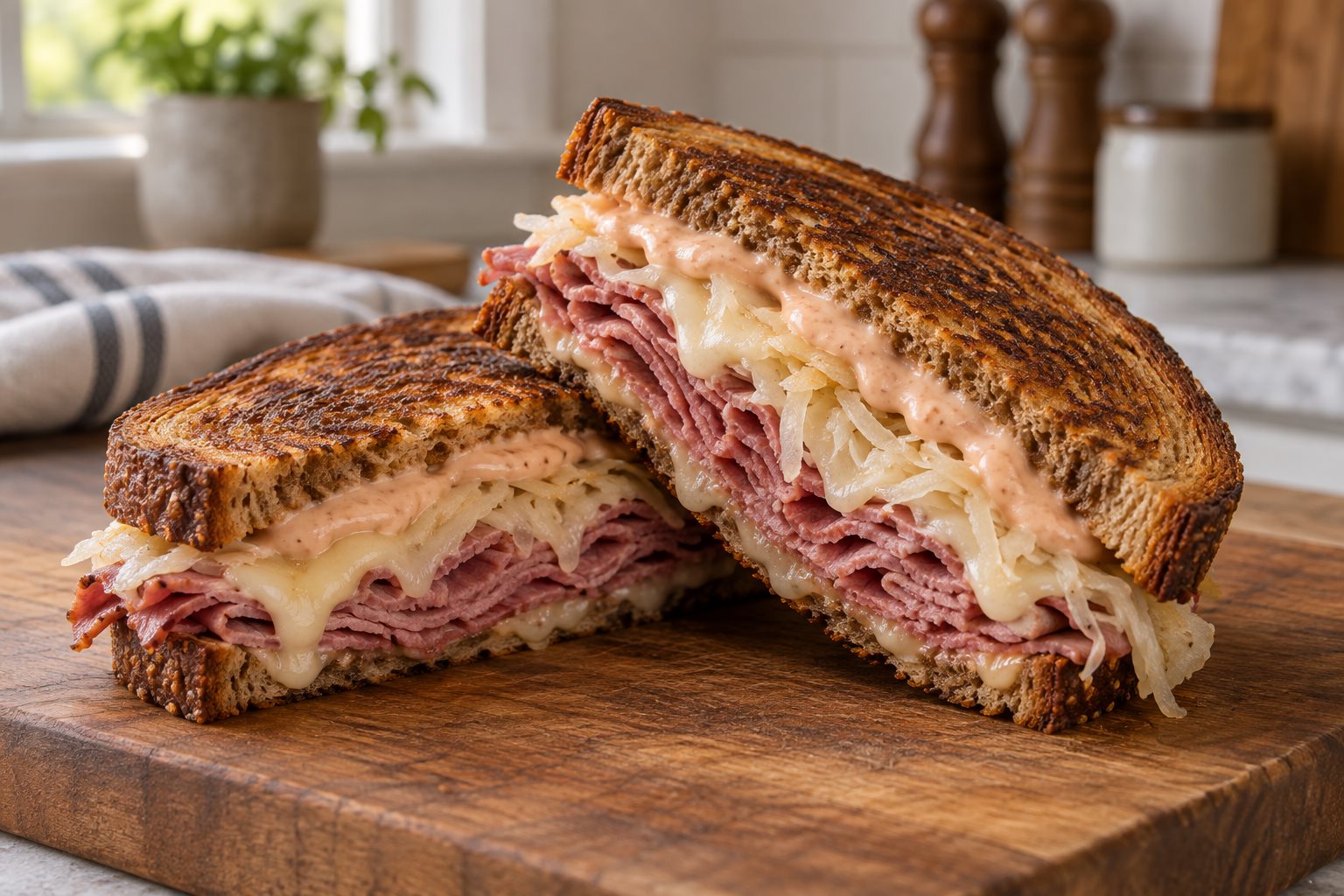
The sandwich is four ingredients and one problem, which is that sauerkraut is wet and bread is not.
Two cities claim this sandwich and this page crowns neither, because neither claim rests on a document. The Omaha story puts it at the Blackstone Hotel in the 1920s, made for a weekly poker game, and names a wholesale grocer called Reuben Kulakofsky as the man it was built for. The New York story names Arnold Reuben of Reuben's Restaurant and puts it a decade earlier. Both are told as recollections, and the papers in which they were first printed — the Omaha World-Herald above all — are not in any archive that answers a script: Nebraska's open newspaper instance at nebnewspapers.unl.edu does not carry the World-Herald, the Library of Congress now refuses automated requests to Chronicling America outright, and the California collection returns a flat 403. So the honest position is that the origin is contested and undocumented. One thread of the Omaha side can be pinned down, and only one: the surname is genuinely an Omaha surname of long standing. The Omaha Daily Bee of 23 October 1896, printing the election judges precinct by precinct, lists "I. Kulakofsky (rep.), 1902 South Tenth street". That places the family in south Omaha thirty years before the card game, which is all it places.
What a document can settle is when the combination was not yet a thing, and that is worth more than either claim. Eva Greene Fuller's The Up-to-Date Sandwich Book: 400 Ways to Make a Sandwich, published in Chicago in 1909 and long out of copyright, is exactly what it says: four hundred numbered sandwiches, the complete American sandwich shelf of its moment. It has a corned beef sandwich — "chop cold corn beef very fine, season with mustard and a dash of catsup", on lettuce, between lightly buttered white bread. It has three Swiss cheese sandwiches. It offers rye bread as an alternative all through. It even has a Russian sandwich, which turns out to be cream cheese and chopped olives. And in the whole book the word kraut does not appear once. Every part was on the shelf in 1909 and nobody had put them together, which brackets both origin stories rather than settling them. The earliest dated appearance the open archives will give is late and casual: The Daily Nebraskan of 19 February 1957, in a column about student eating habits, has the dieter who "shuns about everything at regular meal times and fills up on pizza and reuben sandwiches after dark" — no explanation, no capital letter, so it was already ordinary in Lincoln by then. Georgia's archive, which indexes reprints from all over the country, offers nothing before December 1968. No document prints quantities, so the ones below were worked out for this page.
Why this version works
Warm the beef first. Cold corned beef straight from the fridge is a heat sink in the middle of the stack. Thirty seconds in the dry pan before it goes into the sandwich means the cheese above it melts and the bread below it is not scorched waiting.
Medium-low heat and a lid. A Reuben is thick and the cheese sits at the top. High heat browns the bread long before the middle is warm. Medium-low with the pan covered for the first few minutes turns the sandwich into a small oven, and the cheese runs while the crust is still going gold.
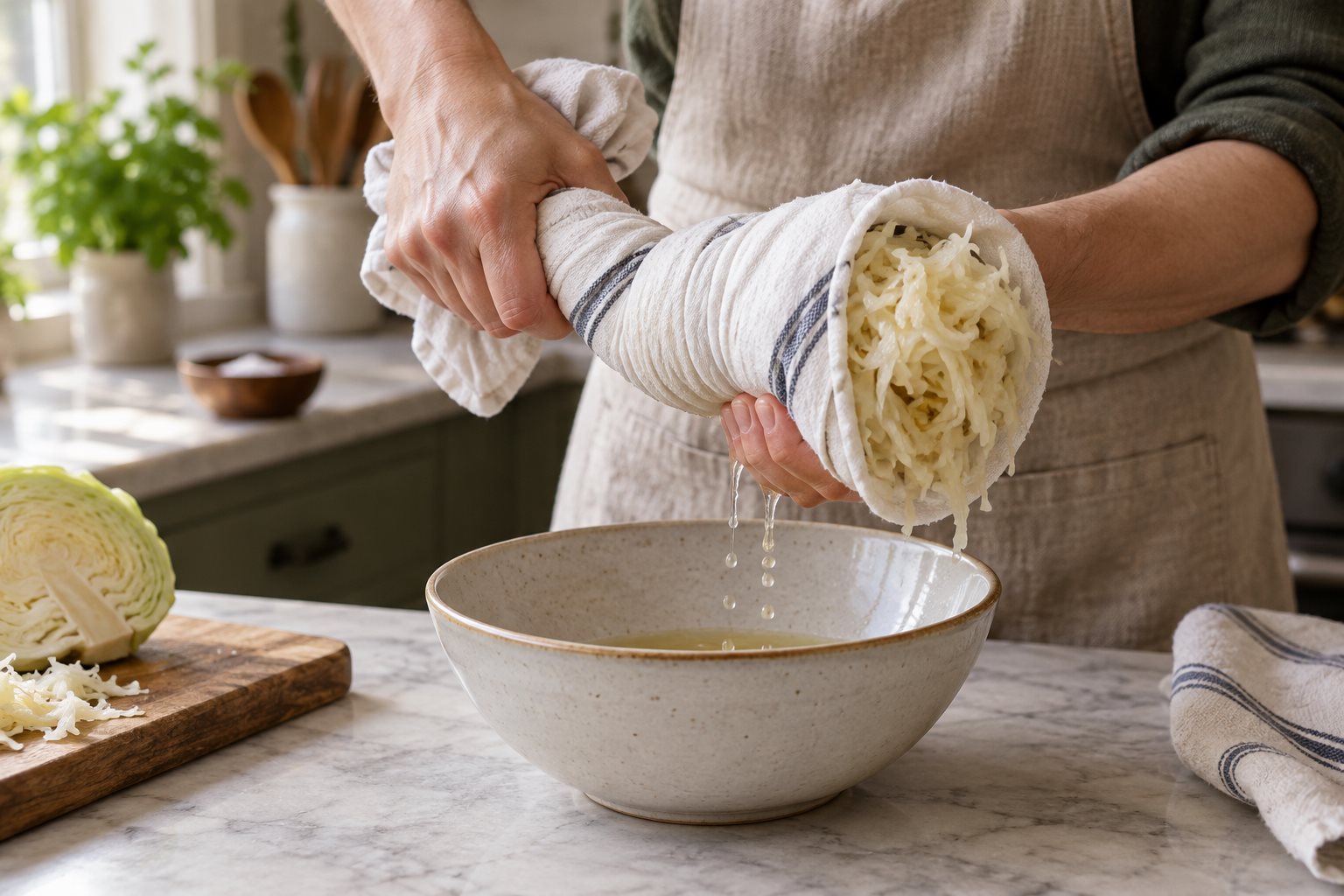
The kraut is squeezed dry. Sauerkraut carries more brine than cabbage. Drained in a sieve and then wrung out in a towel, it seasons the sandwich; poured in wet, it steams the bread from the inside and leaves you holding a grey flannel. Squeeze until no more drops come, then squeeze again.
Butter on the outside, dressing on the inside. Butter on the bread face gives you an even gold crust at a temperature low enough for the cheese to melt. Dressing spread inside the bread also does a job: it is a fat barrier between the crumb and the kraut, which buys the sandwich four or five minutes of structural life.