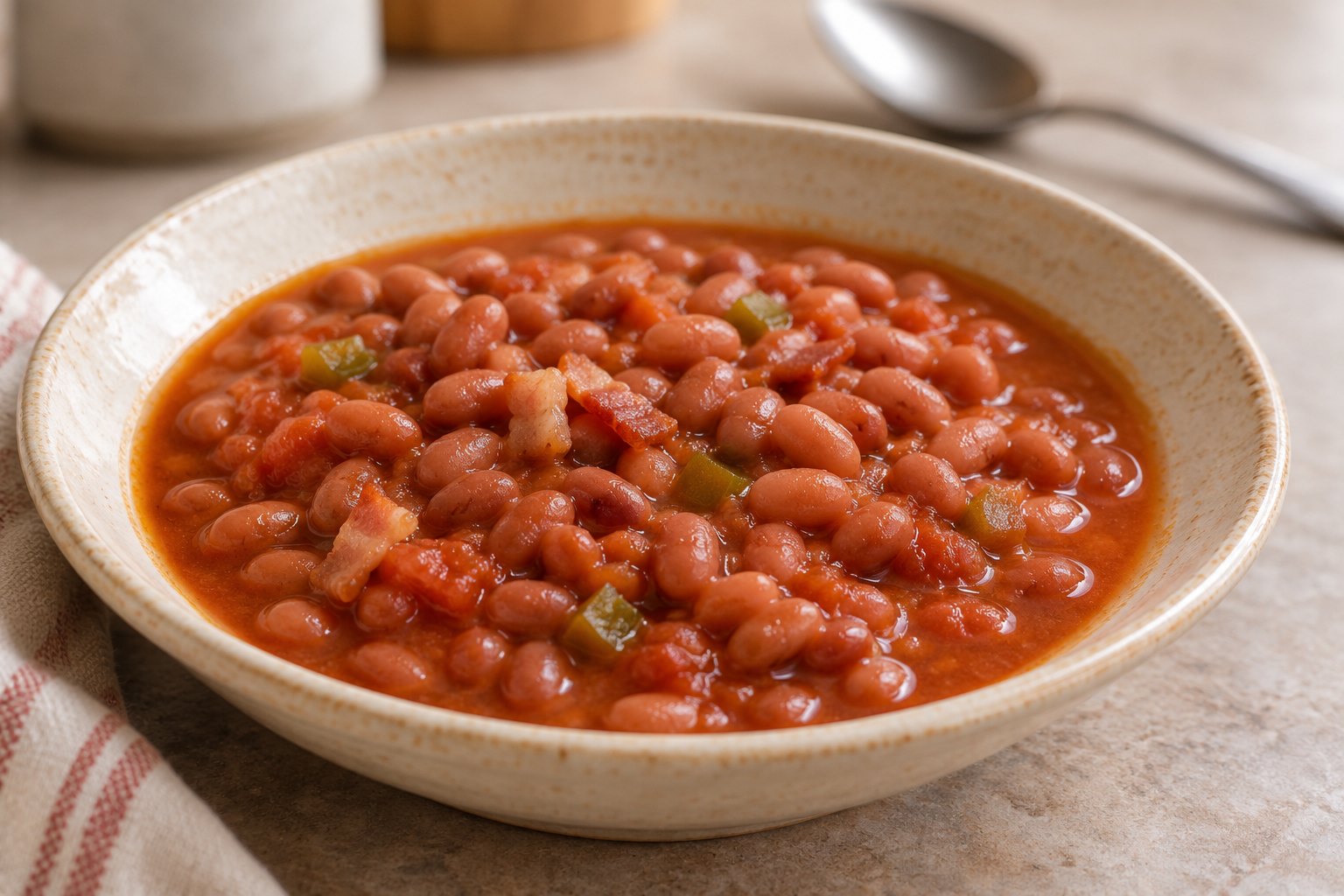
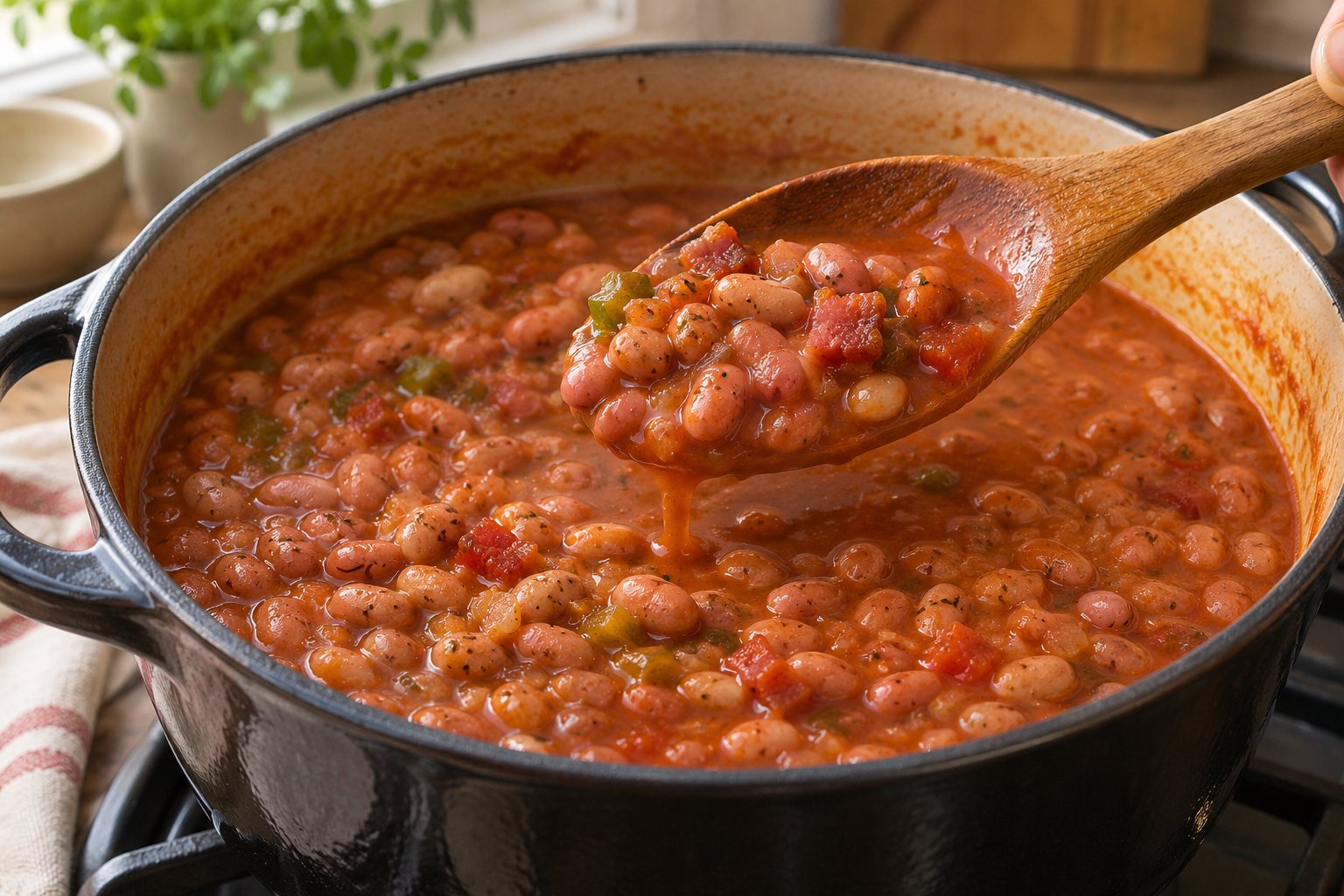
The trick to Santa Maria pinquito beans is to cook the tiny pink beans until they are creamy before they meet the tomato. Simmer the tender beans with bacon, mild chile and a spoonful of their own broth until the sauce clings to the skins.
Santa Maria Valley’s visitor bureau puts pinquito beans next to tri-tip on the Central Coast barbecue table. In its interview with third-generation grower John Porter, the beans are described as a small pink crop associated with the valley and surrounding Central Coast. Their precise origin is less certain than their place on the plate.
The Santa Maria Valley Chamber’s recipe cooks the dried beans and tomato seasoning separately. This home version keeps that order and uses just enough bean liquor to bind the sauce. Quantities and timing are estimates for this adaptation, not the results of a kitchen test.
Why this version works
Finish slowly A quiet simmer concentrates the sauce without breaking all the small skins.
Start with bacon A little rendered bacon fat carries the flavor of the onion and chile without making the sauce greasy.
Cook the beans first Acidic tomatoes can delay softening. Take the beans all the way to a creamy center in plain water before combining.
Keep the cooking broth Starch from the beans gives body to the tomato without flour or a long reduction.
Ingredient notes
Salt Bacon and any canned chiles bring salt. Start with less and taste after the sauce reduces.
Chile Mild Anaheim-style chile brings a green pepper note rather than fierce heat.
Tomato Use unsalted plain tomato purée, not tomato paste or sweet pasta sauce.
Pinquitos Look for dried beans labeled pinquito. Small pink beans or small pintos work in a pinch, but they are not the same valley crop and may cook at a different rate.
Step by step
Soak the pinquitos Sort and rinse the beans. Cover with at least 3 inches (8 cm) of water and refrigerate overnight, about 8 hours. Drain and rinse again.
Cook until the centers are creamy Cover with 2 inches (5 cm) of fresh water in a large pot. Bring it to a full boil, then lower to a gentle but steady simmer. Start checking at 75 minutes; some batches take close to 2 hours. Top up with hot water if needed. A bean should crush smoothly, with no pale, chalky center.
Render the bacon and soften the onion Cook the bacon in a skillet over medium heat until it has released fat and the edges start to brown. Add onion and green chile. Stir until the onion is translucent, about 5 minutes, then stir in the garlic and chili powder for 30 seconds.
Make the tomato seasoning Stir the tomato purée, salt and pepper into the skillet. Add ¼ cup (60 mL) of water if it is thick enough to catch. Simmer 12 to 15 minutes, until a spoon leaves a trail for a second.
Finish the beans in the sauce Ladle out 1 cup (240 mL) of bean broth, then drain the rest. Fold the bacon-tomato sauce and ½ cup of the broth into the beans. Simmer 15 to 25 minutes, adding more reserved broth to keep the beans saucy. Taste for salt and serve when the sauce coats the beans without pooling like soup.
Stop reducing when the sauce coats the beans and still flows between them.
If the centers are chalky, keep simmering in plain water; do not compensate by adding tomato or salt pork early. If the finished sauce is too thick, loosen it with hot bean broth a spoonful at a time.
Storage and make-ahead
Refrigerate within 2 hours in a shallow covered container for up to 3 days. Reheat gently with a splash of water, stirring until hot throughout.
What to serve with it
Spoon alongside grilled tri-tip and garlic bread, or serve as a bowl with a crisp salad.
From the recipe box / California
Santa Maria Pinquito Beans
Small California pink beans with bacon and mild green chile in a concentrated tomato broth.
Prep
PT20M
Cook
PT150M
Total
PT650M
Serves
8
Calories
220 per serving
Ingredients
Scale
Instructions
Sort and rinse the beans. Cover with at least 3 inches (8 cm) of water and refrigerate overnight, about 8 hours. Drain and rinse again.
Cover with 2 inches (5 cm) of fresh water in a large pot. Bring it to a full boil, then lower to a gentle but steady simmer. Start checking at 75 minutes; some batches take close to 2 hours. Top up with hot water if needed. A bean should crush smoothly, with no pale, chalky center.
Cook the bacon in a skillet over medium heat until it has released fat and the edges start to brown. Add onion and green chile. Stir until the onion is translucent, about 5 minutes, then stir in the garlic and chili powder for 30 seconds.
Stir the tomato purée, salt and pepper into the skillet. Add ¼ cup (60 mL) of water if it is thick enough to catch. Simmer 12 to 15 minutes, until a spoon leaves a trail for a second.
Ladle out 1 cup (240 mL) of bean broth, then drain the rest. Fold the bacon-tomato sauce and ½ cup of the broth into the beans. Simmer 15 to 25 minutes, adding more reserved broth to keep the beans saucy. Taste for salt and serve when the sauce coats the beans without pooling like soup.
Nutrition
Fat
4 g
Sodium
305 mg
Protein
13 g
Serving
1 portion, estimated
Calories
220 kcal
Carbohydrates
36 g
Nutrition is an estimate calculated from the listed ingredients and is provided as
a courtesy, not as dietary advice.
Questions readers ask
Can I use pintos?
Yes, preferably small pintos. The result is a useful substitute, with a softer and larger bean.
Can I make them without bacon?
For a meatless variation, soften the vegetables in a tablespoon of oil and adjust salt to taste.
Does the broth have to be thick?
It should coat the beans, not turn pasty. Leave it looser if the pot will sit before serving.
Do I cook the beans in the tomato?
Not at first. Cook them until tender in water, then finish them in the seasoning.
A grilled frankfurter in a toasted bun spread with cream cheese and buried in griddled onions, built the way the street carts build it, in half an hour on a home griddle.
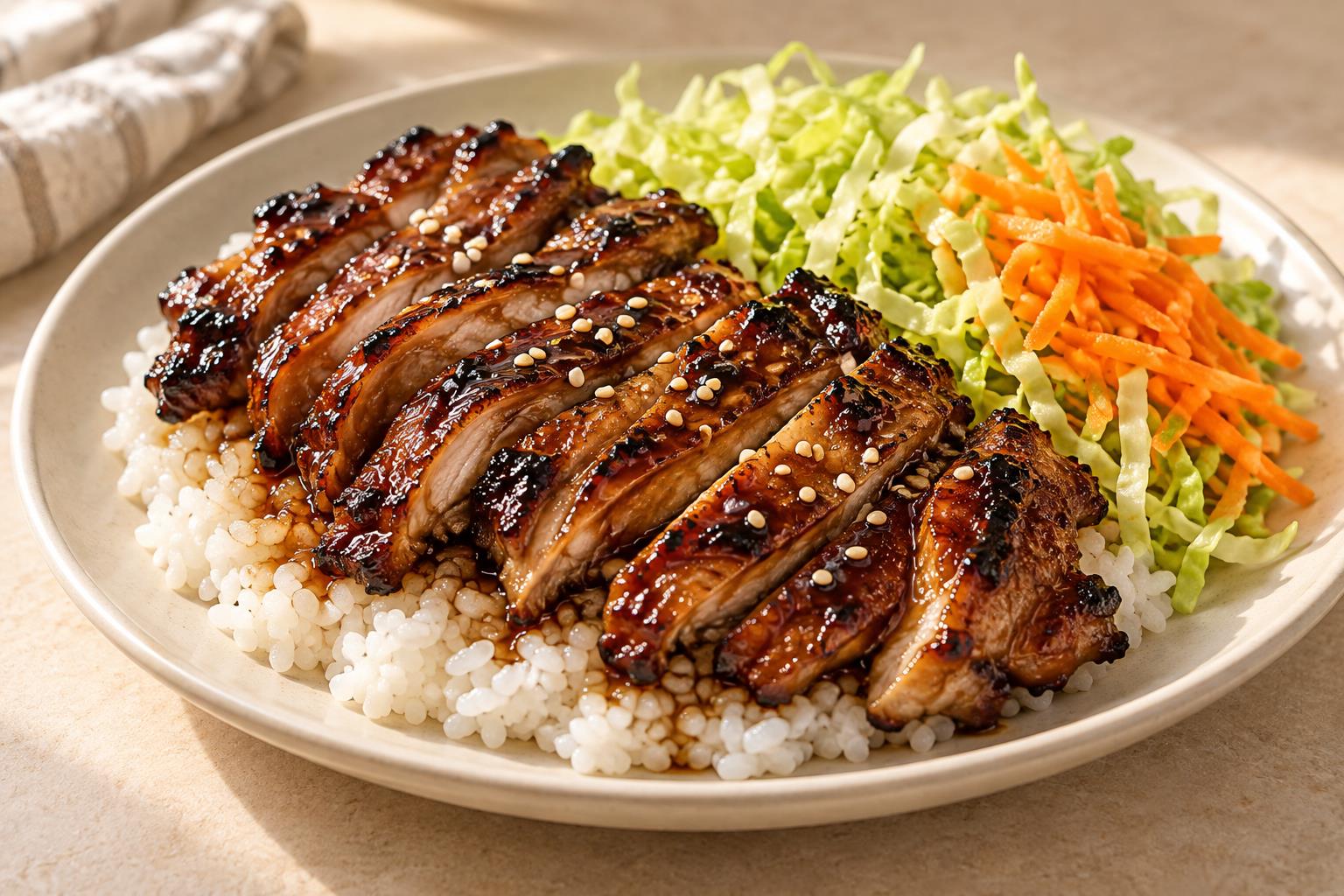
Boneless thighs soaked in soy, mirin and brown sugar, grilled until the sugar blackens at the edges, then sliced across and laid over short-grain rice with a heap of vinegared cabbage.
A starter let down with flour and milk overnight, then slackened with egg and butter and lifted at the last moment with baking soda — the hotcake Alaska built on the one pot a prospector could not afford to let freeze, and the reason the old hands were called sourdoughs.
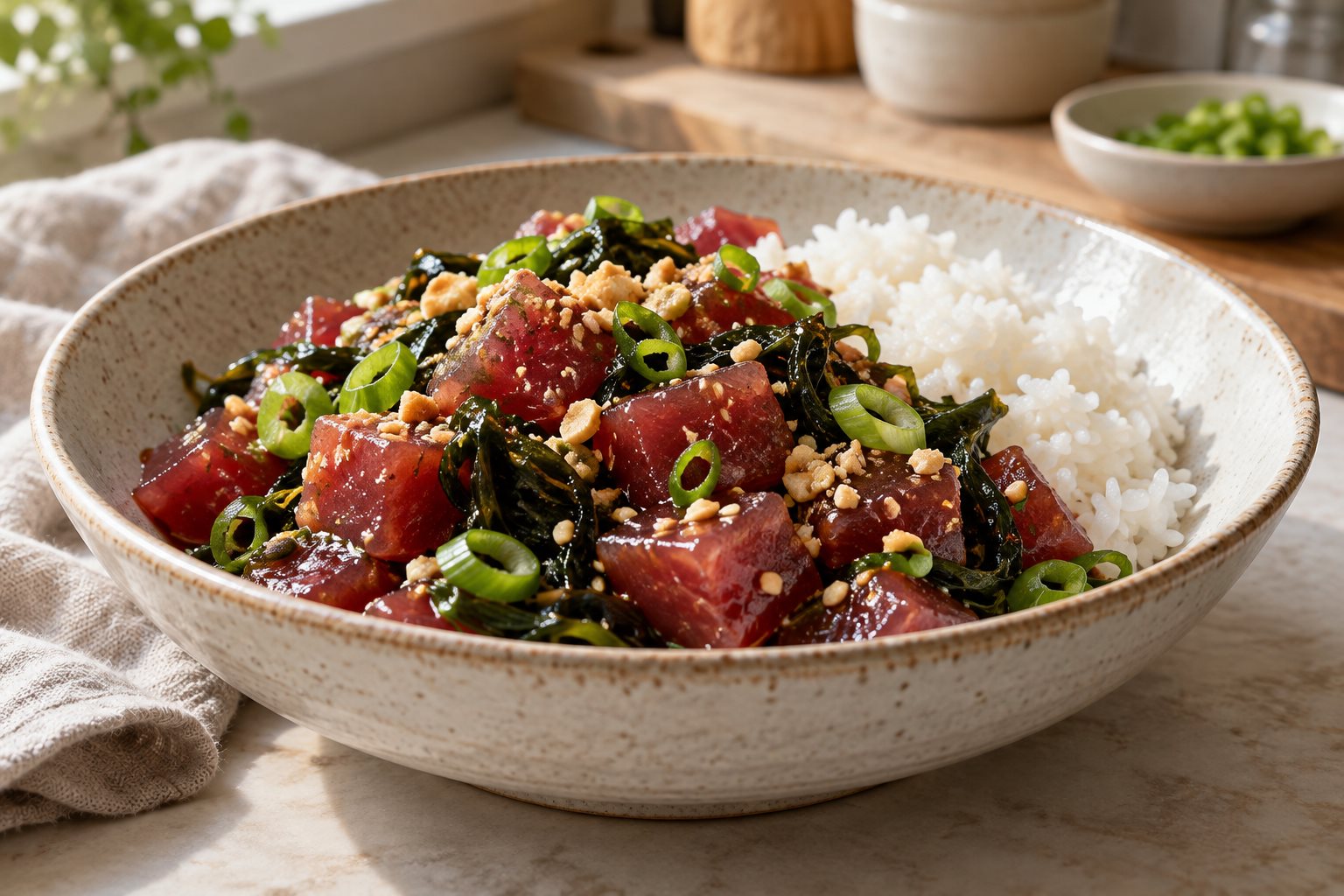
Raw yellowfin cut into cubes and dressed with coarse Hawaiian salt, limu and roasted kukui nut — a Native Hawaiian dish whose name is simply the Hawaiian word for a piece, with the soy and sesame version most people now order given as the later addition it is.