Skillet & Sage

The regional table / Maryland

Maryland Beaten Biscuits
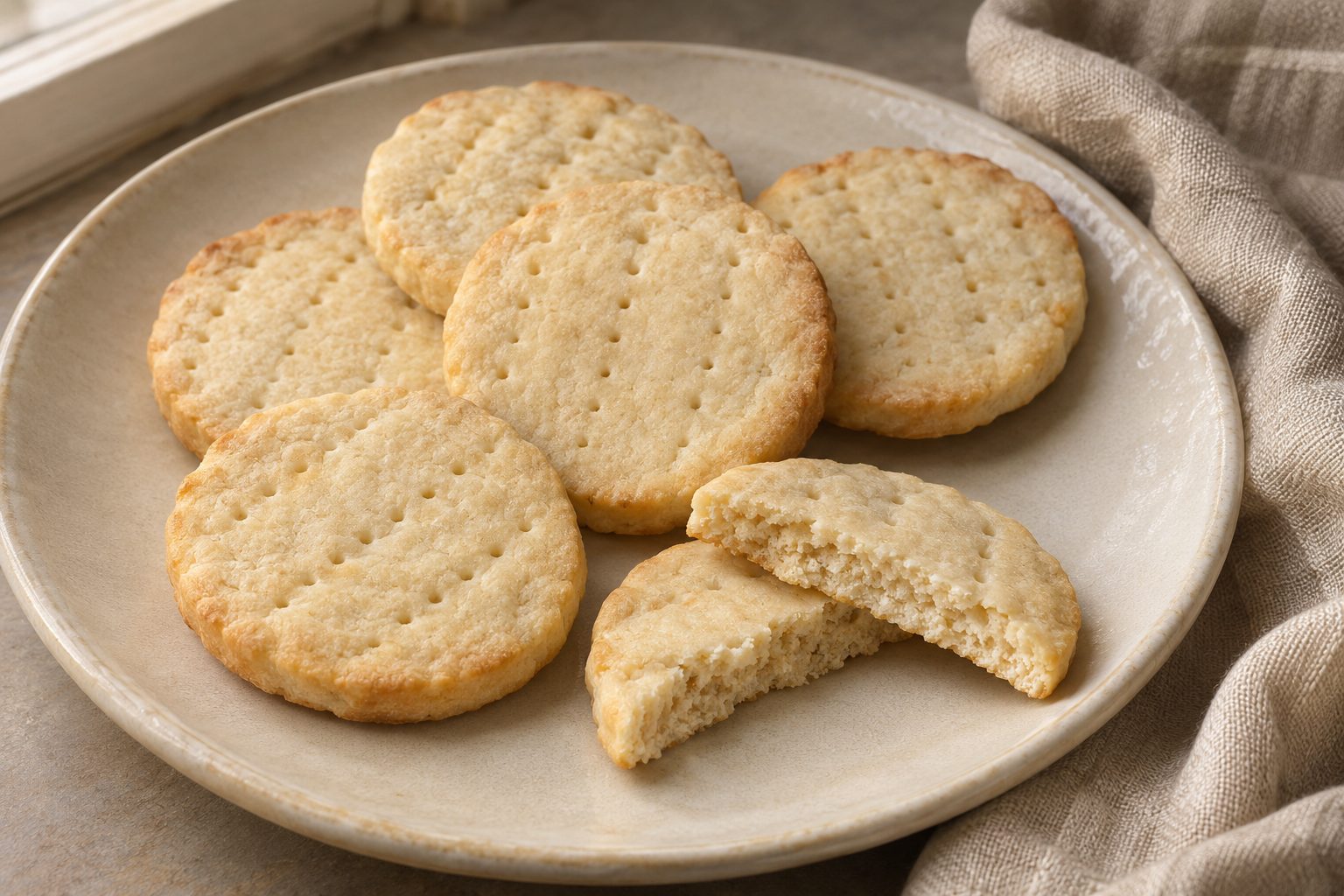
Thin, fork-pricked biscuits on an ivory plate, one broken to show the close crumb.
Thin rounds take on just a little color at the edges.

These small Maryland biscuits bake pale gold, with crisp edges and a close, tender crumb. The trick is in the dough: tap and fold it until smooth, roll it thin, then prick each round with a fork.

Abby Fisher opens her 1881 cookbook, What Mrs. Fisher Knows About Old Southern Cooking, with Maryland Beat Biscuit. Her dough starts with flour, salt, lard, a little butter and water. She beats it on a board, rolls it to a third of an inch and bakes it quickly in a hot stove. The dough has no yeast or baking powder.

On Maryland’s Eastern Shore, Ruth and Herman Orrell kept making beaten biscuits in a small home bakery in Wye Mills. Senator Charles Mathias described their bakery in the Congressional Record in April 1978. The article printed alongside his remarks gives a later version: beat the stiff dough with a wooden mallet and prick the rounds with a fork before baking.

Why this version works

A little fat A little fat rubbed fine coats some of the flour without turning the dough into a flaky biscuit. The close crumb is the point.

Tap and fold Repeated tapping and folding work the rough dough into an even sheet; small surface blisters are a cue, not a required count.

Thin and pricked An even thickness and fork holes let the rounds bake to a restrained color without a big central pillow.

Water by degrees Water goes in by degrees. A dough firm enough to lift from the board can be folded and tapped without smearing.
Ingredient notes

Fats Plain lard is the main fat. Unsalted butter is the smaller addition Fisher names; her printed ratio is leaner than this adaptation.

Flour All-purpose flour makes a sturdy dough. Weigh 300 grams if possible; scoop-and-pack cups can make it hard to control the water.

Water Use cool water, starting with the lower amount. Dry flour and humid flour do not take up the same amount.

Salt and recipe note Fine sea salt dissolves evenly in the dough. Do not substitute self-rising flour: the lift and crumb would be different. This adaptation keeps Fisher’s water dough and thin roll and borrows the fork-pricking from the 1978 account. The weights, oven time and yield are estimates for a modern kitchen; the recipe has not been kitchen-tested.

Step by step

  1. Rub in the fats Heat the oven to 425°F (220°C). Line a baking sheet with parchment. Mix the flour and salt, then rub the lard and butter into the flour with your fingertips until the mixture looks evenly sandy, without large lumps.
  2. Mix a stiff dough Stir in ½ cup cold water. Squeeze a piece of the mixture: if it crumbles apart, add water a teaspoon at a time, up to about ⅔ cup total. Stop when it holds together but feels firm and does not stick to your fingers. Cover and rest 10 minutes.
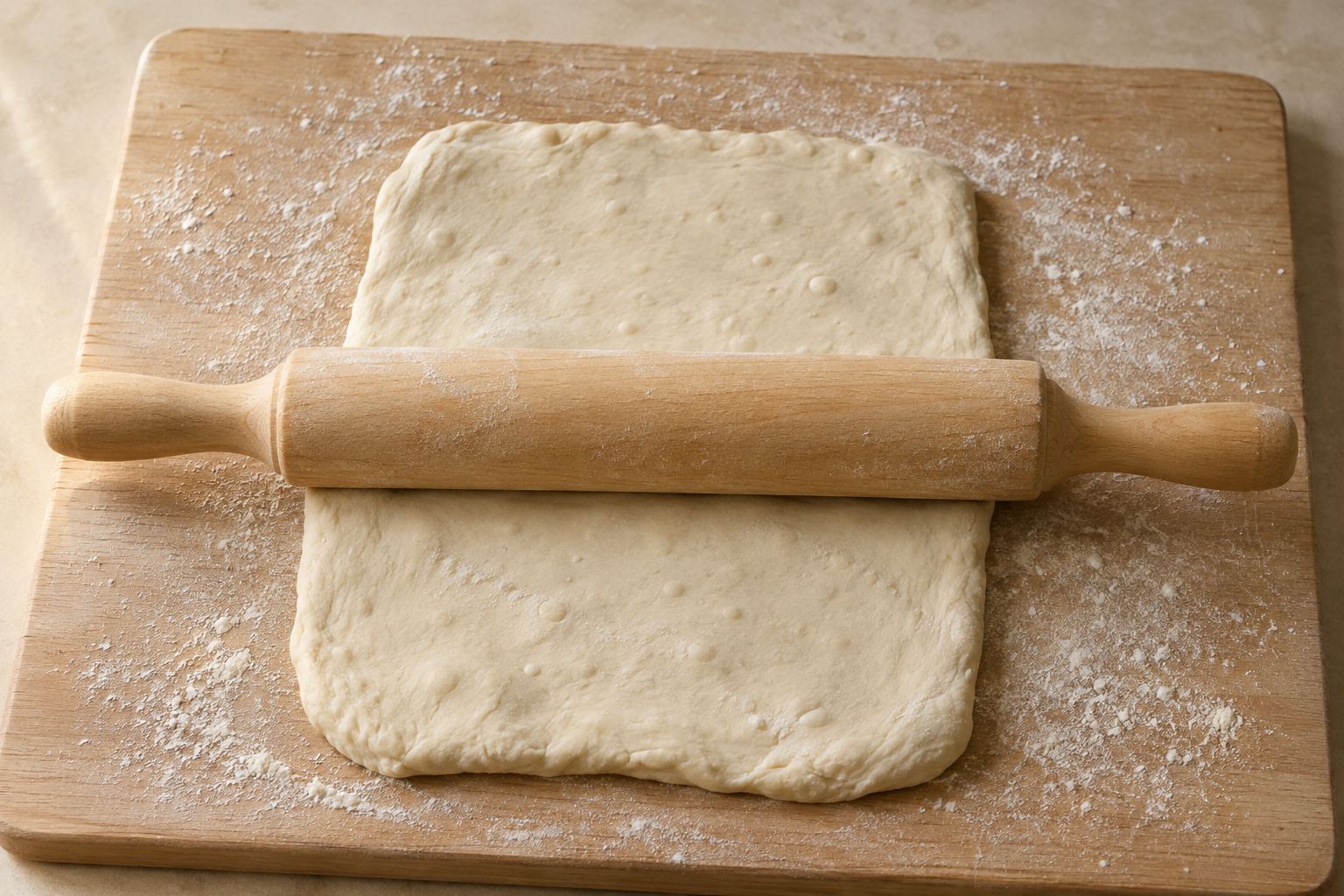
  3. Tap and fold the dough Flatten the dough into a rough rectangle on a lightly floured board. Tap evenly across it with a rolling pin, fold it in half, turn it a quarter turn and repeat. Allow about 10–15 minutes, but go by the surface: it should look smoother and fold without breaking at the edges. A few tiny blisters may appear, but they are not essential.
    A rolling pin on a pale rectangle of dough with small surface blisters.
    Look for a smoother sheet and, sometimes, tiny blisters as the stiff dough is worked.
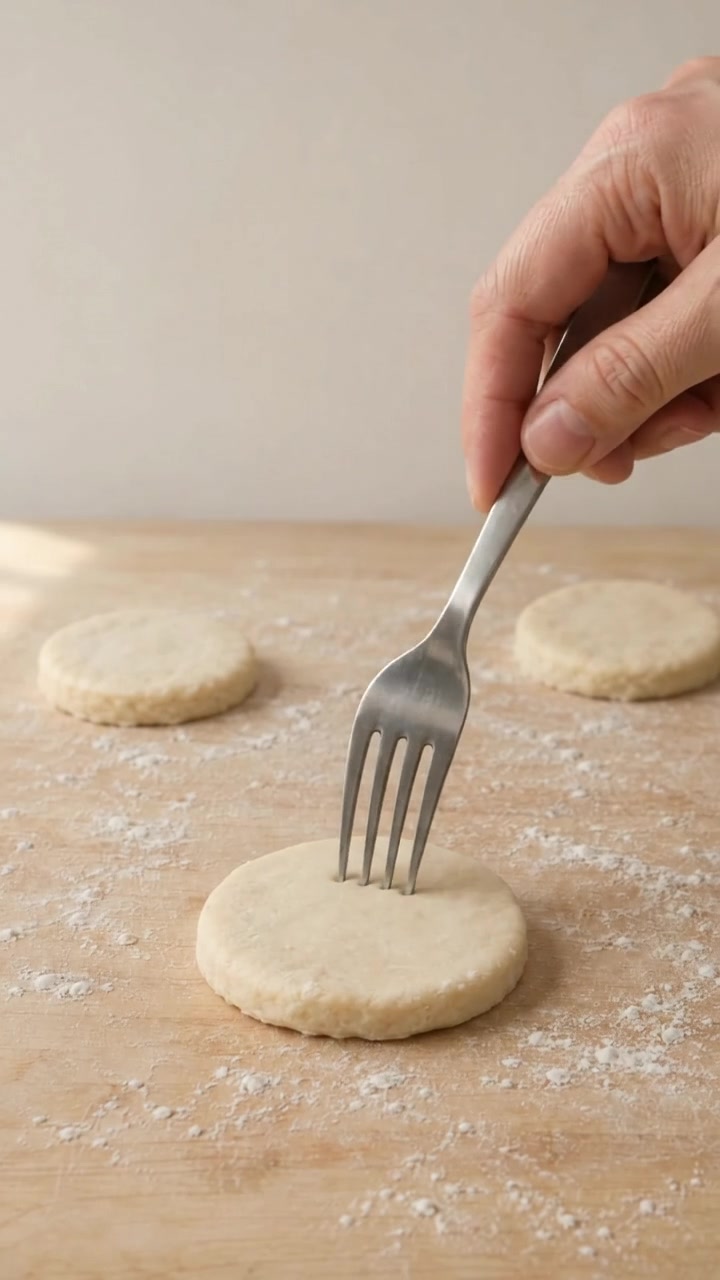
  4. Cut and prick the rounds Roll the dough to about ⅓ inch (8 mm) and cut 2-inch (5 cm) rounds. Gather and roll the scraps once. Prick each round in two or three separate places while it is on the board, lifting the fork cleanly after each press. Set the rounds about 1 inch (2.5 cm) apart on the baking sheet.
    Pricking Maryland beaten biscuits 11s
    Watch the technique Prick each round in two or three places, lifting the fork straight up between presses. Play with sound to hear the mixing.
  5. Bake until the edges color Bake for about 12–16 minutes. At 12 minutes, lift one with a spatula to check the bottom. Take them out when the tops are still pale, the rims are lightly golden and the bottoms are dry and lightly colored. Cool on a rack; the edges crisp as they cool.
If the dough cracks when folded, wet your fingertips and work in a little more water before returning it to the board. If it keeps sticking, dust the board and pin lightly rather than kneading in handfuls of flour.

Storage and make-ahead

Cool fully, then keep airtight at room temperature for up to 3 days. Refresh in a 300°F (150°C) oven for about 5 minutes if the edges soften.

What to serve with it

Serve the biscuits whole, alongside a bowl of soup or with thin slices of country ham. Butter or preserves can go on top.

Thin, fork-pricked biscuits on an ivory plate, one broken to show the close crumb.

From the recipe box / Maryland

Maryland Beaten Biscuits

Small, crisp-edged Maryland biscuits, worked with a rolling pin and pricked with a fork before baking.

Prep
35 min
Cook
16 min
Total
51 min
Serves
18
Calories
80 per serving

Ingredients

Scale

Instructions

  1. Heat the oven to 425°F (220°C). Line a baking sheet with parchment. Mix the flour and salt, then rub the lard and butter into the flour with your fingertips until the mixture looks evenly sandy, without large lumps.
  2. Stir in ½ cup cold water. Squeeze a piece of the mixture: if it crumbles apart, add water a teaspoon at a time, up to about ⅔ cup total. Stop when it holds together but feels firm and does not stick to your fingers. Cover and rest 10 minutes.
  3. Flatten the dough into a rough rectangle on a lightly floured board. Tap evenly across it with a rolling pin, fold it in half, turn it a quarter turn and repeat. Allow about 10–15 minutes, but go by the surface: it should look smoother and fold without breaking at the edges. A few tiny blisters may appear, but they are not essential.
  4. Roll the dough to about ⅓ inch (8 mm) and cut 2-inch (5 cm) rounds. Gather and roll the scraps once. Prick each round in two or three separate places while it is on the board, lifting the fork cleanly after each press. Set the rounds about 1 inch (2.5 cm) apart on the baking sheet.
  5. Bake for about 12–16 minutes. At 12 minutes, lift one with a spatula to check the bottom. Take them out when the tops are still pale, the rims are lightly golden and the bottoms are dry and lightly colored. Cool on a rack; the edges crisp as they cool.

Nutrition

Fat2 g
Sodium100 mg
Protein2 g
Serving1 biscuit, estimated
Calories80
Carbohydrates13 g

Nutrition is an estimate calculated from the listed ingredients and is provided as a courtesy, not as dietary advice.

Questions readers ask

Why prick the rounds?

The holes help keep the rounds flat. Lift the fork vertically so you do not pull or tear the dough.

Why is the dough beaten?

The repeated passes and folds work a stiff dough more evenly than a single roll. Stop by the feel and appearance, not a fixed number of blows.

Do beaten biscuits need baking powder?

Not this version. Fisher’s ingredient list omits leavener, and the biscuits should finish thin and close-grained.

Can I make them with butter instead of lard?

You can try plain unsalted butter as a practical substitution, but it adds water and gives a different flavor and texture. It is not the historical formula described here.