The regional table / Maine
Maine Wild Blueberry Pie
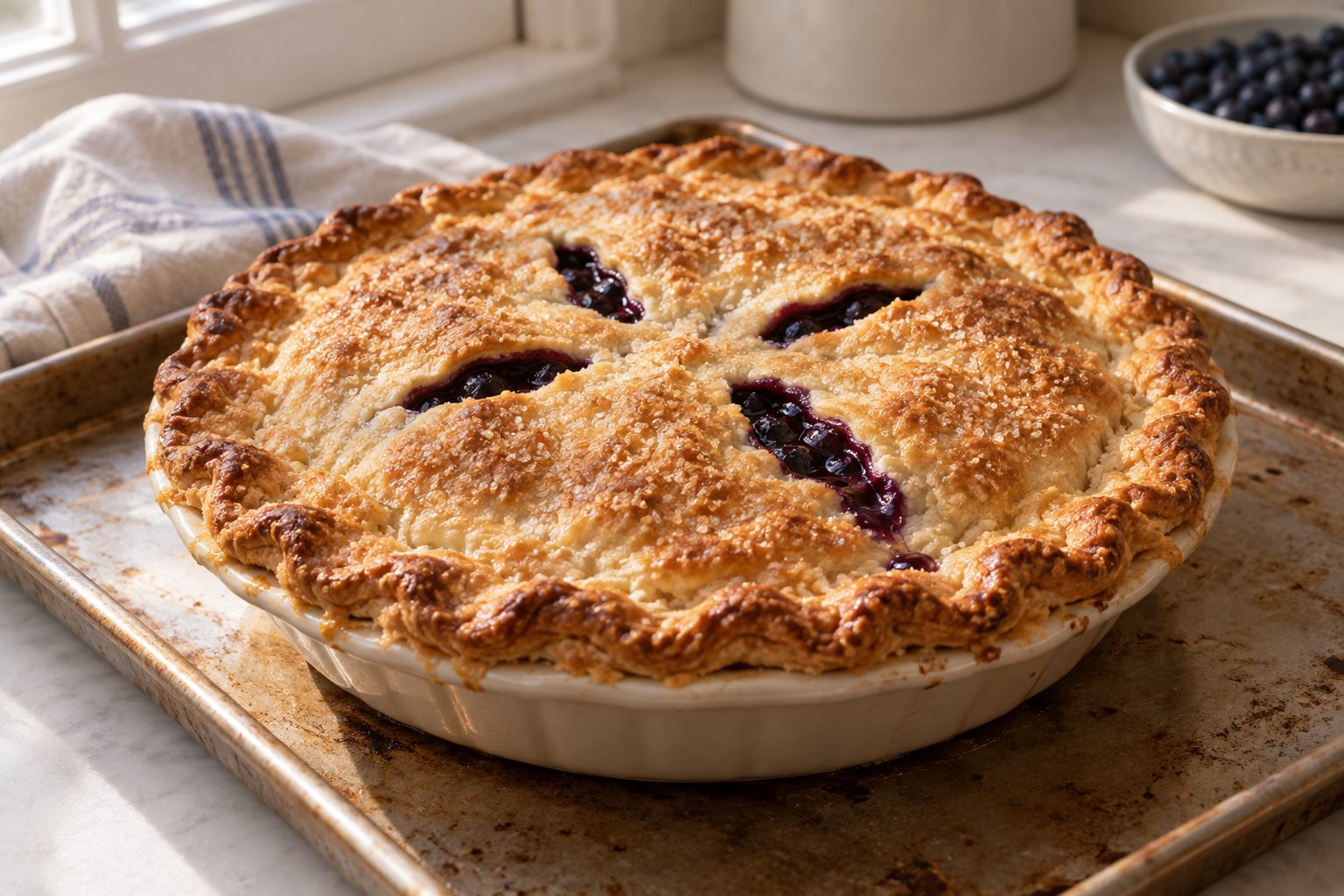
A Maine newspaper printed the whole recipe in 1900, and the striking thing is how little sugar it wanted: a quarter of a cup for an entire pie.
The Biddeford Daily Journal of 13 August 1900 carried it on page three, in a column of household receipts between a caper sauce and a peach pudding. "BLUEBERRY PIE. Pick the berries over, turn into a colander, and rinse in a deep pan of water. Line a plate with paste and rim. Mix one-quarter of a cup of sugar with one tablespoonful of flour, put half of this on the lower crust, dot with bits of butter, add the berries, heap them in the center, add the remainder of the sugar, wet the edge, cover with a crust, press it down closely and bake about half an hour." The same text ran again in the weekly edition four days later. A quarter cup of sugar, one tablespoon of flour, butter under the fruit and nothing else in it — no lemon, no spice, no measured quantity of berries at all, because whoever wrote it assumed you had gone and picked them.
The berry in question has a legal identity here. Under 1 MRSA §219, enacted in 1991, "The wild blueberry (vaccinium angustifolium, aiton) is the official state berry", and under 1 MRSA §226, "Blueberry pie, made with wild Maine blueberries, is the official state dessert." That is a statute naming a species and then naming the pie you make from it. The lowbush plant is not a small version of the supermarket blueberry: it is a different, native, ground-hugging thing that nobody has bred, and the University of Maine Cooperative Extension publishes on the cultivated highbush kind separately, in Bulletin #2253. Extension Bulletin #2096, Burning Wild Blueberry Land in Maine, by Lily Calderwood, Jordan Parks and Leala Machesney, records that prescribed fire on these fields "was first practiced by the First Peoples of Canada who found that burning temporarily improved soil quality, enhanced the growing habits of berry species, and increased bud production", and that "All wild blueberry fields were burn-pruned until research was done using a flail mower to prune in the late 1970s" — a change made, the bulletin says, "to mitigate the high cost of heating oil and serious air quality issues". One correction to the story as it is usually told: the two-year cycle is entirely real, but the fire mostly is not any more. Bulletin #2096 states plainly that today most wild blueberry fields are mowed, not burned, and that it is chiefly organic growers who still burn, because fire is a pest tool their system otherwise lacks.
Why this version works
Sugar that stops short of jam. Two-thirds of a cup for five cups of fruit keeps the pie tart enough that you taste the berry rather than the sweetness. Wild blueberries are noticeably sharper than cultivated ones, and the temptation is to sugar them up to the level people expect from a bakery pie. Resist it; the acid is the entire reason for using these berries.
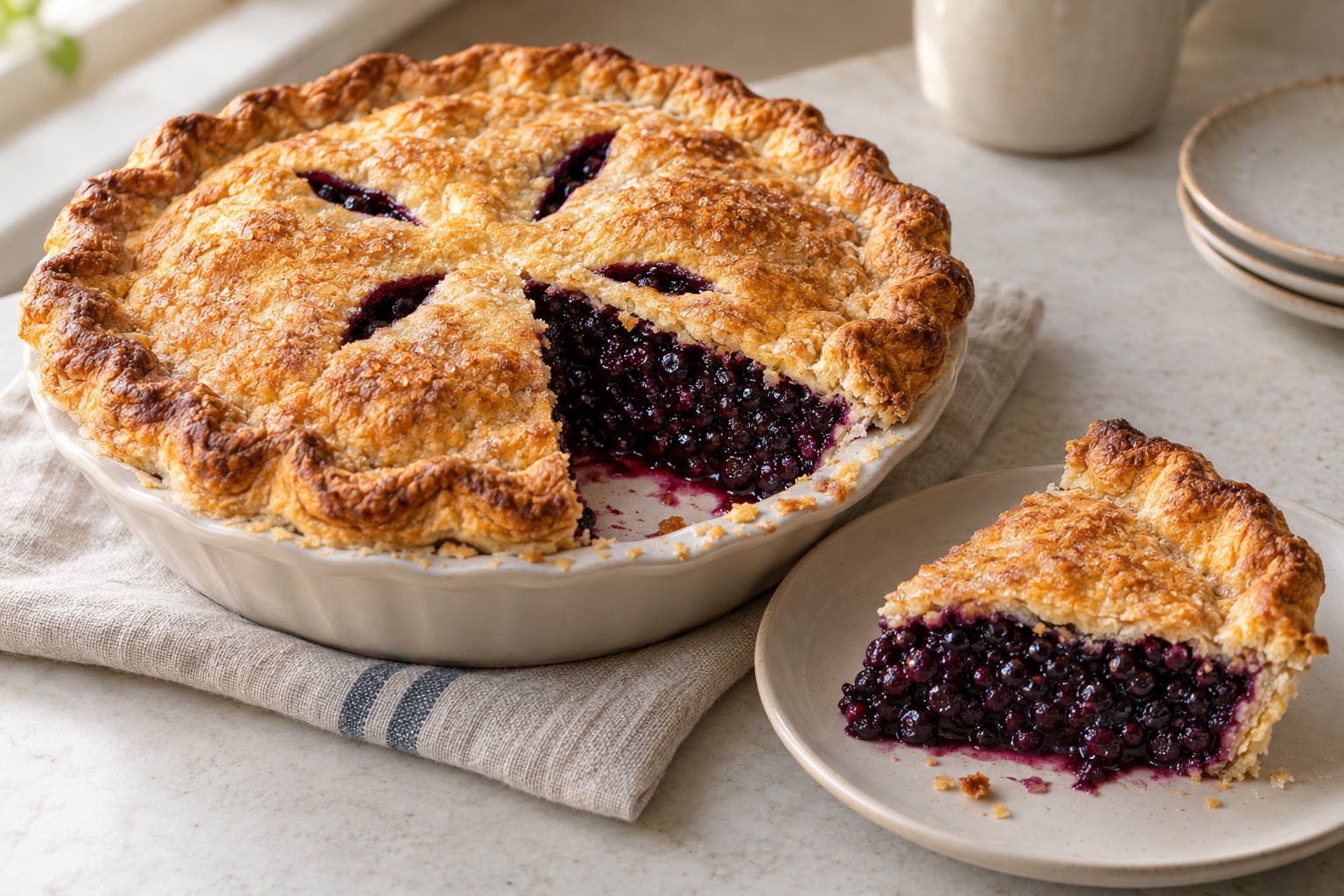
Cooling is part of the cooking. The filling is not set when the pie comes out — it is set four hours later, at room temperature. Cutting a blueberry pie warm is the single commonest way to end up with a puddle, and no adjustment to the starch will save you from doing it.
A hot start, then a long steady bake. Twenty minutes at 425°F sets the bottom crust before the juice can soak into it, and the drop to 375°F gives the starch the forty minutes it needs to hydrate properly. Starch that has only just come to a boil looks thick in the oven and turns to liquid on the plate.
Small berries, so less of everything else. A lowbush berry is a fraction of the size of a cultivated one and carries less water and more skin for its weight. That means more flavour per cup, more natural pectin, and far less liquid to thicken — which is why the 1900 recipe could get away with one tablespoon of flour and why this one gets away with three of cornstarch where a highbush pie would need five.