The regional table / Indiana
Sugar Cream Pie
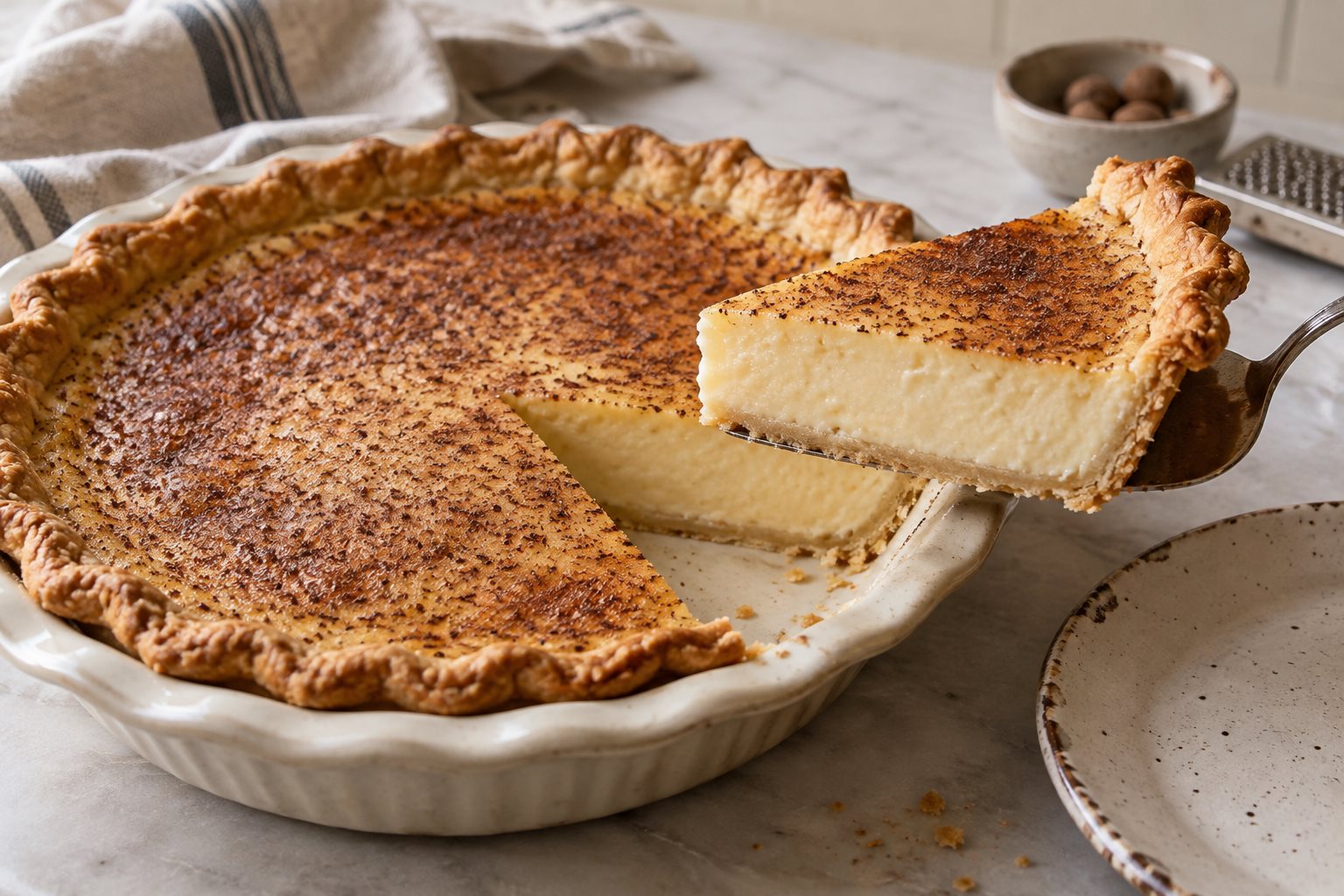
There are no eggs in it, which is the whole engineering problem and the whole reason it exists: this is what you bake when the hens have stopped laying.
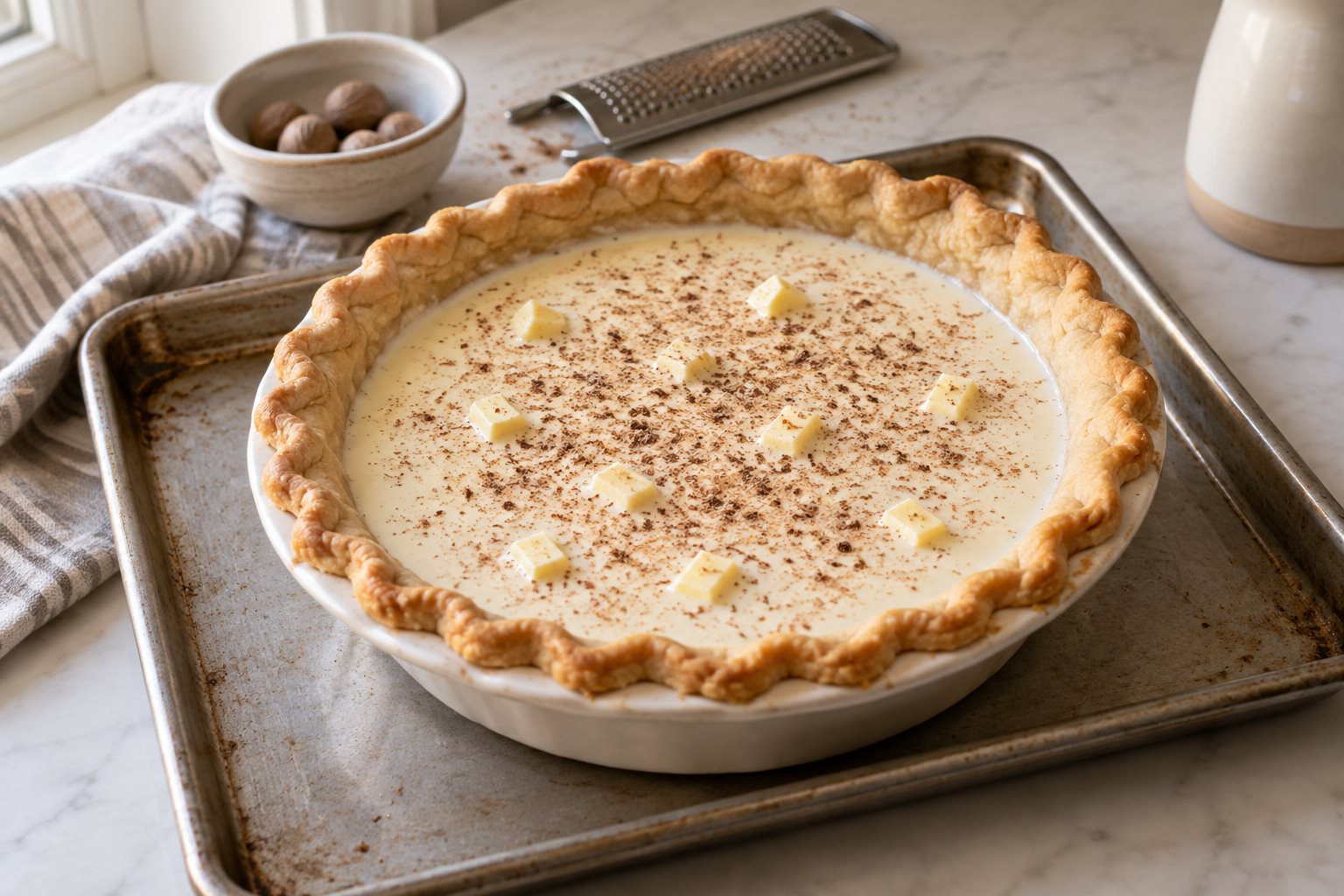
The oldest Indiana version of this pie that could be read for this page is not called sugar cream pie. It is one of four recipes headed simply "Cream Pie" in the Indianapolis Cook Book of 1883, on Internet Archive, and it is contributed by Miss Jessie Wiley: "Beat thoroughly together with the white of one egg, one-half teacup sugar and tablespoonful of flour; then add one teacup of milk. Bake with pastry crust, and grate nutmeg on top." Sugar, flour, milk, one crust, nutmeg over the top and into the oven. That is the architecture of the modern pie almost exactly, with a single egg white doing work that flour does better, and it is sitting in an Indianapolis church-and-society cookbook forty-three years before anyone printed the name the state now uses.
The name is much younger than the pie. It appears in none of the three Indiana community cookbooks reachable here: not in the 1883 Indianapolis book, not in The Princeton Cook Book put out by the First Presbyterian Church of Princeton, Indiana in 1909, whose pastry chapter runs to six recipes headed Cream Pie and puts eggs and a meringue on every one of them, and not in the Lutheran Hospital Ladies Aid cook book of Fort Wayne, 1927, which prints a Cream Pie with macaroons in it and a Sour Cream Pie with raisins and lattice strips and nothing resembling this. Georgia Historic Newspapers, which indexes syndicated food columns from all over the country, holds exactly four pages carrying the phrase sugar cream pie and the earliest of them is dated 25 March 2015. The pie is routinely credited to Indiana's Shaker and Quaker settlements, and that credit is a tradition rather than a document — nothing reachable here dates it or names anyone, and Indiana's own newspaper portal answered 403 to every request on 22 September 2026. It is likewise called the state pie, a title this page could not put a statute behind: the General Assembly's site at iga.in.gov hands a script an empty JavaScript shell and none of the text of the code. What is documented is the pie itself, in Indianapolis, in 1883, filed under a plainer name.
Why this version works
A fully baked shell. The filling is liquid when it goes in and stays liquid for the first fifteen minutes, so raw pastry under it turns to paste. Blind-bake the shell until it is properly coloured, not merely dry, and the bottom stays crisp under a wet filling for two days.
Flour instead of eggs. An egg custard sets because its proteins coagulate, and it curdles for the same reason if it goes ten degrees too far. A starch-set filling has no proteins to break: the flour swells, traps the cream, and holds at the boil. That is why this pie tolerates a hot oven and an imprecise cook, and why it was worth knowing in a farm kitchen in March.
Heavy cream, not milk. Fat is most of the flavour here, because nothing else in the pie has any — no eggs, no fruit, no chocolate. Cream also keeps the filling from tasting chalky, which is the failure mode of a flour-thickened milk pudding. The 1883 recipe says milk and one egg white; cream and no egg at all is the better trade.
Nutmeg grated over the top, not stirred in. Miss Jessie Wiley's instruction in 1883 is to grate it on top, and the reason shows up in the oven: the spice sitting on the surface toasts in the dry heat and scents the whole pie, while nutmeg stirred through the cream just makes it faintly grey and tastes of nothing in particular.