The regional table / New Jersey
Newark Italian Hot Dog
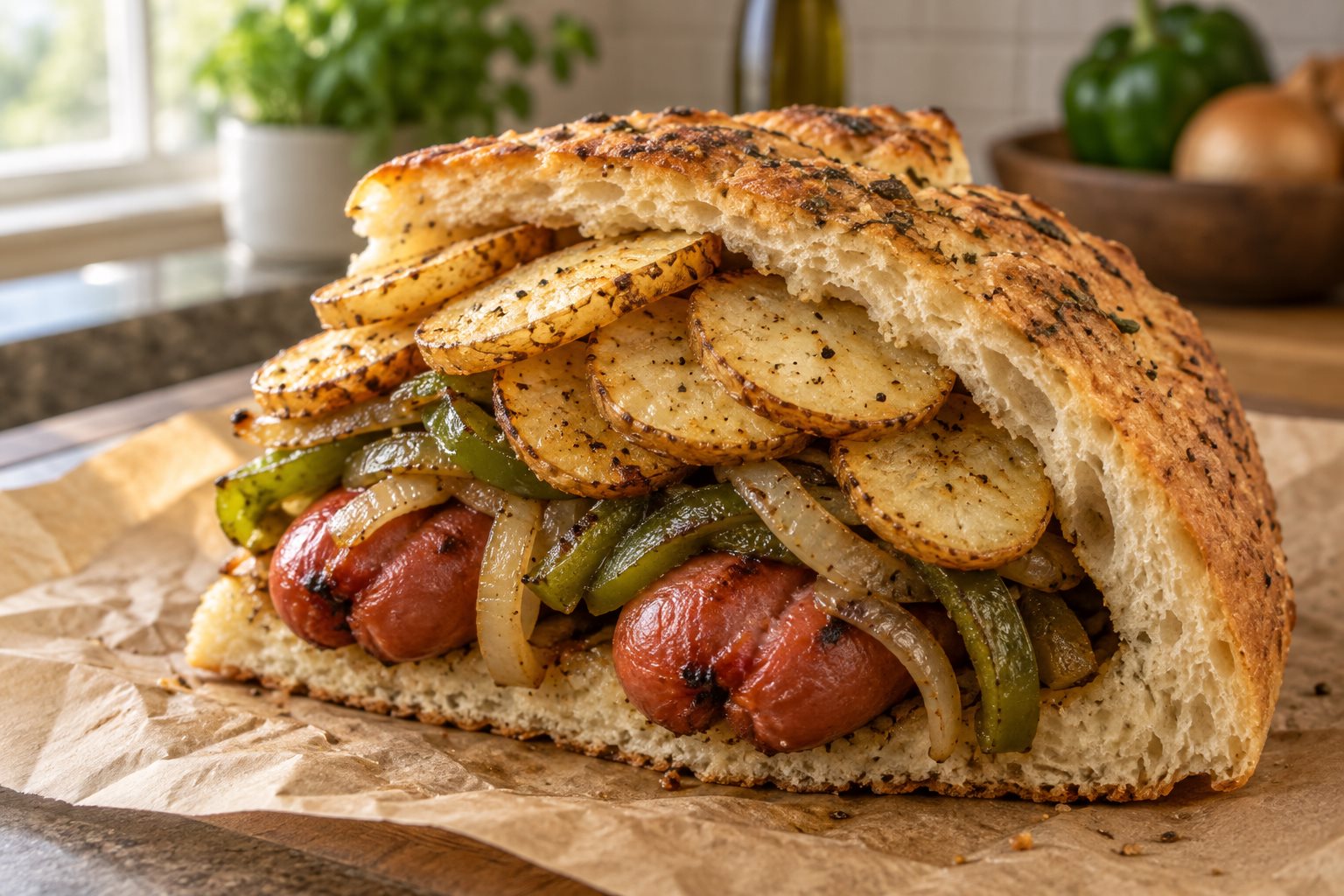
Everything in this sandwich goes through the same oil, and the bread is a container rather than a wrapper. Build it in the wrong order and you have a bag of hot grease.
I will be straight about the history, because the usual version of it is a shop's own claim and I could not test it. The Newark origin story credits a particular stand in 1932, and that date appears in no document I could reach. There is no Newark or Essex County newspaper archive that answers an automated request: the New Jersey instances of the Advantage Archives community network that do answer are Burlington County (1818 to 1960), Lambertville (1860 to 1939, plus the 1970s), Princeton (1965 to 1974) and Vineland (1970 to 1973). The exact phrase "Italian hot dog" returns nothing in any of them, and nothing in the Georgia Open ONI newspaper instance either, which indexes reprints from all over the country into the 2000s. A South Jersey paper's silence proves nothing whatever about a sandwich sold in Essex County, and I am not going to dress an absence up as evidence. The federal court database has no trademark fight over it and the SEC full-text filings have no mention of it. What I can tell you is how it is put together, which is the part that actually matters at the stove.
The one document that does apply is the federal definition of the sausage. Under 9 CFR 319.180, a frankfurter, frank, furter, hot-dog, wiener, vienna, bologna, garlic bologna or knockwurst is a comminuted, semisolid cooked sausage made from raw skeletal muscle meat, seasoned and cured, and — the phrase is the regulation's own — they "may or may not be smoked". The finished product may not exceed 30 percent fat, and no more than 40 percent of a combination of fat and added water. That fat ceiling is why a hot dog can go into deep oil at all without collapsing, and why the ones that split and curl in the fryer are the ones worth buying: a natural casing under 30 percent fat blisters and splits rather than bursting. Everything else here is Italian-American home cooking done on a griddle and in a fryer at the same time — peppers, onions and potatoes, the standard trio, loaded into a round loaf that has been cut into quarters and hollowed out. The quantities below were worked out for this page.
Why this version works
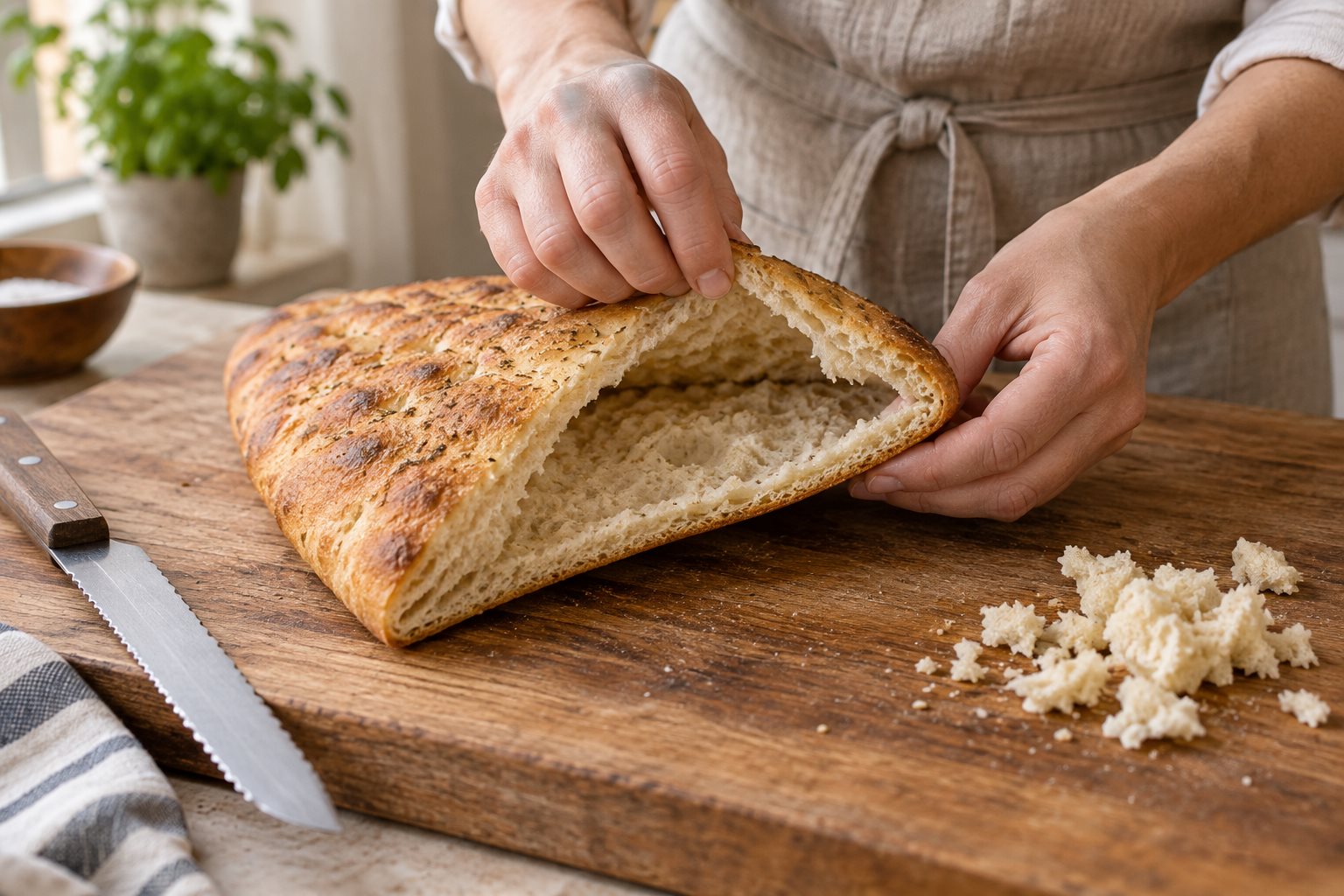
The bread is a pocket. A round pizza bread cut in quarters and opened along the curved edge gives you a deep pouch with a closed bottom and closed sides. That is the only vessel that holds two split dogs, a handful of potatoes and a pile of peppers without any of it escaping. A hot dog bun holds about a third of it.
Potatoes last, and on top. Peppers and onions are wet. Potatoes underneath them go soft within a minute. Load the pocket meat first, then peppers and onions against the bread where their juice soaks in usefully, then the potatoes on top where the steam can escape past them.
Round potato slices, not wedges. A quarter-inch round has two flat faces and fries to a crisp shell fast, and it packs into a pocket without stabbing through the bread. Wedges have a thick core that is still steaming when the shell is done, and they puncture the loaf.
Both the dogs and the potatoes go in oil. Deep-fried, a natural-casing dog blisters, splits down its length and curls, and the split faces take on a crust that griddling never gives. The potatoes fried in the same oil pick up a little of that meat flavour, which is the quiet reason this tastes different from the sum of its parts.