American cooking Recipes & regional stories

Skillet & Sage

A culinary journey through the fifty states

The regional table / New Mexico

New Mexico Green Chile Stew
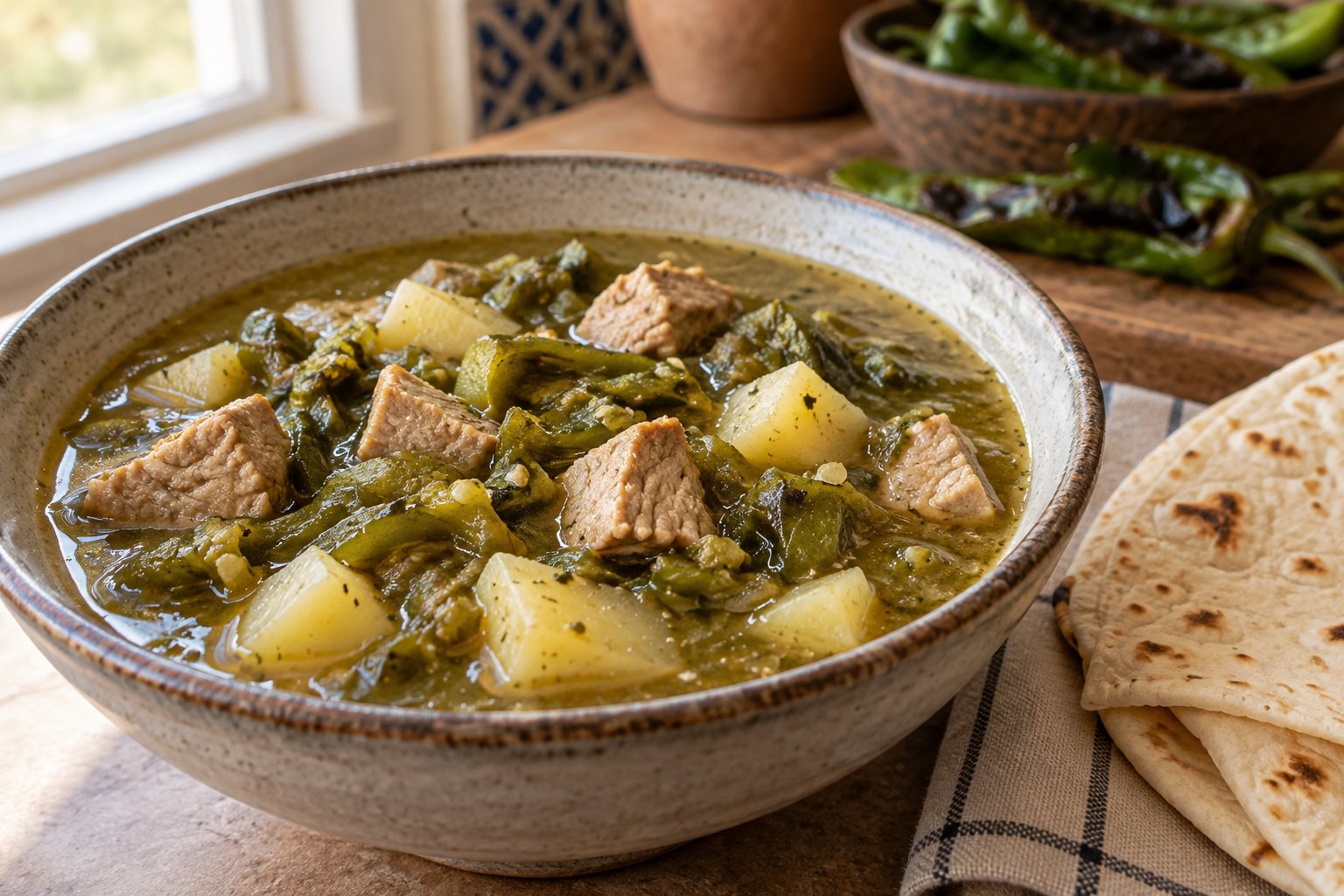
A bowl of green chile stew with cubes of pork, diced potato and chopped green chile in a thin broth, a warm flour tortilla beside it
The broth should stay loose enough to pool around the spoon; the green chile sits in pieces, not dissolved into a sauce. AI-generated illustration.

Green chile is not the seasoning here. It is the vegetable, and the pork is what it cooks with.

The Federal Writers' Project spent 1941 trying to write down how the country ate. The book, America Eats, never appeared — funding stopped weeks after Pearl Harbor — and the state files went to the Library of Congress with the rest of the Work Projects Administration records, where the New Mexico folder of notes, reports and essays still sits under the title "New Mexico Cookery and Recipes." The Southwest desk, run out of the Arizona Writers' Project, gathered this state's share. The pages are digitised at whatamericaate.org, and they are the reason this bowl is written the way it is: a pot of chile, pork and potato, cooked in a house rather than a restaurant.

The second document is a century of work at New Mexico State University. Fabián García published the agricultural experiment station's first chile bulletin, Chile Culture, in 1908, and in 1921 he released an improved variety he called No. 9 — every New Mexican pod type grown since descends from it. The station has never stopped publishing on the crop. Guide H-230 has green chile picked at about 120 days and red left on the plant to about 165, and lists the northern landraces named for their villages — Chimayó, Velarde, Jemez, Alcalde — bred by the places themselves for a cooler, shorter season. Guide E-324 covers the step this recipe cannot skip: roast the pods 6 to 8 minutes at 400–450°F, turning, until the skin blisters and pulls away from the flesh, then trap the steam and peel. The state defends the name in statute, too — the 2011 Chile Advertising Act makes it unlawful to sell chile as New Mexico chile unless it grew there.

Why this version works

No roux and no tomato. This is the line between here and Pueblo, Colorado, where green chile is built on a flour roux and usually a can of tomato and served as a gravy over something else. Leave both out and the body has to come from the pork and the potatoes, which is exactly what you want: a bowl you can see through.

Pork shoulder, cut into cubes. Shoulder carries enough collagen to go two hours and come out in pieces that hold together but give to a spoon. Loin and chops go stringy in half the time, and ground pork disappears into the broth instead of sitting in it.

The chile is roasted and peeled first. Roasting is where the sweetness comes from, and the skin is why the steaming step exists. Chile skin is papery and never softens in a simmer — it comes off the spoon in strips hours later. Blister, cover, peel.

Chile is the vegetable, not the flavoring. Two cups of chopped green chile to two pounds of pork is the ratio that makes this a New Mexico bowl rather than a pork stew with peppers in it. Cut the chile back and you get a broth that tastes faintly of chile; keep it up and the chile is what you are eating.
Ingredient notes

Heat: Pods are bred and sold mild, medium and hot, and two batches of the same variety can differ. Taste a raw sliver of one pod before you decide how many go in, and hold a few back to add at the end.

Pork: Boneless shoulder, sometimes sold as Boston butt, with the fat left on. Cut it into 3/4-inch cubes yourself rather than buying it diced, which is usually loin trim.

Potatoes: Yukon Gold, in a 1/2-inch dice. They soften at the edges and give the broth the only thickening it gets. Russets break down into starch and turn the pot cloudy.

Green chile: New Mexican pod types — Big Jim, Sandia, Joe E. Parker, New Mexico 6-4 — all descendants of García's No. 9. Roasted frozen chile is the honest substitute out of season, and NMSU notes that whole pods freeze perfectly well unpeeled and peel more easily afterward. Anaheim is the last resort and will need more of it.

Step by step

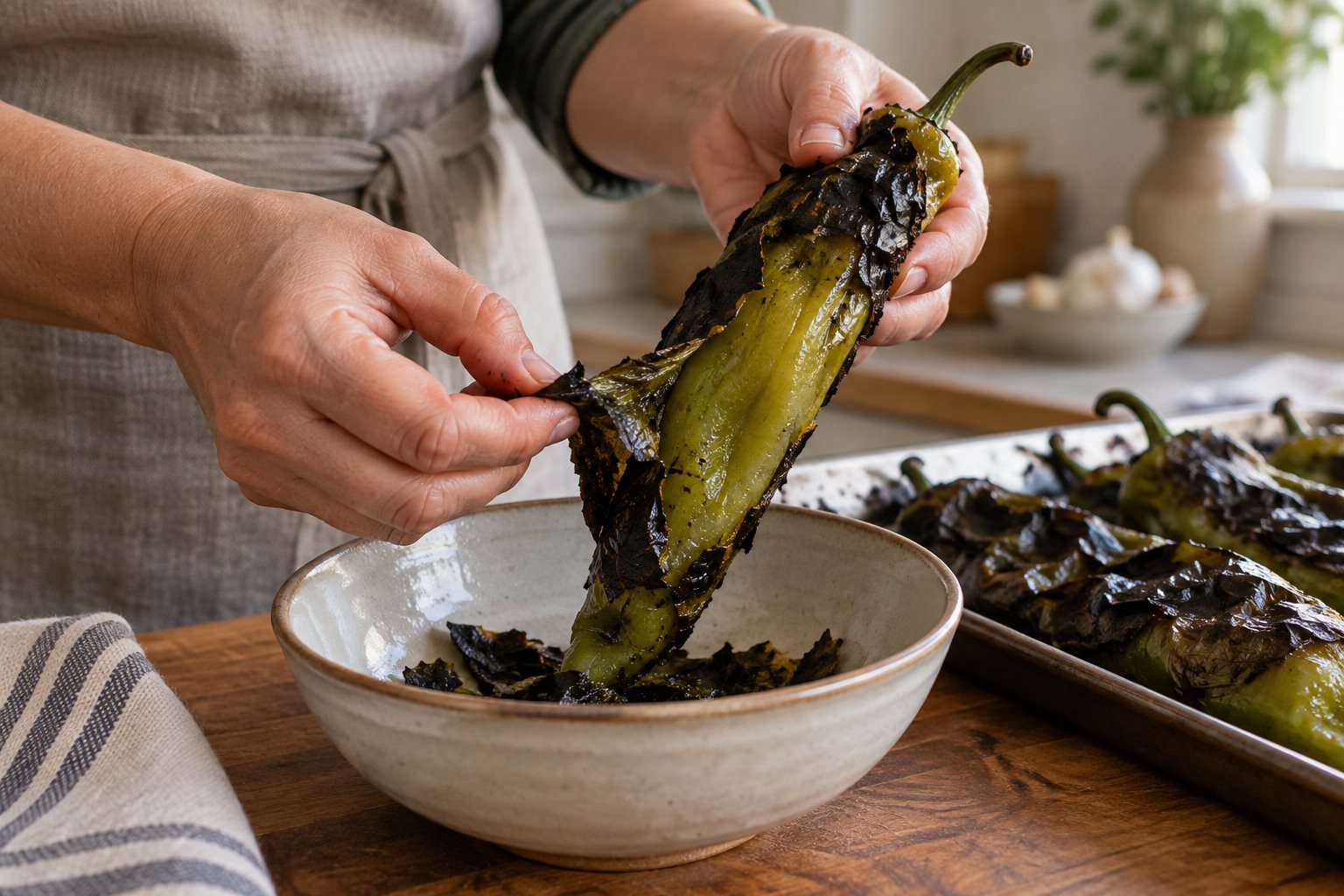
  1. Roast the chile. Heat the broiler or a grill to 400–450°F. Roast the pods in a single layer 6 to 8 minutes, turning, until the skins blister and lift from the flesh. Move them straight into a bowl and cover it tightly for 10 minutes, then pull off the skins, stems and seeds and chop the flesh coarsely. You want about 2 cups.
    Blistered skin peeled from a roasted green chile
    Steam the roasted pods briefly, then remove the loosened skins. AI-generated illustration.
  2. Brown the pork. Pat the cubes dry and salt them with 1 teaspoon of the salt. Heat the lard in a heavy pot over medium-high and brown the pork in two batches, 5 to 6 minutes a batch, moving each one to a plate. A crowded pot steams and you lose the fond.
  3. Cook the onion. Lower the heat to medium and cook the onion in the fat 5 minutes, until soft and browned at the edges. Add the garlic, oregano and cumin and cook 1 minute more.
  4. Deglaze and simmer. Pour in the broth and scrape the bottom clean. Return the pork with any juices, bring it to a bare simmer, and cook partly covered for 1 hour 15 minutes, until a cube gives under a spoon.
  5. Add the chile and potatoes. Stir in the chopped green chile and the potatoes and simmer uncovered 30 to 35 minutes, until the potatoes are tender and the broth has drawn down slightly.
  6. Season and rest. Skim the fat off the top, add the remaining salt to taste, and leave the pot off the heat 10 minutes before serving. It tastes hotter at a rolling simmer than it will in the bowl.
If the stew tastes grassy and sharp rather than sweet, the chile went in under-roasted — give the pot another 20 minutes at a low simmer and the raw edge cooks off. If it came out watery, simmer it uncovered for 10 minutes and crush half a dozen potato cubes against the side of the pot; that is the only thickening this bowl is allowed.

Storage and make-ahead

It keeps 4 days refrigerated and is better on the second day, once the chile has gone through the pork. Reheat it gently — a hard boil breaks the pork into threads.

Freeze it up to 3 months. If you know it is going in the freezer, hold the potatoes back and add them fresh on the day you reheat, because they come out of the freezer grainy. Roasted chile itself freezes well for a year, which is how New Mexico gets through to the next harvest.

What to serve with it

Warm flour tortillas and nothing else is the standard, and pinto beans on the side if you want the bowl to feed more people. A fried egg dropped on top turns it into breakfast, which is how a good deal of it gets eaten.

A bowl of green chile stew with cubes of pork, diced potato and chopped green chile in a thin broth, a warm flour tortilla beside it

From the recipe box / New Mexico

New Mexico Green Chile Stew

Pork shoulder simmered with two cups of roasted, peeled New Mexico green chile and potatoes, thin enough to eat with a spoon and never thickened with flour.

Prep
30 min
Cook
2 hr
Total
2 hr 30 min
Serves
6
Calories
465 per serving

Ingredients

Scale

Instructions

  1. Roast the chile pods at 400–450°F for 6–8 minutes until blistered, cover them 10 minutes, then peel, seed and chop to about 2 cups.
  2. Salt the pork with 1 teaspoon salt and brown it in the lard in two batches, 5–6 minutes each. Set it aside.
  3. Cook the onion 5 minutes in the fat, then the garlic, oregano and cumin for 1 minute.
  4. Add the broth, scrape the pot, return the pork, and simmer partly covered 1 hour 15 minutes.
  5. Stir in the green chile and potatoes and simmer uncovered 30–35 minutes, until the potatoes are tender.
  6. Skim the fat, season with the remaining salt, and rest 10 minutes off the heat before serving with tortillas.

Nutrition

Fat29 g (10 g saturated)
Sodium580 mg
Protein30 g
Servingabout 1 1/2 cups, without tortilla
Calories465
Cholesterol110 mg
Carbohydrates21 g (4 g sugar, 3 g fiber)

Nutrition is an estimate calculated from the listed ingredients and is provided as a courtesy, not as dietary advice.

Questions readers ask

Do I really have to peel the chile?

Yes. The skin is papery, it never softens in liquid, and it ends up wrapped around the spoon. That is the whole reason NMSU has you trap the steam after roasting: the skin loosens against the flesh and comes off in sheets.

Can I use frozen or canned green chile?

Frozen roasted New Mexico chile is the substitute that costs you nothing — it is the same crop, roasted at harvest. Canned chile is milder and wetter; drain it, use a third more, and stir it in for the last 15 minutes only.

Is this the same as Colorado green chile?

No, and the difference is structural. The Pueblo version is thickened with a flour roux and usually carries tomato, so it pours as a gravy over a burrito. This one has neither, stays thin, and is eaten from a bowl.

What if I cannot get New Mexican pods at all?

Anaheim is the closest supermarket pod and runs milder, so use about half again as much and add a serrano or two for heat. Poblano brings a darker, smokier flavor that reads as a different dish, though a good one.