The regional table / Maryland
Maryland Crab Cakes, Jumbo Lump and Almost No Filler
Everything in a Maryland crab cake is decided before it meets heat, because the crab was already cooked by someone else.
The dish makes more sense once you read how the meat got to a kitchen in the first place. A federal survey called The Crab Industry of Maryland, written for the appendix to the Report of the Commissioner of Fisheries for the year ending June 30, 1904 and reprinted in Forest and Stream in September 1905, walks through the picking houses at Oxford, St. Michaels and Tilghman line by line. Crabs arriving at a factory were dumped into a large box and steamed from twenty to forty minutes. They were then handed to pickers who worked the meat out by hand; ice water was thrown over it, about three ounces of salt were added to every twenty pounds, and it went into tin buckets with perforated bottoms holding five or six pounds, packed under ice until it shipped. Cleaned shells travelled with every shipment, the report says, to be used principally in making deviled crabs.
Two things follow from that, and they run this recipe. The meat is fully cooked and cold before you buy it, so heat here is only for setting an egg and browning a surface, never for cooking crab. And the fragile part is structural: a picker takes two large muscles out of each crab whole, which is what jumbo lump is, and any mixing you do after that is an argument you lose. Note that the 1905 report does not grade its meat at all — flakes, lump, backfin and claw are trade words the packing houses settled on later, and no federal standard fixes them, so what is in the tub is decided by eye, not by the label.
Why this version works
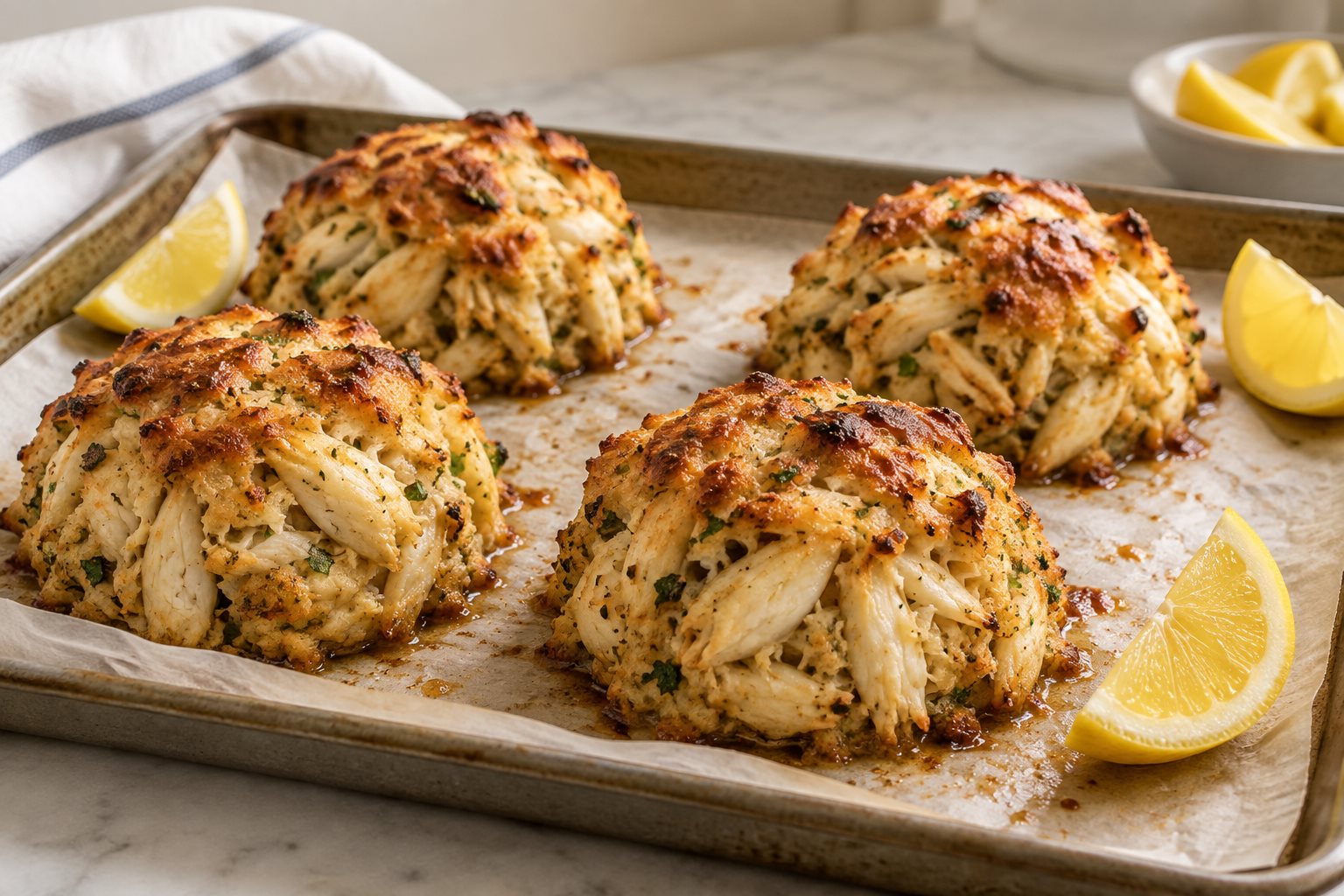
The broiler, not the skillet. A fried cake has to be turned, and the turn is where lumps break. Under the broiler the top browns from above, the cake is never touched, and the butter is brushed on rather than sitting in a pan of it.
Thirty minutes cold before it cooks. Chilling firms the fat in the mayonnaise and lets the crumbs finish drawing moisture out of the meat. A cake that goes under the broiler straight from the bowl spreads; the same mixture chilled holds a dome.
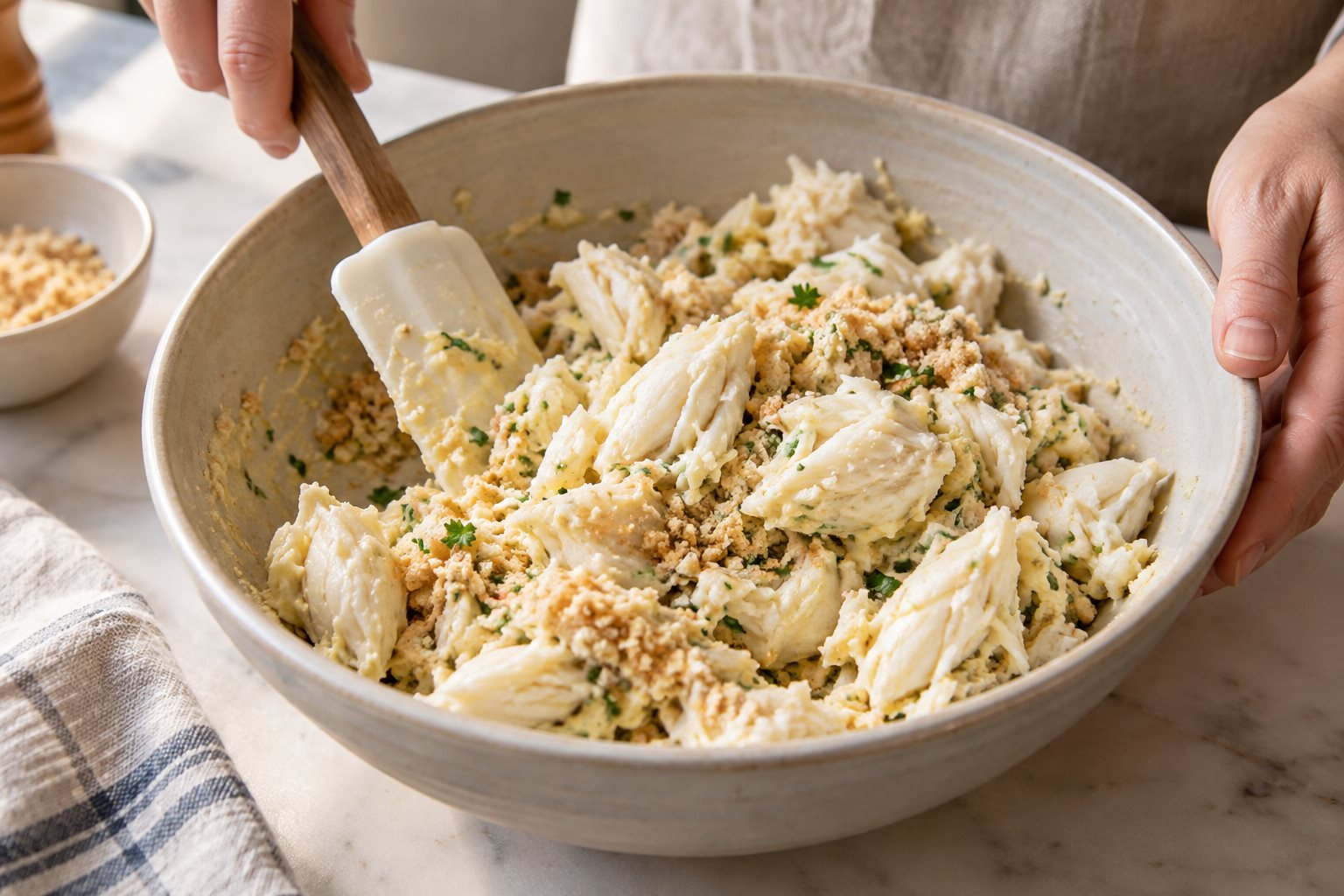
The binder is mixed on its own first. Egg, mayonnaise and seasoning poured straight onto crab have to be stirred to distribute, and stirring is what turns lump into shreds. Whisked smooth in an empty bowl and then poured over, the same amount coats everything in about six folds.
Half a cup of crumbs for a whole pound. The crumbs are there to hold water that the egg cannot, not to stretch the crab. More than this and the cake reads as bread; less and it slumps on the pan the moment it warms.