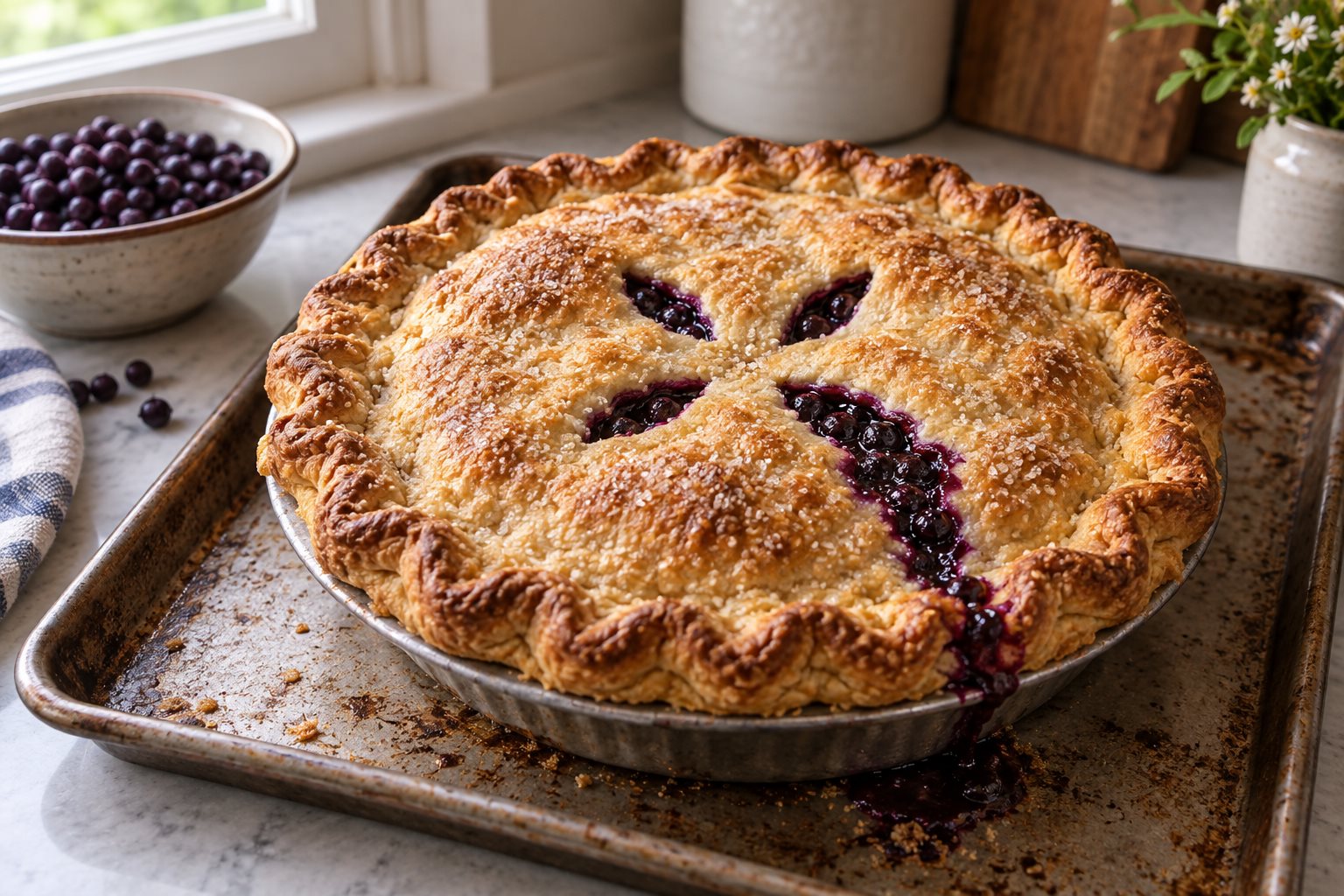
The regional table / Montana
Huckleberry Pie
Nobody sells you a farmed huckleberry because nobody has managed to farm one, and the federal record of the attempts is unusually blunt about it.
The document behind this pie is a Forest Service report: Huckleberry Ecology and Management Research in the Pacific Northwest, by Don Minore, Alan W. Smart and Michael E. Dubrasich, published by the US Department of Agriculture in 1979 after a six-year study. Its laboratory section is the part worth reading twice. Two thousand stem cuttings were taken from dormant shoots in June 1972 and put into a peat-and-sand mixture under intermittent mist. They broke buds. "None rooted." In late July another two thousand cuttings were taken from growing shoots, soaked overnight in an indolebutyric acid solution, rinsed, and given the same treatment; again none of them rooted. Only rhizome cuttings grew, and rhizomes are hard to collect uniformly, so the researchers gave up and raised plants from seed instead. Those seedlings flowered for the first time in their third growing season and produced no rhizomes at all in their first two. That is the whole commercial problem in one paragraph: no cuttings means no clonal nursery stock, and three years to a first bloom means no orchard anyone wants to plant. The Forest Service's own host refused every automated request while this was written; the report is readable in full on the Internet Archive.
The rest of the report explains where the berries do come from, which is fire. Huckleberry fields sit above about 3,000 feet on ground that big wildfires cleared of trees, and they are disappearing as fire is suppressed and low-quality timber crowds back in — over 100,000 acres of them in Oregon and Washington alone, and shrinking. The researchers measured real yields: 100 gallons an acre on one good field in 1976, 77 gallons on another in the poorer year of 1977, when fresh huckleberries were selling at ten to eleven dollars a gallon. They also tried everything short of miracles to keep the canopy open. Sheep grazing, even severe overgrazing, did the huckleberries no harm. The herbicide that killed the trees killed the huckleberries under them. Root-rot inoculations meant to hold the overstory open had not worked. And there is a Montana footnote worth having: the report notes that spring burning raised stem density of Vaccinium globulare within a year in the larch and Douglas-fir forests of western Montana, and warns in the same breath that Montana results may not apply further west, because western Montana environments differ. Montana's huckleberry is its own plant, on its own ground, and it is picked, never grown.
Why this version works
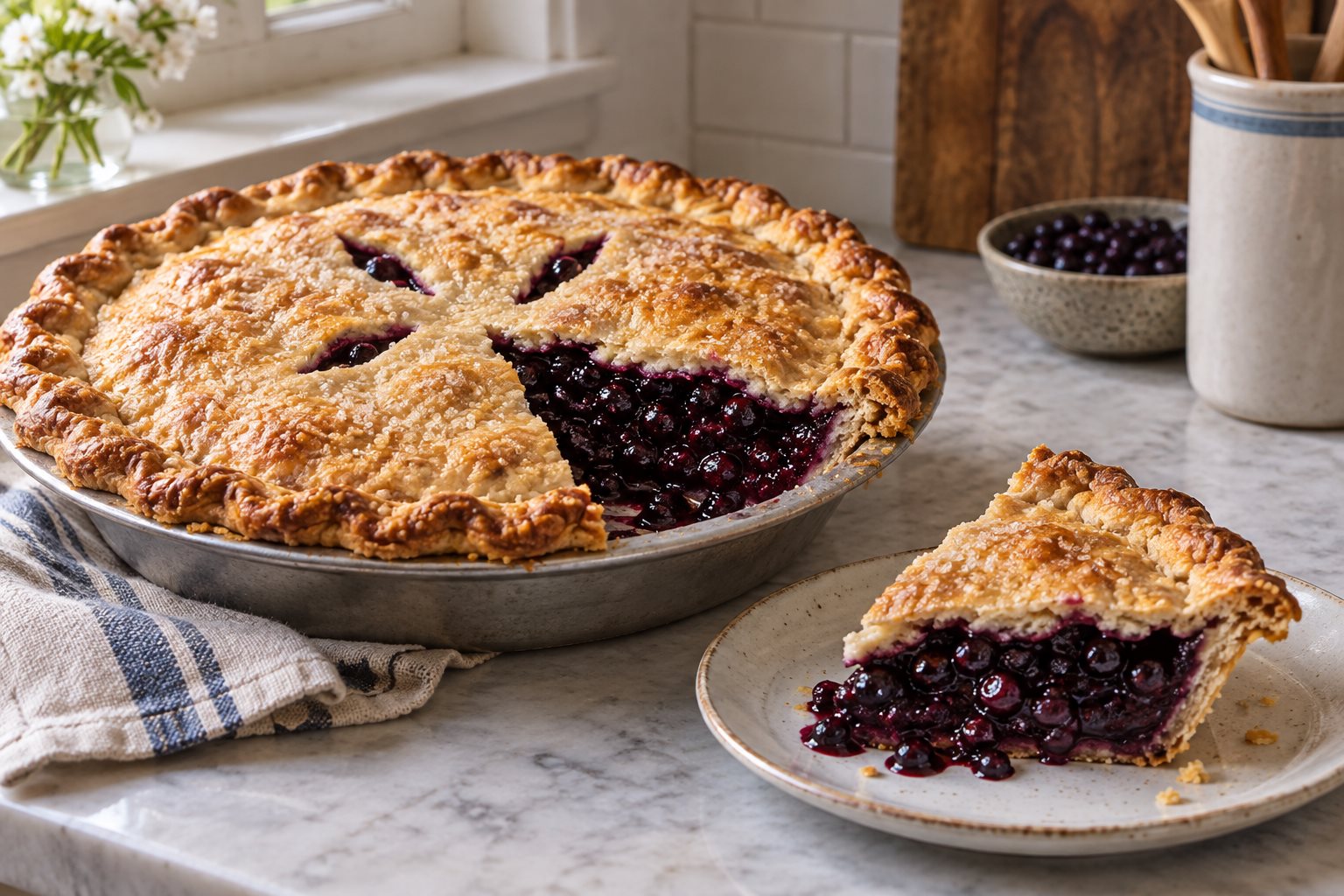
It must actually boil. Tapioca does not thicken until the juice bubbles, and bubbling only at the rim means the middle has not got there. Wait for slow, thick bubbles through the vents in the centre of the pie, even if that means another ten minutes with the edges shielded.
Tapioca rather than flour. Flour clouds the filling and leaves a floury edge where it did not hydrate. Quick-cooking tapioca sets clear, holds through cooling and reheating, and does not stiffen into a slab the way too much cornstarch does. Let it sit with the fruit for fifteen minutes before the pie goes together.
A hot start on a low shelf. Twenty minutes at 425°F on the bottom shelf sets and browns the base before the juice starts moving. Drop the heat after that and the filling comes to a boil slowly and evenly. Start low and you get a raw seam where the bottom crust meets the filling.
Less sugar than a blueberry pie. Huckleberries carry more acid and far more flavour per berry than a cultivated blueberry, and sugar buries both. Three quarters of a cup for five cups of fruit keeps the pie tasting of the hillside instead of the jam pot. Taste the berries first; a late-season picking may want a spoonful less.