The regional table / Idaho
Finger Steaks
The Boise inventor everybody names cannot be found in any Idaho newspaper a script can reach — but the dish itself can, and it is already being advertised as a house specialty in 1964.
The story that circulates gives finger steaks a Boise originator and a date in the middle 1950s. That story cannot be tested from here, and it is worth saying why: the Idaho papers that are open to a search are the Pocatello dailies, the weeklies of the Magic Valley and the Lemhi County run out of Salmon, and Boise has no daily in any of them. So the claim stays a claim. What can be tested is when the words start appearing in print, and the answer is earlier and further out in the state than you would guess. In the Pocatello run the phrase is absent through the whole of the 1950s — the word steak occurs 5,453 times in those papers between 1948 and 1966, so the index is plainly sound, and finger steaks is not among them until 1966.
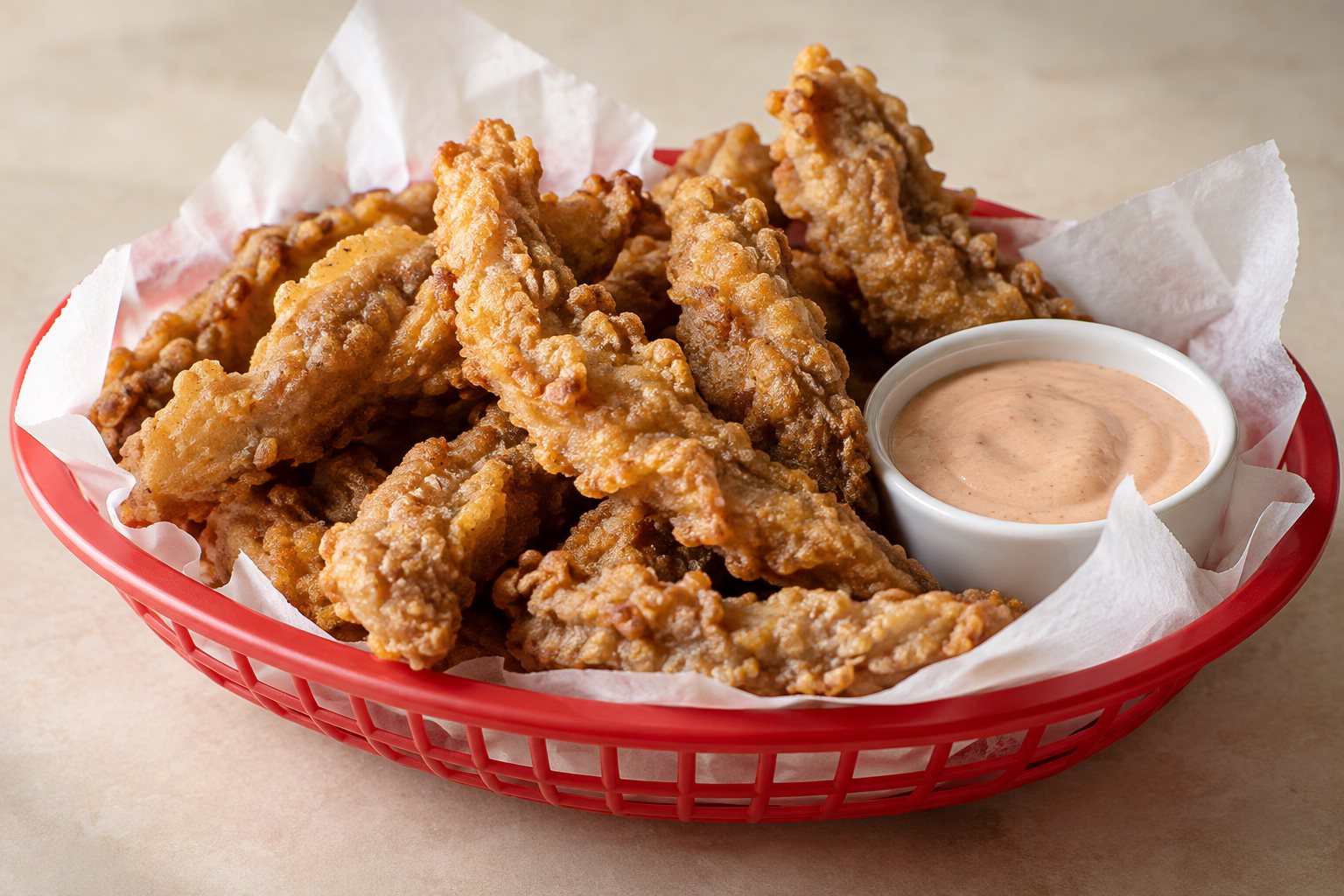
The earliest dated printing anywhere reachable is not a restaurant review but a small advertisement on page eight of the Recorder-Herald of Salmon, Idaho, for 2 April 1964. The North Fork Store, up the river at North Fork, tells its neighbours: "Visit the North Fork Cafe. We specialize in delicious Flavor-Crisp Chicken and Finger Steaks in-the-Basket." Two years later, on 19 August 1966, the Idaho State Journal carries the New Frontier at Blackfoot offering "tender, juicy Tenderloin Finger Steaks, served in a basket with French Fried potatoes, tossed green salad (choice of dressing) and garlic bread for ONLY $1.95." Between them those two advertisements give you the whole dish: the cut named, the coating implied, the basket, and the fact that by the middle sixties it was already ordinary enough to sell without explaining. No printed recipe from that period is reachable, so the quantities below were worked out for this page.
Why this version works
The basket does real work. Both of the earliest printings sell this in a basket, and a basket lined with paper is the right vessel. Steam escapes downward instead of condensing under the pile, so the last strip is as crisp as the first. A plate, or worse a covered dish, turns them soft in four minutes.
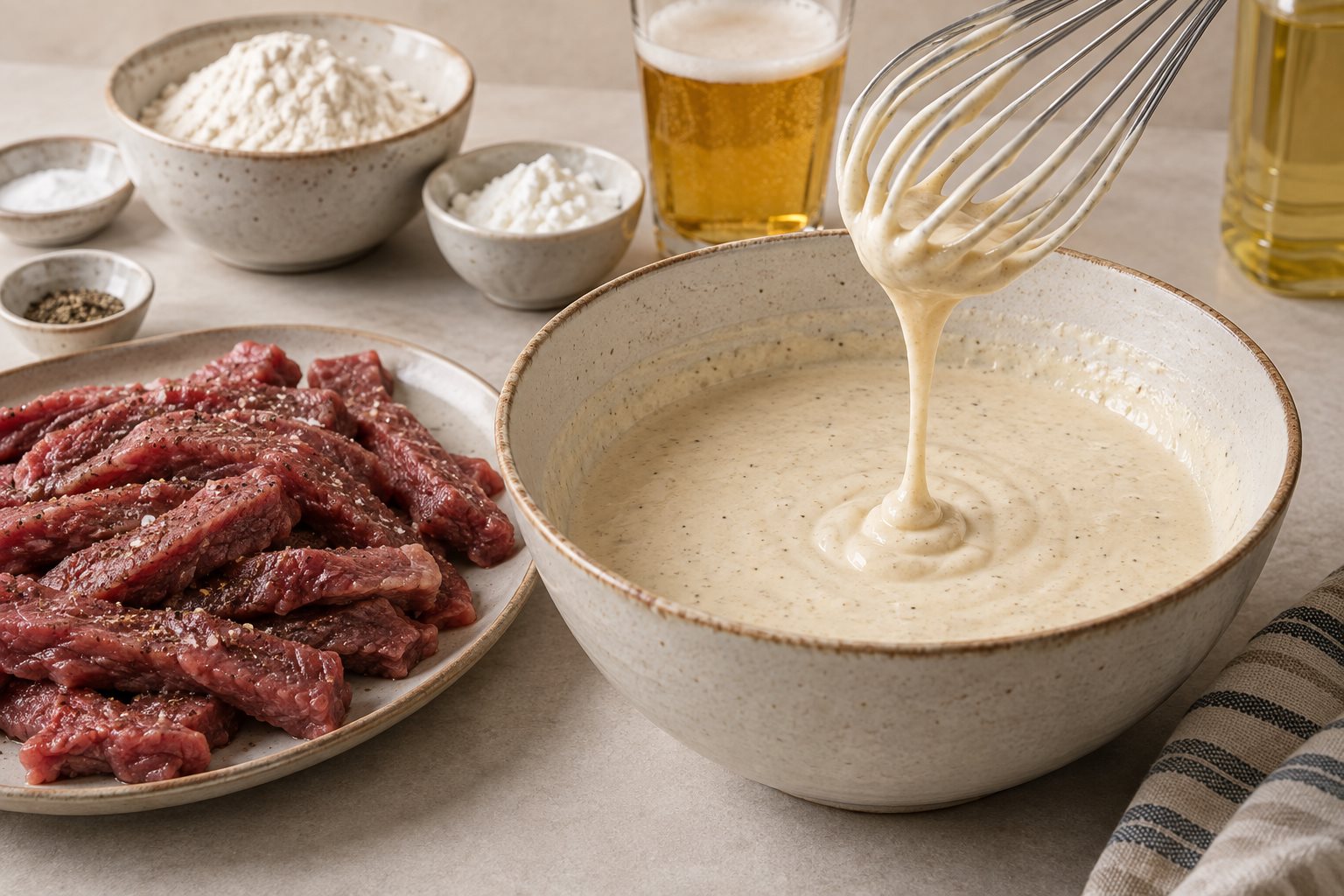
A thin batter, not a thick one. Beer batter behaves like tempura: the alcohol flashes off fast and leaves a lace rather than a shell. You want it loose enough to run off the strip in a thin sheet. A batter that coats like paint gives you a doughnut with beef inside, which is what most disappointing versions of this are.
Hot oil, short time, small batches. At 375°F a half-inch strip is done in about ninety seconds, which is exactly the point: the batter sets before the meat has time to go past medium. Drop in more than a handful and the oil falls thirty degrees, the batter soaks instead of setting, and you are frying grey beef in grease.
Tenderloin or sirloin, cut across the grain. The 1966 advertisement says tenderloin, and tenderloin is the easy answer: it has no grain worth fighting and it cooks through in ninety seconds. Sirloin tips are the cheaper answer and they work, provided you cut the strips across the fibres rather than along them, about the width of two fingers held together and no thicker than half an inch.