The regional table / Kansas
Chili with a Cinnamon Roll
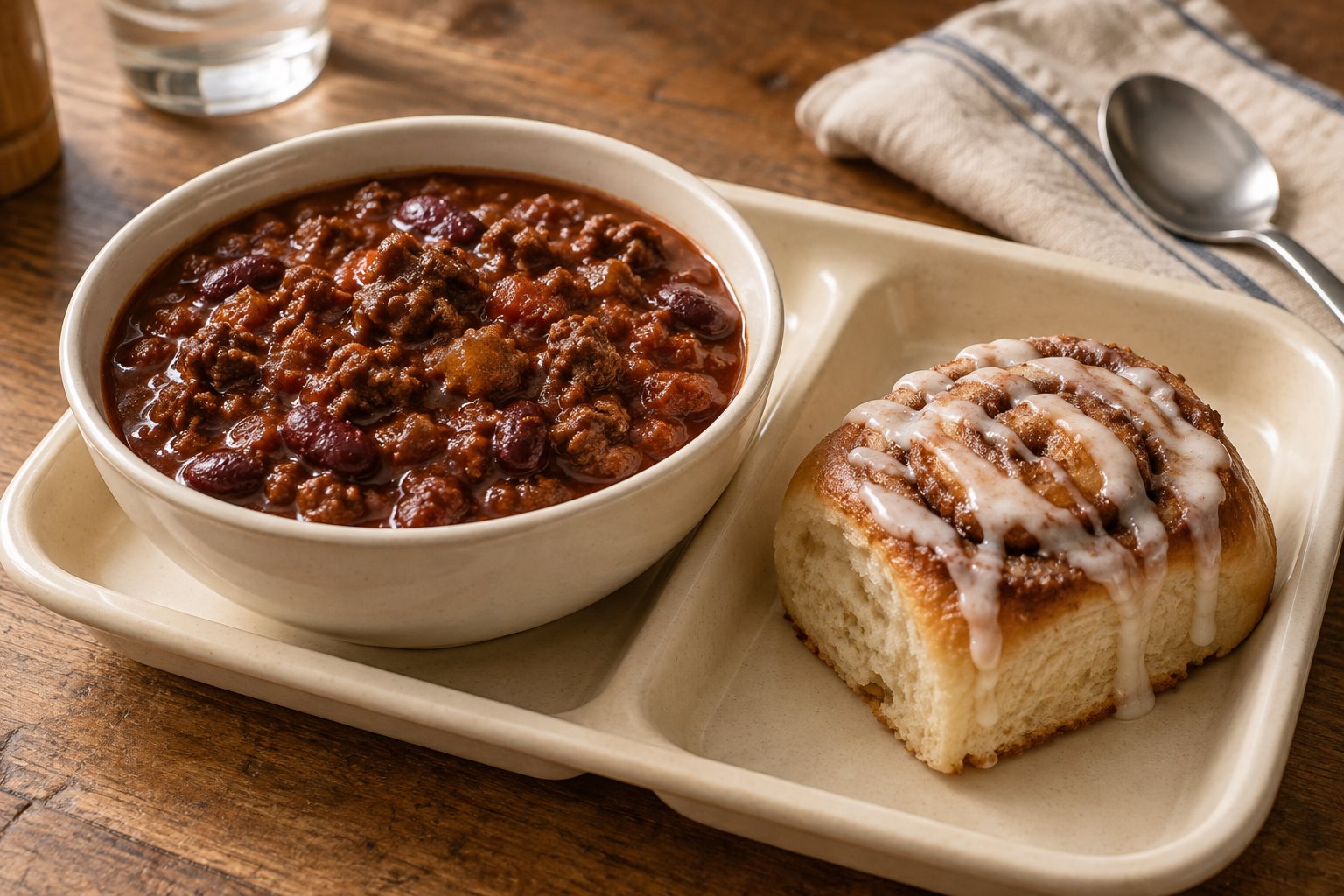
Two things that have no business together, put together by a form — and then kept for sixty years because it works.
This pairing has a paper trail, and it is not folklore. The Menu-Planning Guide for School Lunches issued by the War Food Administration's Food Distribution Administration in September 1943 sets out what a Type A lunch has to contain, and two of its five items explain the tray by themselves. Item two is the protein, and it names as an alternate to meat "½ cup (cooked measure) of dry peas, beans, or soybeans". Item four is the bread: "One or more slices of bread, or muffins or other hot bread, made of whole-grain or enriched flour or cereal." And the first of its three serving patterns is the one every school kitchen actually cooks: a lunch "built around a main dish (stew, casserole, or salad) which combines the meat or meat alternate ... supplemented by a raw vegetable or fruit, and served with milk, bread, and butter or fortified margarine — in short, a one dish plus meal." Chili is that one dish. It carries the meat and the beans in the same pot. What it does not carry is item four, and so something made of enriched flour has to arrive alongside it. The 1977 successor, A Menu Planning Guide for Type A School Lunches, USDA Food and Nutrition Service PA-719, repeats the bread requirement — "a serving of other bread such as cornbread, biscuits, rolls, muffins, made of whole-grain or enriched meal or flour" — and adds the sentence that finishes the argument: use a bread "which will go well with the main dish and other items in each lunch". Today the rule still holds the door open in so many words. Title 7, section 210.10 of the Code of Federal Regulations sets the grains component in ounce equivalents, requires that the rest be enriched where it is not whole-grain-rich, and then says plainly: "Schools may count up to two grain-based desserts per week towards meeting the grains requirement."
What none of those documents do is name this dish. The word chili appears zero times in the 1943 guide. It appears twice in PA-719 and both times it is "Chili peppers, green" in a list of vegetables. Neither guide mentions a cinnamon roll anywhere, so the pairing is a lunchroom's answer to a federal form rather than an instruction from one, and no cook, school or district can be credited for it from anything reachable. Kansas's own newspapers would date it and they are shut: the Historical Society's digitised run sits behind a commercial portal that answers a script with 401, Chronicling America blocks scripts, and Kansas operates no open newspaper instance of its own — I was told before starting that it did, and it does not. The earliest dated occurrence of the two words together that I could pull and verify in a page's own raw text is not a school at all. It is a classified block in the Daily Nebraskan of 10 March 1986, advertising a sorority chili feed: two dollars seventy-five, all you can eat, "Chili — Cinnamon Rolls — Door Prizes — Entertainment". By then the pairing was obvious enough to a plains college campus to need no explaining. Everything below was worked out for this page.
Why this version works
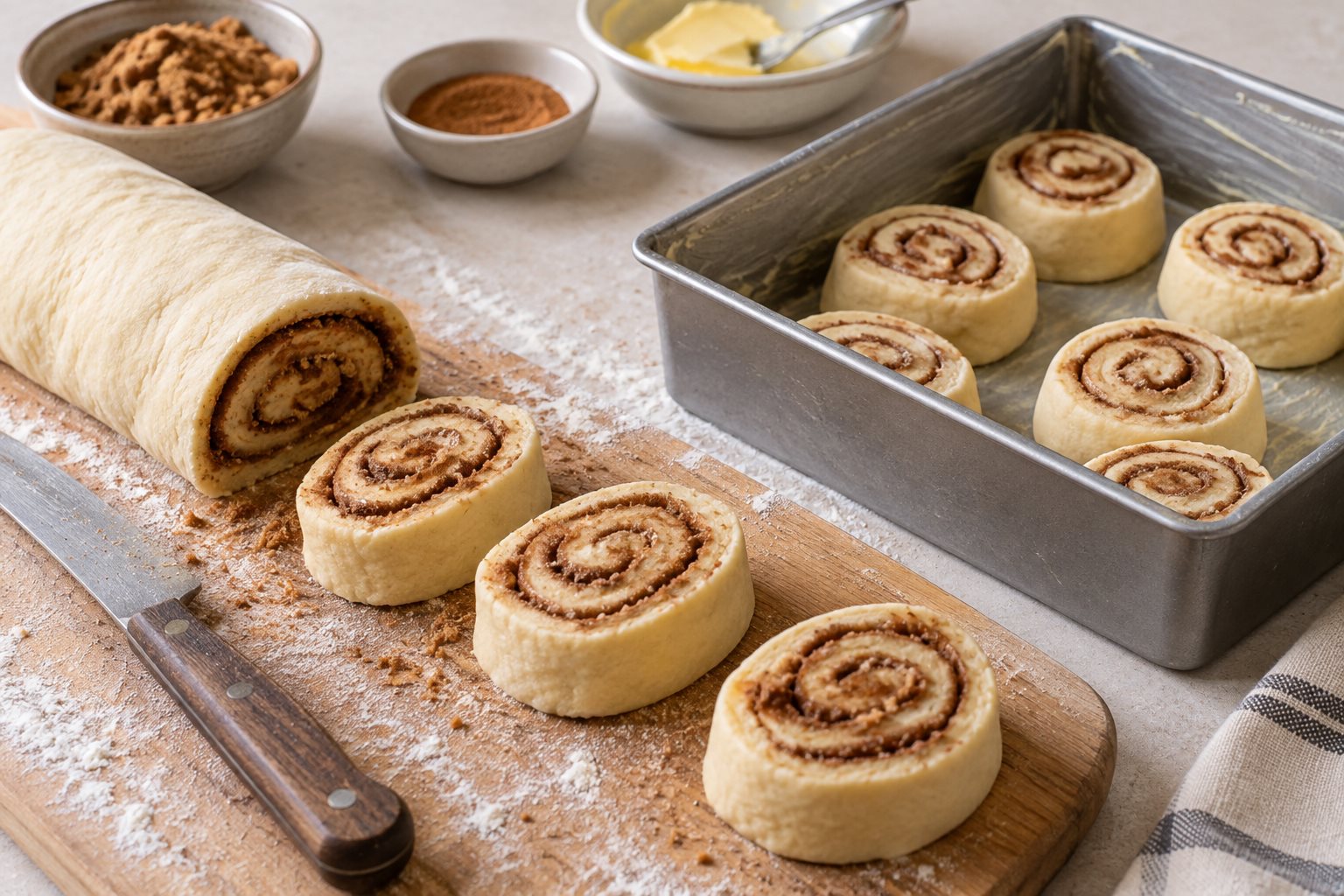
The roll is soft and under-iced. A crisp pastry or a heavy glaze both fight the chili. What you want is a slack, tender roll with a thin drizzle — enough sweetness to register against the cumin, not enough to coat the tongue before the next spoonful.
Beans are in the pot, not on the side. The federal pattern counts cooked dry beans as the protein alternate, and that is not an accounting trick — beans and beef together are what let a school feed a child on a nickel of meat. It is also why Kansas chili has beans in it and Texas chili does not, and the two arguments have nothing to do with each other.
Cinnamon against cumin, not against sugar. The reason this works rather than merely coexists is aromatic: cinnamon and cumin sit in the same warm register, and the sweetness reads as a seasoning of the chili rather than a dessert beside it. Chocolate or caramel in the roll breaks that and turns the plate into two meals.
The chili is thick enough to be a main dish, not a soup. Tomato paste cooked until it darkens on the pan, and forty-five minutes uncovered, take it to the consistency a spoon stands a moment in. A thin chili soaks the roll into mush on contact; a thick one lets you tear and dip without losing the roll.