The regional table / Louisiana
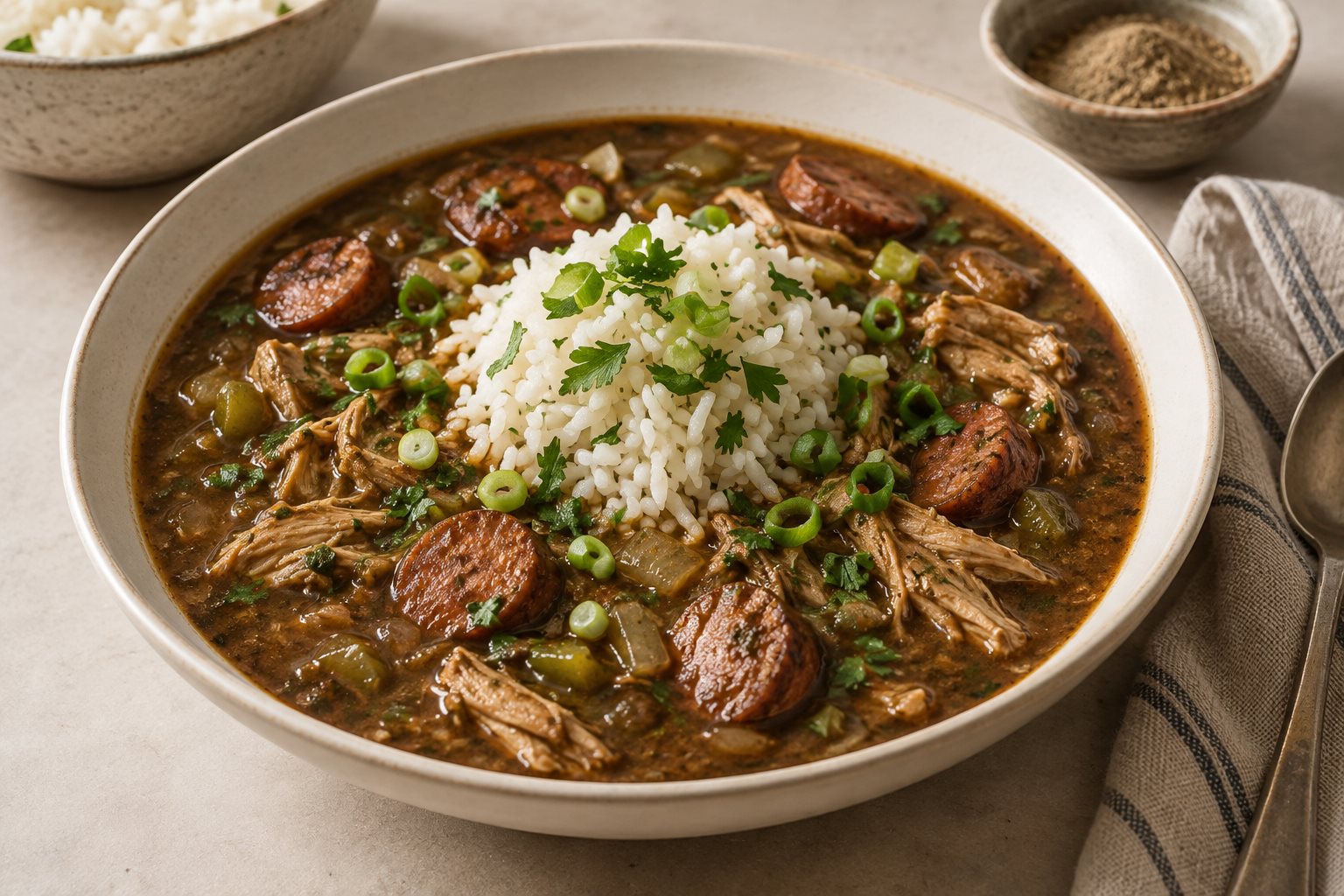
Chicken and Andouille Gumbo
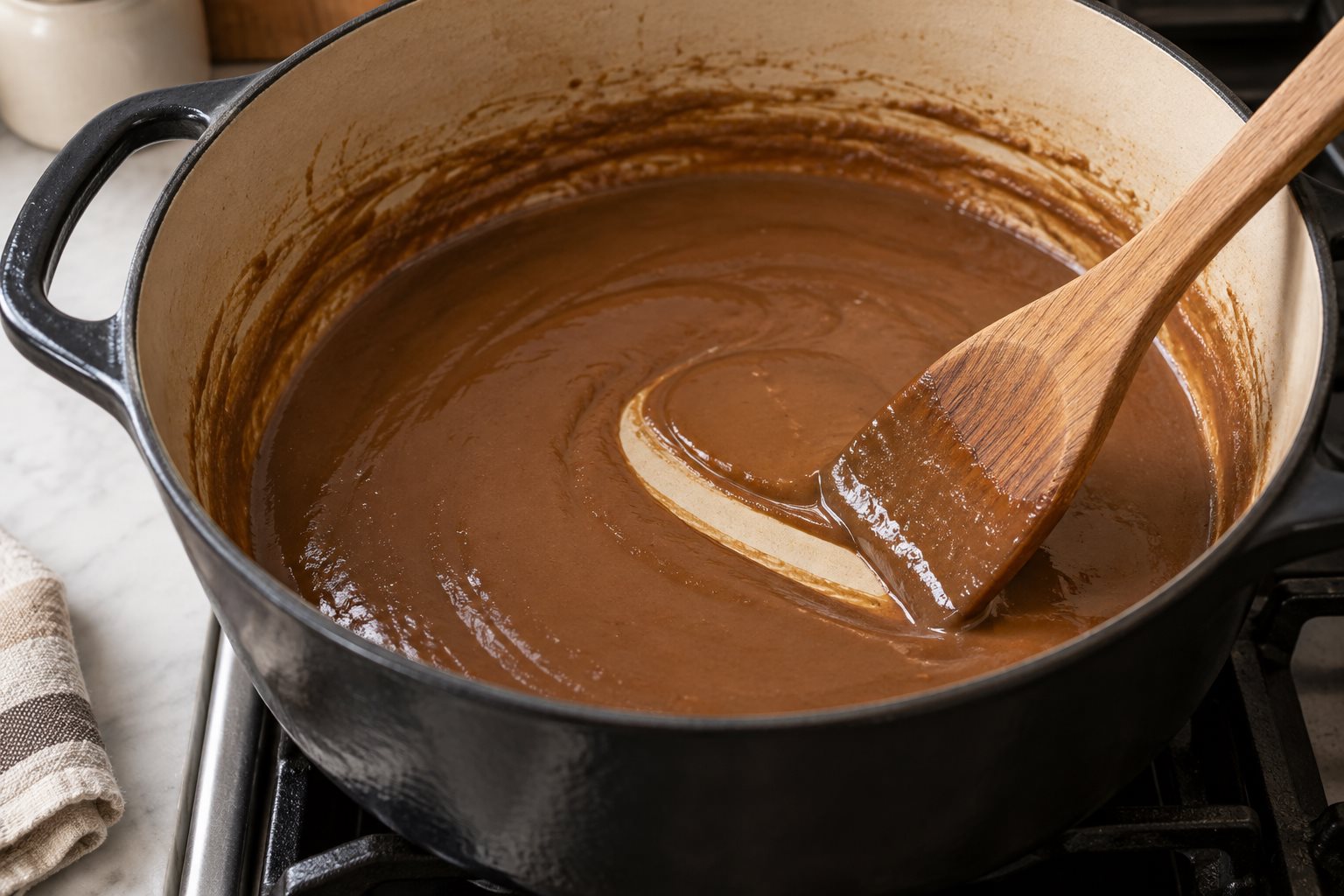
The roux takes forty minutes at the stove and you cannot leave it; everything else in the pot is waiting on that one pan of flour and oil.
Chapter VII of The Picayune's Creole Cook Book is called Creole Gumbo, and it opens by refusing to call the dish an evolution of anything: gumbo, the Picayune writes, is an original conception, a something sui generis in cooking, peculiar to this ancient Creole city alone. The New Orleans paper first published the book in 1900 and kept reprinting it for decades; the copy scanned on the Internet Archive is a later printing, the fourth edition. Ten gumbos run through the chapter in a row — filé, turkey, squirrel or rabbit, okra, crab, oyster, shrimp, shrimp filé, green herb gumbo, and a cabbage gumbo at the end.
Read them in order and the surprise is what is not there. The chicken Gumbo Filé has no roux in it at all: the ham and the cut-up chicken go straight into hot lard, get covered and fried five or ten minutes, and then boiling water and hot oyster stock go over the top. The roux turns up two pages later, in the oyster and shrimp gumbos — a tablespoon of lard, a spoon or two of flour, cooked to what the book calls a brown roux. And the standing rule for roux, printed in the sauce chapter, is blunt: never, under any consideration use burnt or over-browned flour. The near-black roux that people now mean by the word gumbo is nowhere in this book. What is here, and what this recipe keeps, is the order of the pot and the last rule of the chapter — once the filé is added the gumbo must never be warmed over.
Why this version works
Bones first, meat later. The book cuts the chicken up as for a fricassee and leaves it in the pot. Bone-in thighs and drumsticks simmered for forty-five minutes give the broth the body that the roux no longer supplies; pulling the meat off the bone at that point and returning it shredded keeps it from cooking down to string over the second half hour.
The trinity is the brake. A roux at chocolate color is far past the temperature of the oil you started with, and it keeps browning in a hot pan after the heat is off. Three cups of cold chopped onion, pepper and celery dumped in at once drop it below browning temperature in seconds. That is why they go in all together and the garlic follows a minute later.
Filé in the bowl, never in the pot. The chapter is emphatic and gives two reasons: boiling after the filé is added turns the gumbo stringy and unfit for use, and the powder otherwise settles to the bottom. The Creole cooks kept their tureens in a bain-marie for exactly this reason. Passing the jar at the table does the same thing and lets you keep the leftovers.
The roux goes darker than the book allows, on purpose. The Picayune stops its brown roux at a nice, delicate brown and tells you to throw it out at the first burnt smell. A gumbo roux taken to milk chocolate is doing a different job: past a certain point the browned flour has given up most of its thickening power and become the flavor of the dish instead. That is the one place this recipe leaves the document, and it is worth knowing you are leaving it.