The regional table / Kentucky
Bourbon Chocolate Walnut Pie
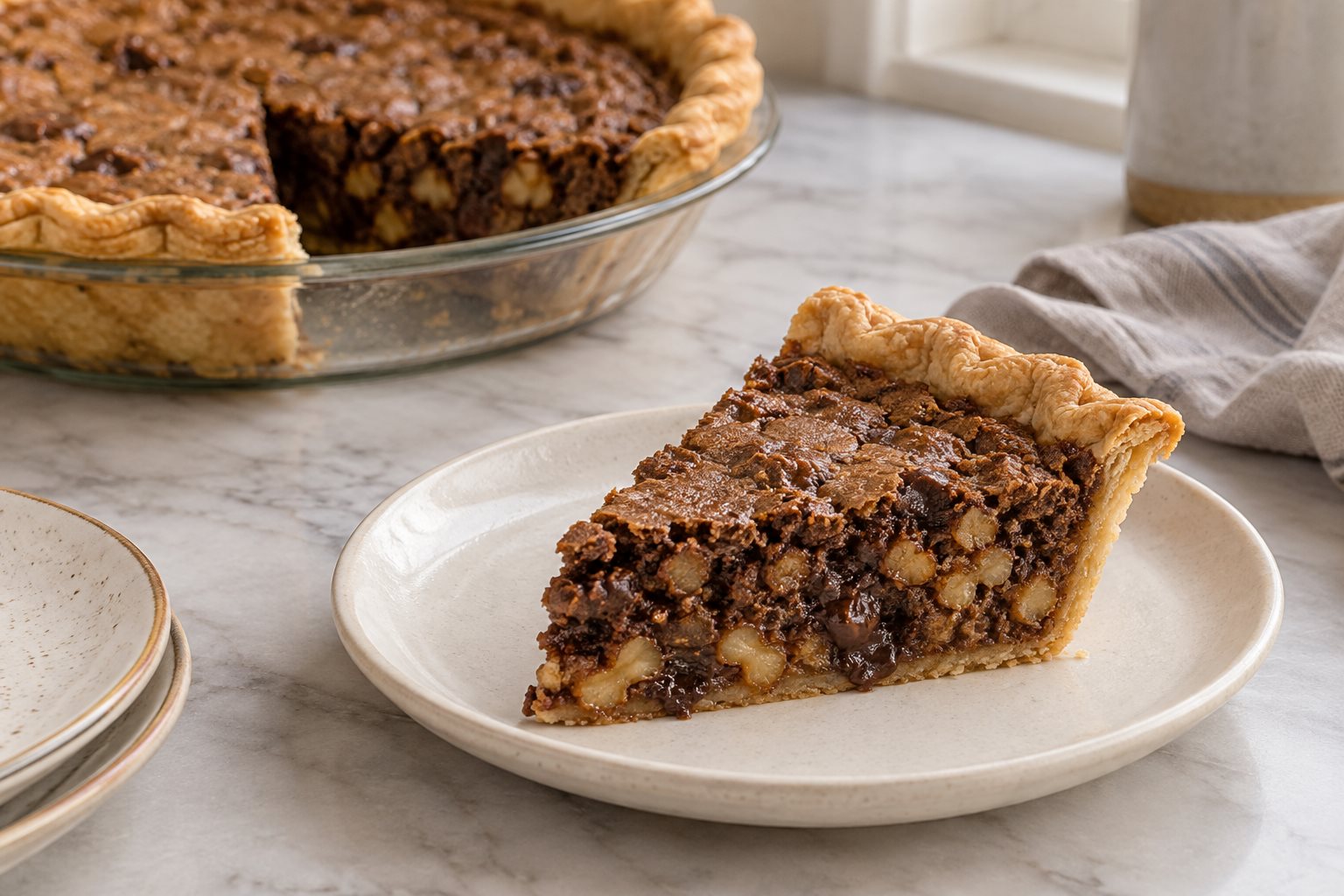
Kentucky's Derby-day pie has a popular name that belongs to somebody else, so this article calls it what it is made of.
The name is a legal fact before it is a culinary one, so take it first. A chocolate and walnut pie sold under a hyphenated trade name has been a registered federal trademark for decades, and its owner enforces it. The United States District Court for the Western District of Kentucky set the background out plainly in Rupp v. The Courier-Journal, Inc., decided on 19 March 2020: the plaintiff owns the mark, "a federal trademark for a 'well-known chocolate nut pie' sold nationwide," first created in 1954 at the Melrose Inn in Prospect, Kentucky, and has "enforced the DERBY-PIE® trademark throughout the years against Bon Appetit Magazine, Sweet Streets Desserts and Nestle Foods to name but a few." That last suit was against a newspaper, for printing recipes. The Sixth Circuit affirmed the dismissal on 11 January 2021, holding that the paper had used the words in a "wholly descriptive manner" and so infringed nothing. The law, in other words, leaves the descriptive words free — and the descriptive words are also more honest, because the trademarked pie is one particular bakery's recipe and this is not it.
What that same litigation establishes is how narrow the famous pie is. The appeals court quoted the trademark owner's own exhibit back at him: "If you buy something called Derby-Pie®, you know it's made by Kern's Kitchen and will have walnuts and vanilla. Chocolate nut pie, on the other hand, is a generic term for a pie that might have walnuts and vanilla, or it might have pecans and vanilla, or pecans and bourbon, or almonds and amaretto." This recipe sits squarely in that generic space: walnuts, chocolate, vanilla and bourbon. The bourbon is the one ingredient with a legal definition of its own — under 27 CFR 5.143 bourbon whisky must be made from a fermented mash of not less than 51 percent corn, distilled at 160 proof or less, and stored in charred new oak barrels at 125 proof or less — and the char is what puts vanilla and caramel into it, which is why three tablespoons do so much work here. The pie itself is younger than anything in the public domain and has no old cookbook behind it; the quantities below were worked out for this page.
Why this version works
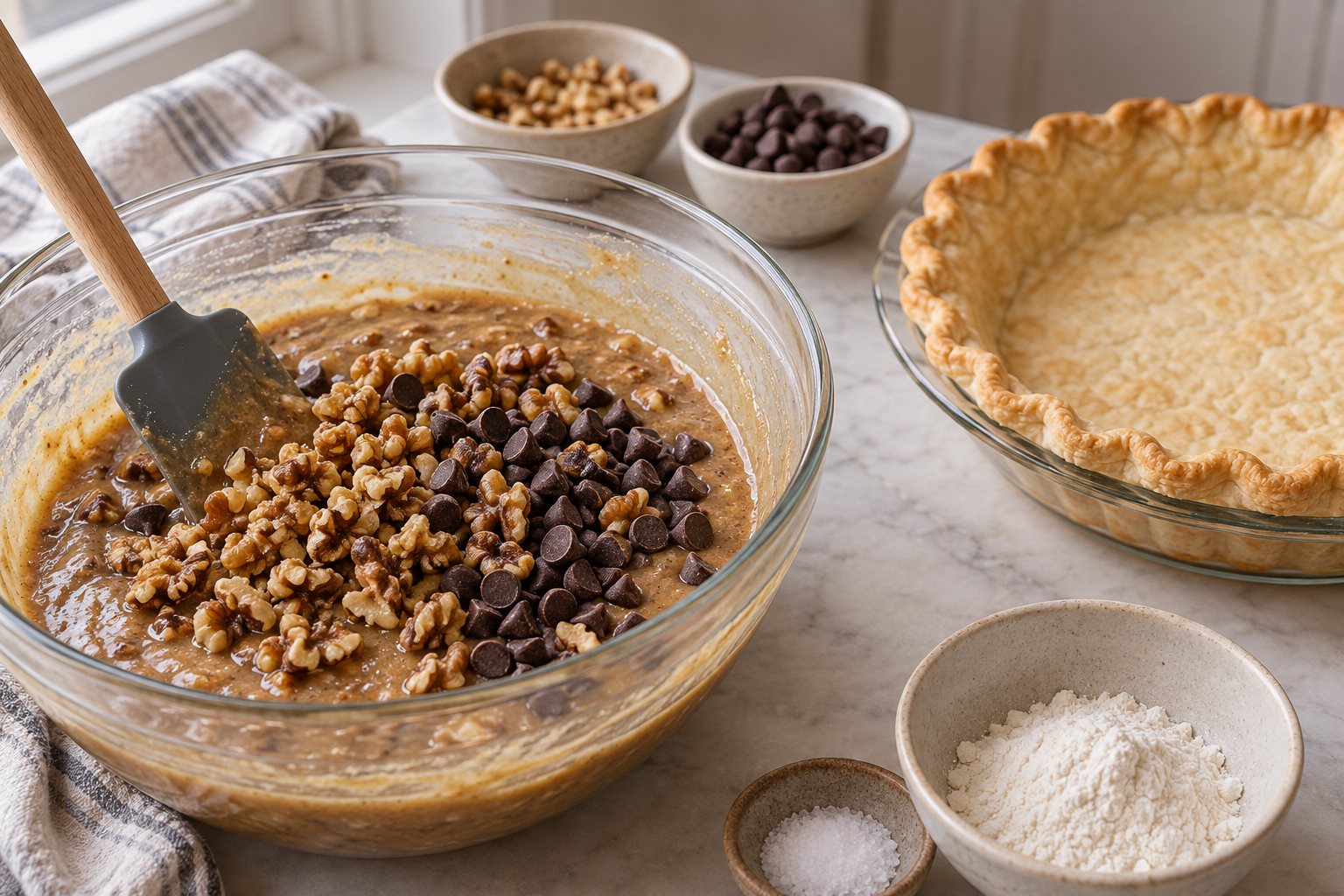
Flour in the filling. Half a cup of flour is what separates this from a chess pie that weeps. It binds the melted butter and the eggs into a filling that sets to a sliceable, faintly chewy body rather than a loose custard, and it is the reason a wedge holds its edge. Cut the flour and you get flavour without structure.
Two sugars, doing different jobs. White sugar gives clean sweetness and the thin crackled top; brown sugar brings molasses, moisture and the chew. Half and half is the balance that browns properly without going to toffee at the edges before the middle sets.
Chips rather than chopped chocolate. Chips are formulated to hold their shape, so they stay as distinct pockets of chocolate through a 45-minute bake. Chopped bar chocolate melts out into the filling and gives you a uniformly brown, slightly greasy pie — pleasant, but it loses the contrast between filling and chocolate that the dish is built on.
Bourbon off the heat, and not too much. Three tablespoons is the ceiling. Past that the extra liquid slackens the filling and the alcohol stops reading as flavour and starts reading as burn. Stir it in after the melted butter has cooled, so it is not driven off before the pie ever reaches the oven.