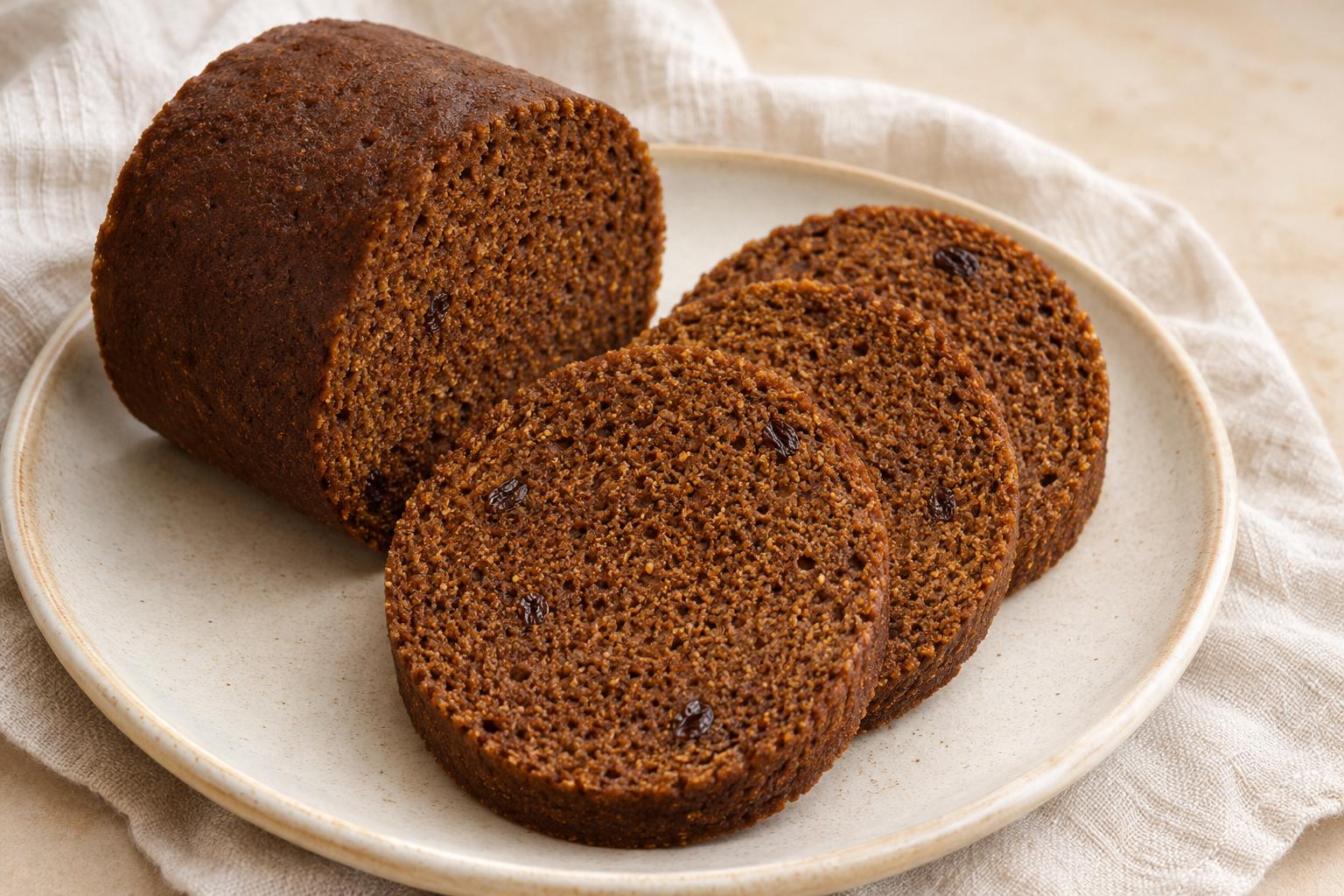
Boston brown bread comes out of the pot without the hard crust you get from an oven. Its fine, damp crumb has the gentle grit of cornmeal, a little rye earthiness and just enough molasses to go with a plate of baked beans.
Fannie Merritt Farmer’s The Boston Cooking-School Cook Book records the local method: rye meal, Graham flour and corn meal mixed with molasses and steamed in a covered vessel. King Arthur Baking’s Boston Brown Bread recipe documents the same three-grain combination with buttermilk and notes that currants or raisins are at home in the batter. For this smaller loaf, use a purpose-made metal pudding mold rather than a repurposed food can.
Why this version works
The grains bring different textures Whole wheat gives the slices enough structure to hold together, rye adds flavor and fine cornmeal leaves a faint grain without the crunch of coarse polenta.
A covered mold keeps the crumb moist The foil keeps drips from the lid out of the batter. Steam cooks the loaf without forming a hard crust.
Ingredient notes
Use regular molasses Unsulphured dark molasses gives the loaf its color without the bitter edge of blackstrap.
Use a metal mold that fits the pot A straight-sided 1-quart stainless-steel pudding mold makes the classic rounds. Check that it sits level on a trivet and that the pot lid closes with room over the foil.
Step by step
Set up the steamer Butter the inside of a straight-sided 1-quart stainless-steel pudding mold, about 4 inches across. Set a low metal trivet in a deep pot with a lid. Add water to come about halfway up the mold when it sits on the trivet, then take the empty mold back out and bring the water to a simmer.
Mix the three grains Whisk the whole wheat flour, rye flour, cornmeal, baking soda and salt in a bowl, then toss in the raisins. In a second bowl stir the molasses into the buttermilk until no dark streaks remain. Stir the wet mixture into the dry just until there are no pockets of flour.
Lower the covered mold Pour the batter into the mold, filling it no more than two-thirds full. Crimp heavy-duty foil around the rim, leaving the top slightly tented so the loaf can rise. Set the mold on the trivet, cover the pot and keep the water at a gentle simmer. Replenish with hot water as needed so the pot never runs dry.
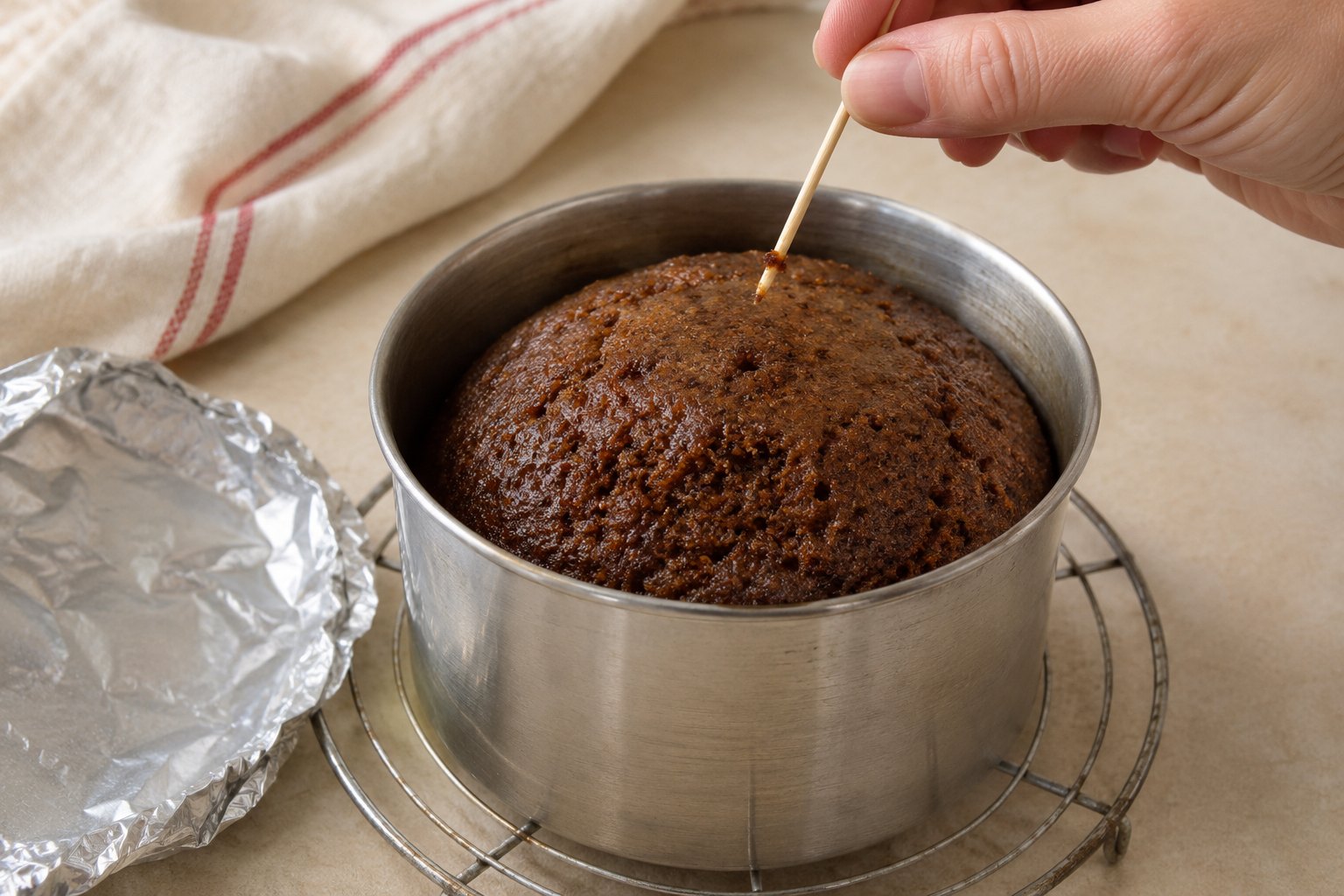
Check the center Start checking at 1 hour 40 minutes; allow up to 2 hours or a little longer for a tall mold. Lift the mold to a trivet with oven mitts and peel the foil back away from your face. A wooden pick pushed into the center should come out with a few moist crumbs, not a smear of batter. If needed, cover the mold again and give it another 10 minutes in the steamer.
A few moist crumbs are fine; a smear of batter means the loaf needs more time.
Cool and slice into rounds Let the finished loaf sit in the uncovered mold for 10 minutes. Run a thin spatula around the edge, turn the loaf onto a rack and cool for at least another 20 minutes before slicing. Keep the slices fairly thick while the bread is still warm.
If the center is still wet when the edges look set, tightly re-cover the mold and return it to the simmer. Check that there is still hot water in the pot, and test in 10-minute increments.
Storage and make-ahead
Cool completely and keep tightly wrapped at room temperature for up to 2 days. Freeze individual slices for up to 2 months, separated by parchment. Toast a thawed slice to warm it through.
What to serve with it
Set thick slices beside Boston baked beans so the bread can soak up the dark, salty bean sauce.
From the recipe box / Massachusetts
Boston Brown Bread
Make Boston brown bread on the stovetop: rye, whole wheat and cornmeal steam into a moist molasses loaf that cuts into rounds.
Prep
PT15M
Cook
PT120M
Total
PT165M
Serves
8
Calories
About 165 per serving
Ingredients
Scale
Instructions
Butter the inside of a straight-sided 1-quart stainless-steel pudding mold, about 4 inches across. Set a low metal trivet in a deep pot with a lid. Add water to come about halfway up the mold when it sits on the trivet, then take the empty mold back out and bring the water to a simmer.
Whisk the whole wheat flour, rye flour, cornmeal, baking soda and salt in a bowl, then toss in the raisins. In a second bowl stir the molasses into the buttermilk until no dark streaks remain. Stir the wet mixture into the dry just until there are no pockets of flour.
Pour the batter into the mold, filling it no more than two-thirds full. Crimp heavy-duty foil around the rim, leaving the top slightly tented so the loaf can rise. Set the mold on the trivet, cover the pot and keep the water at a gentle simmer. Replenish with hot water as needed so the pot never runs dry.
Start checking at 1 hour 40 minutes; allow up to 2 hours or a little longer for a tall mold. Lift the mold to a trivet with oven mitts and peel the foil back away from your face. A wooden pick pushed into the center should come out with a few moist crumbs, not a smear of batter. If needed, cover the mold again and give it another 10 minutes in the steamer.
Let the finished loaf sit in the uncovered mold for 10 minutes. Run a thin spatula around the edge, turn the loaf onto a rack and cool for at least another 20 minutes before slicing. Keep the slices fairly thick while the bread is still warm.
Nutrition
Serving
Estimated; one-eighth of the loaf
Calories
About 165 kcal
Nutrition is an estimate calculated from the listed ingredients and is provided as
a courtesy, not as dietary advice.
Questions readers ask
Why is the top soft?
A steamed loaf stays tender on the outside. Check the center with a pick rather than waiting for the top to brown.
Does this bread need yeast?
No. Baking soda reacts with the buttermilk. Steam as soon as the batter is mixed instead of leaving it to rise.
Can I leave out the raisins?
Yes. The loaf will be just as moist and a little less sweet. Do not replace them with extra liquid.
A butter cake baked in two pie tins, split by a cooked cream filling, with powdered sugar on top — the way every nineteenth-century book that prints it prints it.
Six ounces of two-year cheddar grated into the pastry instead of laid on the plate beside it, over sour apples sweetened with maple sugar the way the state's own 1915 bulletin does it.
Warm picked lobster turned through melted butter off the heat and piled into a griddled split-top roll — no mayonnaise, no celery, and nothing else in the bun.