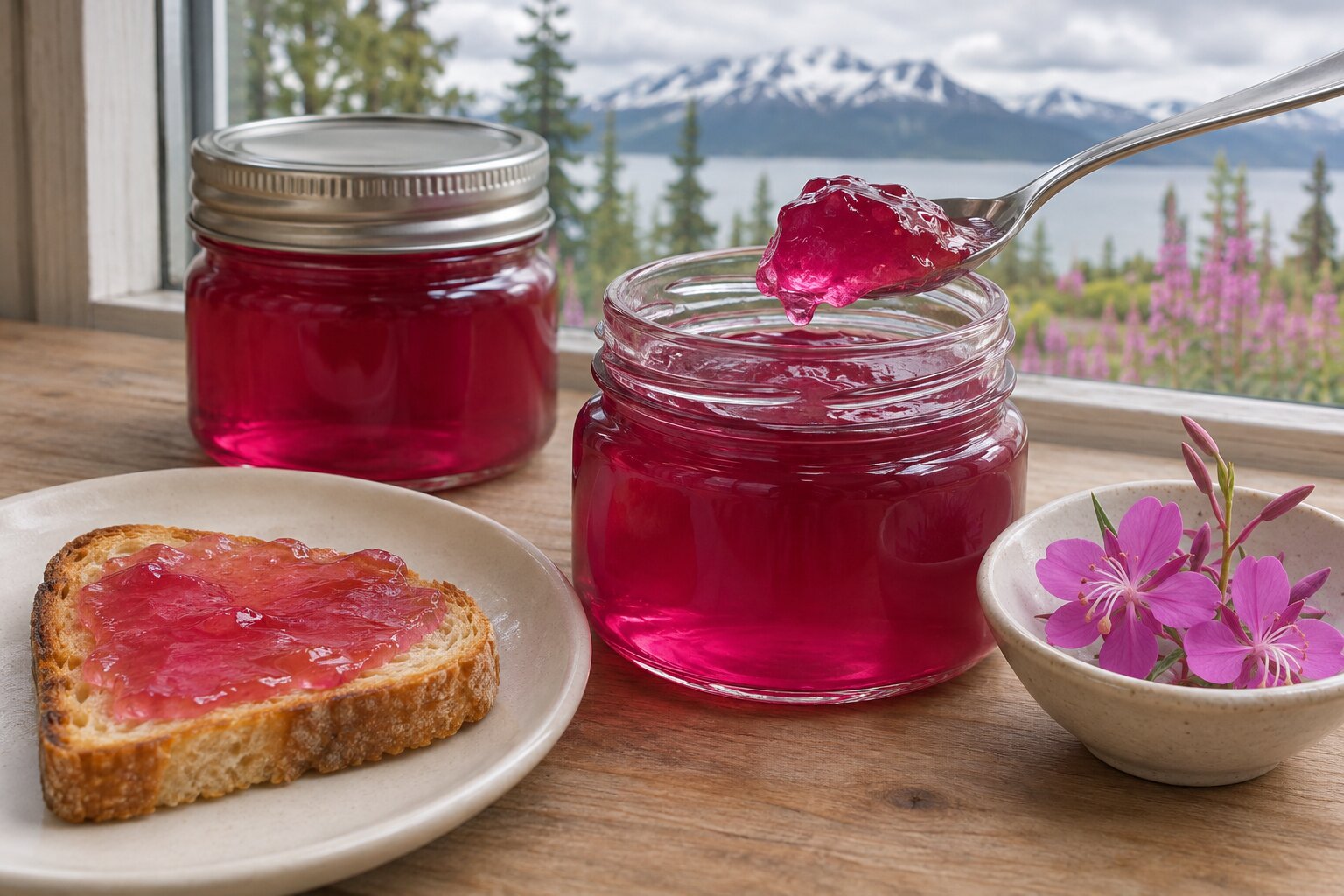
Fireweed blossoms make a clear pink jelly with a light floral taste. Infuse the blossoms overnight, strain out every petal, then boil the infusion with pectin, lemon juice and sugar. A spoonful on a cold saucer shows when it is ready to chill.
The University of Alaska Fairbanks Cooperative Extension’s Fireweed guide gives a jelly recipe that starts with an overnight blossom infusion. The guide advises using fresh, young blooms because older ones can taste bitter. It also gives a cold-saucer test for checking the set before the jelly goes into jars.
This refrigerator adaptation uses the same main ingredients and the two short boils described in the guide. It does not use a canning process and is not shelf-stable. Make it when culinary fireweed blossoms are available and chill or freeze what you won’t use right away.
Why this version works
The cold test The freezer-cooled test sample firms earlier than the contents of the pot. A soft wrinkle is enough; jelly that looks loose while hot can set once chilled.
Two timed boils A rolling boil does not settle down as you stir. Wait for it to return after adding sugar before starting the second one-minute timer.
A clear infusion Refrigerating the infusion overnight gives the petals time to tint the water. Passing it through a cloth keeps plant fragments out of the finished jelly.
Pectin, lemon and sugar Regular powdered fruit pectin is added before the sugar; the lemon juice and measured sugar are part of the formula for its soft set.
Ingredient notes
Oil The tiny amount of neutral oil can help limit foam. It does not replace the lemon juice or affect whether the jelly can be stored on a shelf.
Sugar Measure plain granulated sugar; do not improvise a low-sugar version with the same pectin.
Powdered pectin Use regular powdered fruit pectin, not liquid pectin, instant freezer-jam pectin or gelatin. The University of Alaska Fairbanks’ Jams and Jellies guide notes that pectin types are not interchangeable.
Fireweed blossoms Use positively identified, food-grade fireweed blossoms and unopened buds from a trusted source. Do not use flowers from florists, chemically treated plants or plants you cannot identify with certainty.
Step by step
Infuse the blossoms overnight Rinse the positively identified culinary fireweed blossoms and buds in a colander and drain. Pack 2 cups firmly and put them in a heatproof bowl. Bring the water to a boil and pour it over the blossoms. Cool the covered bowl promptly in a cold-water bath, then refrigerate the infusion overnight, at least 8 hours.
Strain and measure the infusion Set two plain saucers in the freezer. Pour the infusion through several layers of cheesecloth or a jelly bag into a measuring jug. Let it drain without squeezing plant fragments through the cloth. Measure 2½ cups (600 mL) of clear infusion; if it falls just short because the flowers held some water, top up with a splash of potable water.
Boil twice, once before and once after the sugar Combine the measured infusion, lemon juice, regular powdered fruit pectin and oil in a large saucepan. Stir over high heat until boiling continues even as you stir. Boil for 1 minute, stirring constantly. Stir in the sugar, bring it back to a full rolling boil and time another 1 minute, continuing to stir. Move the pan off the burner.
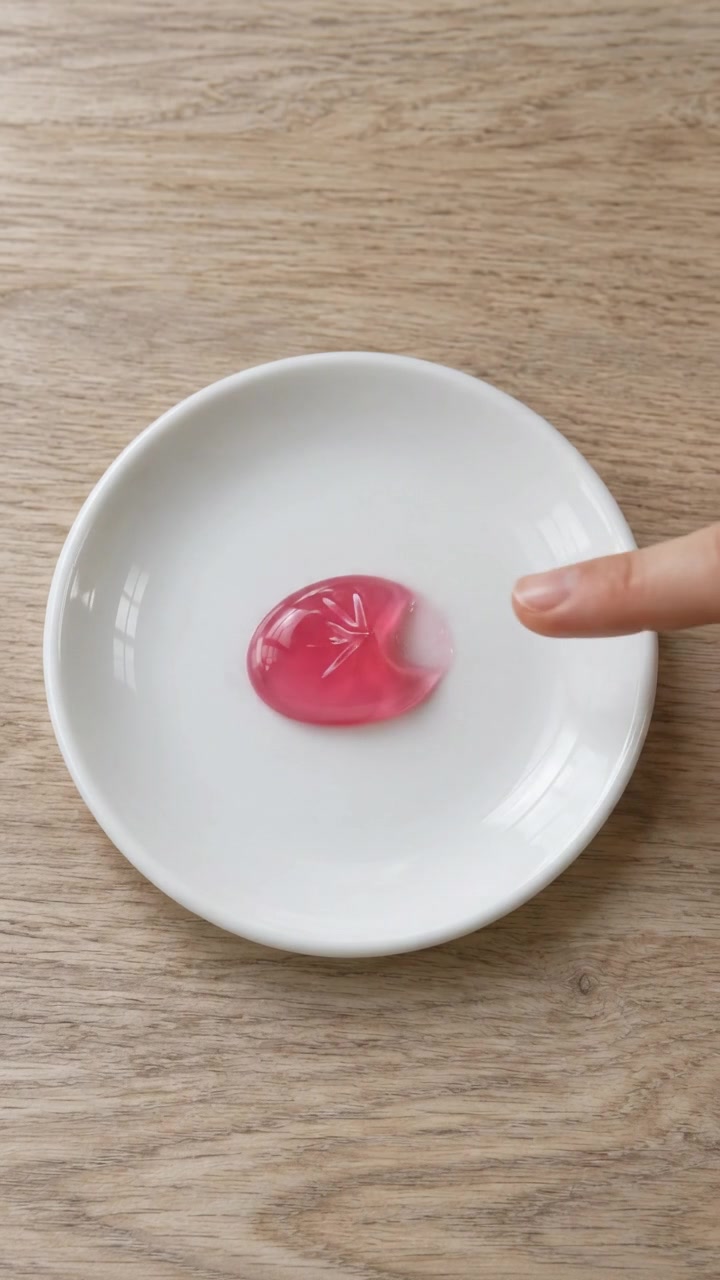
Check the set on a cold saucer Put ½ teaspoon of jelly on a chilled saucer and return the saucer to the freezer for 5 minutes. Nudge the edge gently with a fingertip: a soft wrinkle or a line that does not immediately flow closed is enough. If the sample still runs like syrup, see the rescue note. Keep the rest of the batch off the heat while you check.
10sWatch the technique
Nudge the edge of the chilled sample. A soft wrinkle that stays briefly after you lift your finger is enough.
Play with sound to hear the mixing.
Transfer and refrigerate Divide among clean heatproof containers of about ½ cup (120 mL) each. Leave some room at the top, especially in freezer-safe containers. Let the steam subside briefly, cover and refrigerate promptly; do not leave the containers at room temperature for more than 2 hours. Let the jelly set in the refrigerator for at least 2 hours before checking it; a softer batch may need longer.
If the cold test stays watery, the Extension recipe calls for ½ cup additional sugar and another 1-minute rolling boil. Use the second cold saucer for a fresh test. If you prefer not to add sugar, use the soft batch as a refrigerated syrup instead of boiling it repeatedly.
Storage and make-ahead
Refrigerator only: keep at 40°F (4°C) or colder and use within 3 days, or freeze promptly in covered freezer-safe containers with expansion space. Thaw in the refrigerator. Do not store at room temperature or use this adaptation for shelf-stable canning.
What to serve with it
Spread a thin layer on buttered toast, or spoon a little onto plain yogurt or a soft mild cheese.
From the recipe box / Alaska
Alaska Fireweed Jelly
A clear pink flower jelly made with a cold-steeped fireweed infusion, lemon and powdered pectin. Keep refrigerated.
Prep
25 min
Cook
10 min
Total
10 hr 35 min minimum, including overnight infusion and chilling
Serves
48
Calories
50 per serving
Ingredients
Scale
Instructions
Rinse the positively identified culinary fireweed blossoms and buds in a colander and drain. Pack 2 cups firmly and put them in a heatproof bowl. Bring the water to a boil and pour it over the blossoms. Cool the covered bowl promptly in a cold-water bath, then refrigerate the infusion overnight, at least 8 hours.
Set two plain saucers in the freezer. Pour the infusion through several layers of cheesecloth or a jelly bag into a measuring jug. Let it drain without squeezing plant fragments through the cloth. Measure 2½ cups (600 mL) of clear infusion; if it falls just short because the flowers held some water, top up with a splash of potable water.
Combine the measured infusion, lemon juice, regular powdered fruit pectin and oil in a large saucepan. Stir over high heat until boiling continues even as you stir. Boil for 1 minute, stirring constantly. Stir in the sugar, bring it back to a full rolling boil and time another 1 minute, continuing to stir. Move the pan off the burner.
Put ½ teaspoon of jelly on a chilled saucer and return the saucer to the freezer for 5 minutes. Nudge the edge gently with a fingertip: a soft wrinkle or a line that does not immediately flow closed is enough. If the sample still runs like syrup, see the rescue note. Keep the rest of the batch off the heat while you check.
Divide among clean heatproof containers of about ½ cup (120 mL) each. Leave some room at the top, especially in freezer-safe containers. Let the steam subside briefly, cover and refrigerate promptly; do not leave the containers at room temperature for more than 2 hours. Let the jelly set in the refrigerator for at least 2 hours before checking it; a softer batch may need longer.
Nutrition
Fat
0 g
Protein
0 g
Serving
1 tablespoon, estimated; optional sugar excluded
Calories
50
Carbohydrates
13 g
Nutrition is an estimate calculated from the listed ingredients and is provided as
a courtesy, not as dietary advice.
Questions readers ask
Is this jelly shelf-stable?
No. This version is for refrigeration or freezing only. A jar lid sealing on its own does not make the recipe safe to store at room temperature.
Can I use the stems or leaves?
Not for this recipe. The infusion uses the blossoms and unopened buds. Use positively identified culinary fireweed; skip the recipe if you cannot verify the source.
Why cool a sample before judging it?
Hot jelly looks much looser than the finished spread. A small sample on a chilled saucer lets you check the set before transferring everything to containers.
Can I use a different kind of pectin?
Use regular powdered fruit pectin for this formula. Liquid and reduced-sugar pectins behave differently, so choose a recipe written for the pectin on hand.
Pacific halibut cut to a controlled inch, dusted, dipped in a cold lumpy lager batter and fried hard — the boat-town plate of Homer and Kodiak, built around the small charter fish that federal rules make the one most people actually bring home.
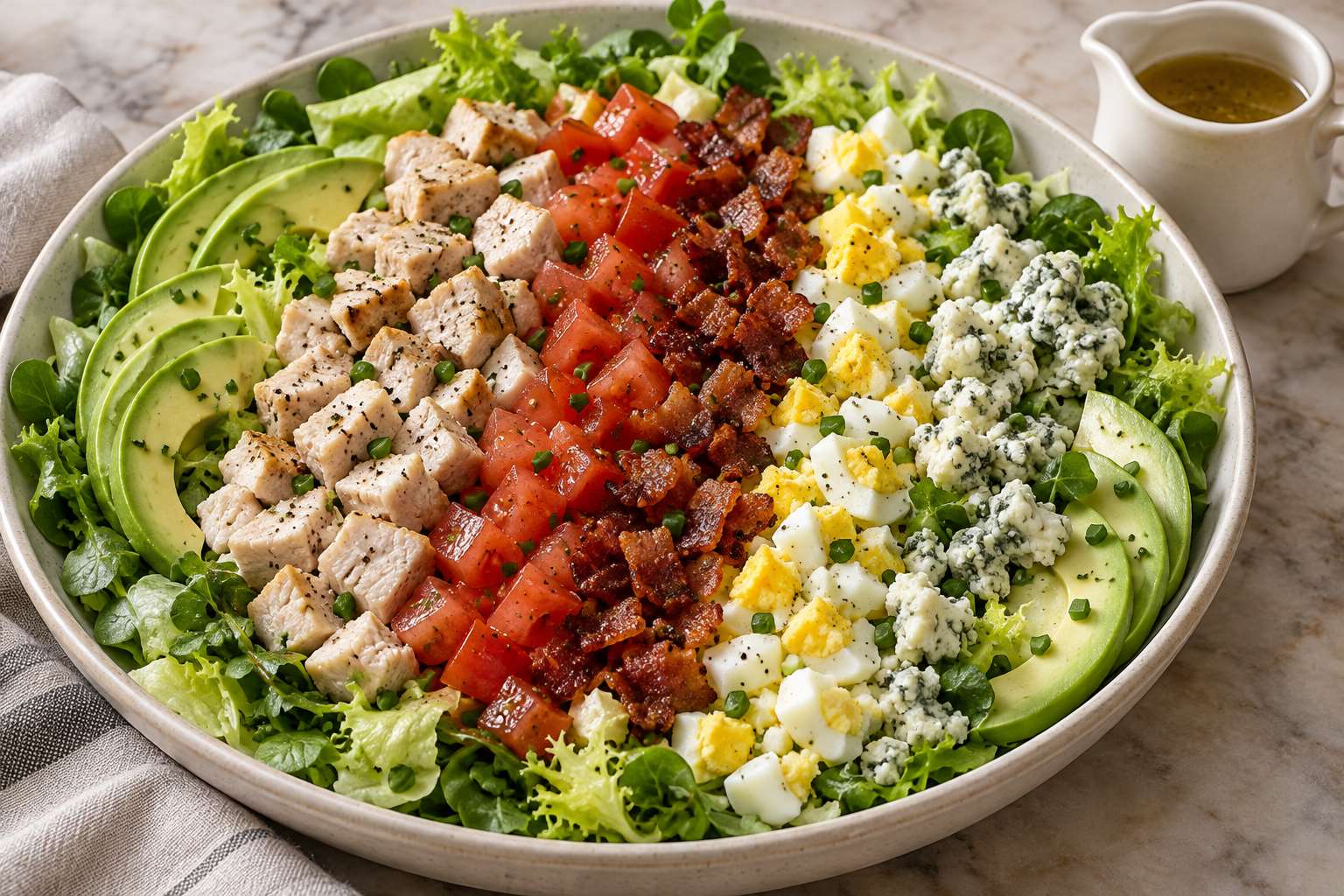
Four greens chopped to a fine dice, with poached chicken, bacon, avocado, egg, tomato, chives and Roquefort laid across the top in stripes and mixed in at the last second with an old-fashioned French dressing — the Brown Derby salad as the dated documents give it, quartered for a household and worked out for this page.