The regional table / Maine
Portland Italian Sandwich
A Biddeford advertisement of 15 October 1943 does what every modern description of this sandwich fails to do: it lists what is in it.
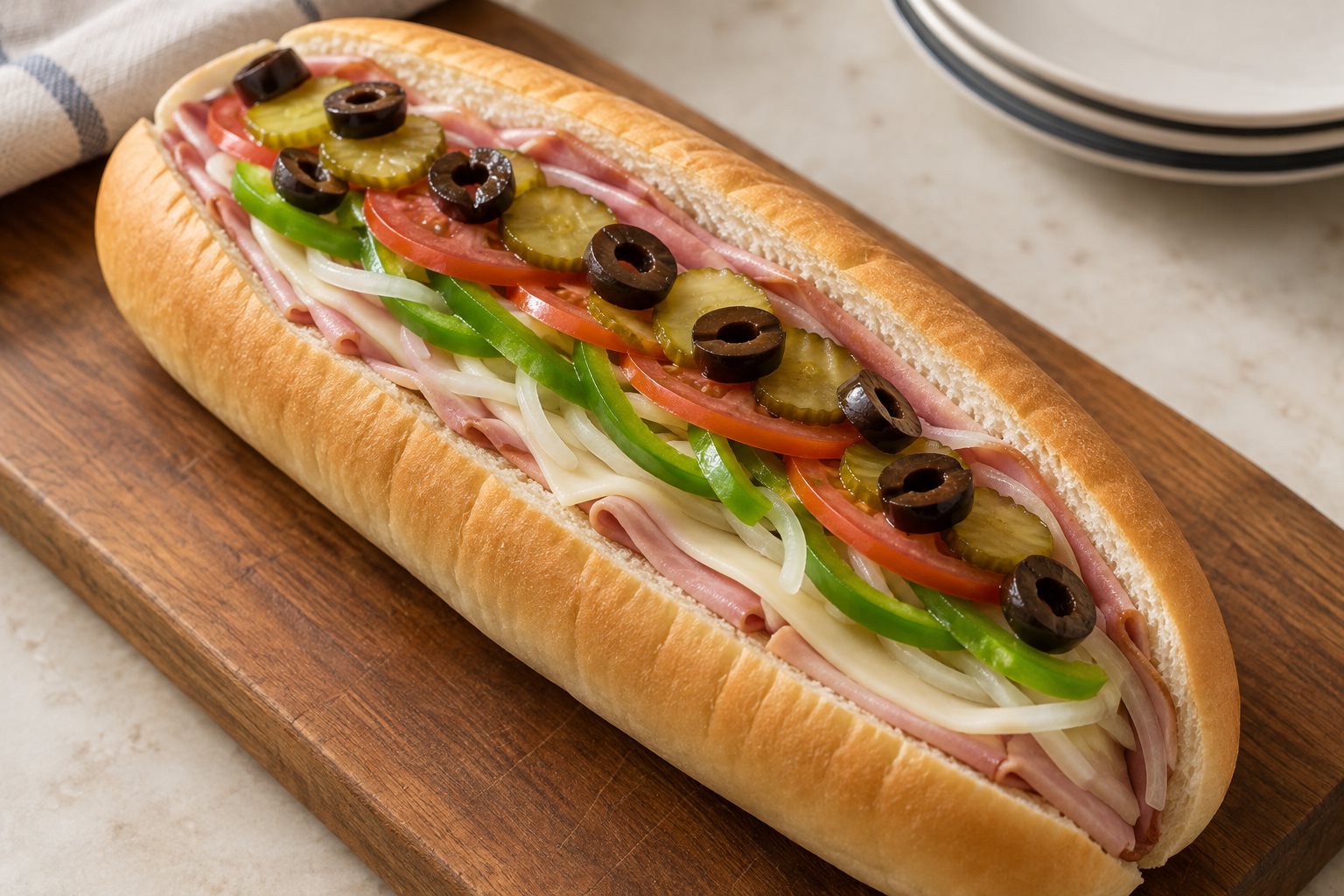
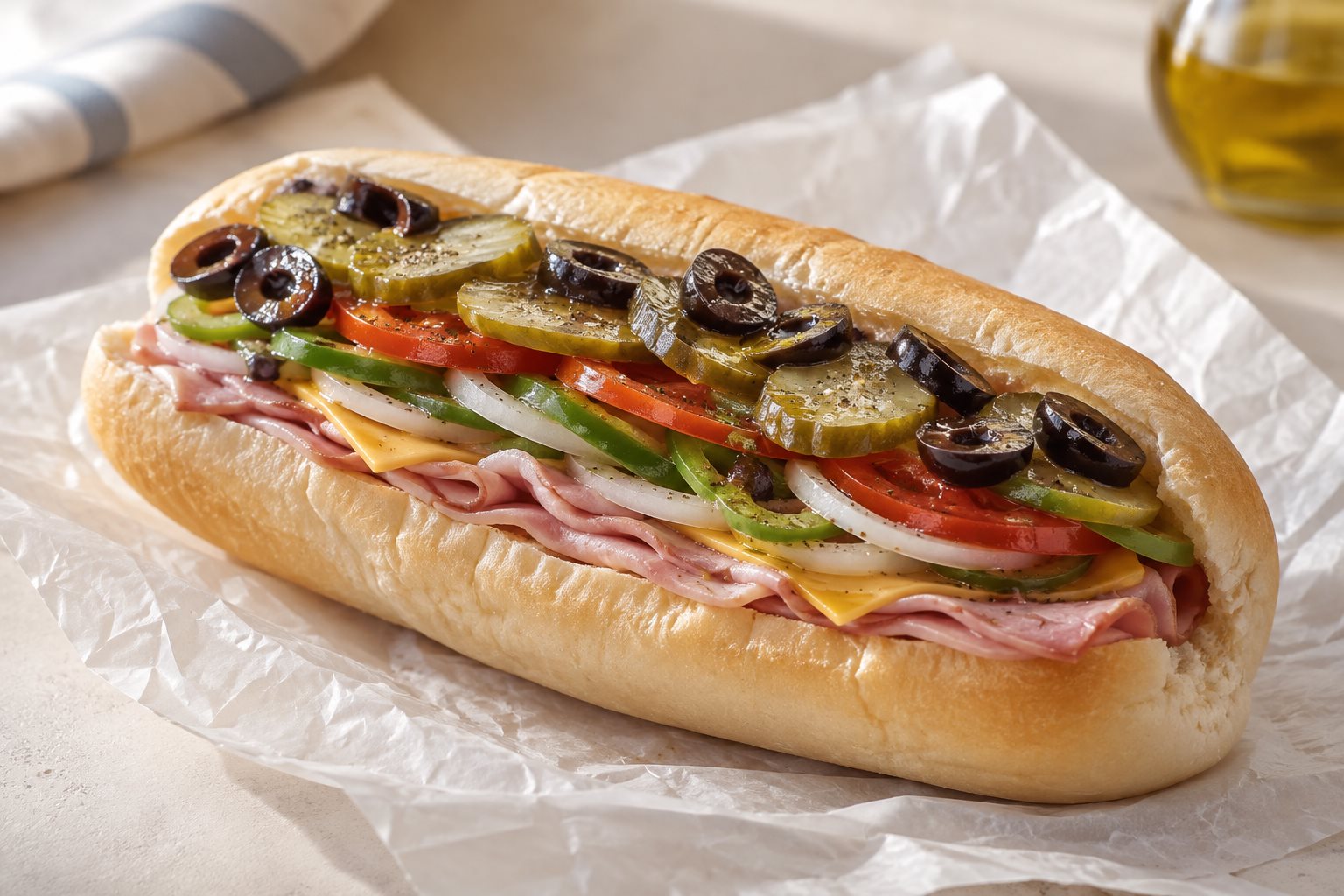
The Biddeford Daily Journal of that Friday runs a block of advertising on page ten for Grassi's Italian Sandwiches, and under the name the copy reads "Filled With Salami, Cheese, Onions, Olives, Green" — the next word runs off the edge of the scanned column and is lost, though there is only one thing it is likely to have been. Underneath, the price: Single 15c. Eighty years on, in a Maine variety store, the same sandwich comes over the counter with cheese, onion, green pepper, tomato, sour pickle and black olives on it, and the only argument is whether the meat is ham or salami. A wartime newspaper advertisement in a mill town got the build right in eight words.
The origin story is the part that needs testing. Every account of this sandwich credits an Italian baker in Portland — Giovanni Amato, selling filled rolls to dock workers on India Street — and dates it to 1902 or 1903. The 1912 Portland city directory, digitised on the Internet Archive, puts the man exactly where the story puts him: the alphabetical section reads "Amato Giovanni, baker 67 India, h. do.", and the street-by-street section confirms it from the other direction, listing "67 Giovan Amato, baker" on India Street, with a Raffaele Amato, labourer, living over on Freeman Lane. So the baker, the trade, the street and the address are all a matter of record. What is not on the record is the date. No Portland directory earlier than 1912 could be reached, and no Portland newspaper appears in any Maine archive that answered, so 1902 can be neither confirmed nor knocked down from here. Treat the address as documented and the year as a family's own telling. What the newspapers do show is the sandwich spreading and being sold by the piece: Grassi's in Biddeford through the autumn of 1943 at fifteen cents, a jumbo version made to order at twenty cents single and thirty-five double by November, and by July 1949 a Biddeford bakery advertising Italian sandwich rolls by the half dozen for people who wanted to build their own at home.
Why this version works
Oil, not dressing. A few tablespoons of oil, salt and black pepper is the entire seasoning. Vinegar makes the vegetables weep and turns the bread sour within minutes; a bottled Italian dressing does both at once. The tomato and the pickle supply all the acid the sandwich needs and they supply it slowly.
Ten minutes in the paper. Wrap it and leave it. In that time the oil moves into the bread, the salt draws a little juice out of the tomato and onion, and the layers settle into each other so the thing holds together in the hand. A Maine Italian eaten the second it is built tastes like a pile of ingredients.
A soft roll, deliberately. The Maine Italian roll is a plain white top-split bread with barely any crust — closer to a hot dog roll than to a baguette. A crusty sub roll fights the filling and tears your palate; a soft one compresses under the heap, soaks up the oil, and lets you bite cleanly through the whole stack. If you can only buy crusty bread, pull some of the crumb out and accept it will be a different sandwich.
Everything raw except the meat and cheese. No lettuce, no mayonnaise, nothing cooked and nothing creamy. The sandwich runs on the crunch and water of raw onion and green pepper against soft bread and soft cheese, and every element you add from the cooked side of the kitchen kills that contrast. It is the reason this tastes nothing like a submarine sandwich despite looking like one.