The regional table / Montana
Butte Pork Chop Sandwich
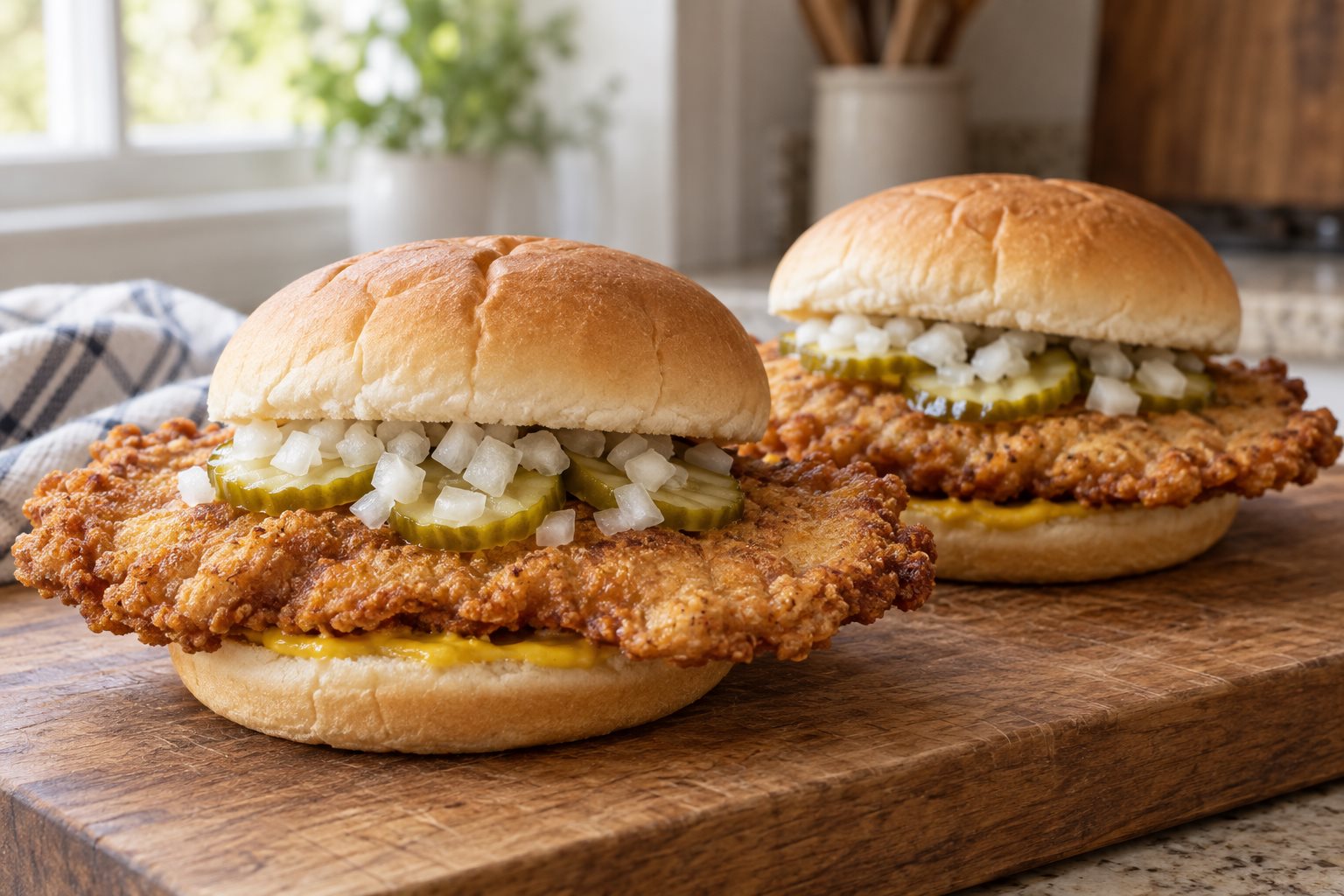
There is no chop in it. It is a slice of boneless loin beaten flat, and the sandwich is built so that one hand and thirty seconds are enough.
This is a dish younger than any open archive, and the honest version of its history is short. The usual account sends you to a Butte counter founded in 1932 and to the America Eats Montana file said to sit at Montana State University. Neither is a document you can read today. On 23 September 2026 whatamericaate.org answered 503 on every path tried, so the America Eats material was not consulted and nothing here rests on it. Montana's own newspaper portal is gone as well: montananewspapers.org now serves a notice that the Montana Historical Society has retired the site and moved its digitised run to a commercial portal, which refuses scripts, and the Library of Congress newspaper collection answers automated requests with 403. The earliest printing of the 1932 date that could actually be opened is a Billings Gazette obituary of 27 February 2016 for the man Butte knew as Pork Chop John, who died at 82; it says the business started in 1932, in the Depression, and refers back to an interview he gave the Montana Standard in 1981. That is a newspaper in 2016 repeating a shop's own account, and it is worth exactly that much. The quantities below were worked out for this page.
Two absences are more useful than the date. The exact phrase "pork chop sandwich" does not occur anywhere in the Billings Gazette's digitised run between 1918 and 2011 — the first hit in the whole file is 2012. And Copper Camp, the Montana Writers' Project book of 1943 whose "Copper Camp Cuisine" chapter is the closest thing Butte has to a food census, does not contain the words pork chop at all. What that chapter does record is the counter world this sandwich belongs to: free-lunch counters in a thousand saloons, ten-cent merchant's lunches of stew or roast beef, the Success Cafe on East Broadway — three feet wide and thirteen feet long, half of it kitchen — and the Shawn O'Farrell, a shot and a beer for a dime, sold only in the hours when the men were coming off shift and only, the book says, to a buyer with a lunch bucket on his arm to prove he had spent the day in the mines. Bureau of Mines Technical Paper 260 of 1921 puts a number on that queue: in 1917 approximately 14,000 men were employed underground in the Butte mines. A sandwich you can eat standing up, in one hand, in under a minute, is an answer to those men, whenever somebody first fried one.
Why this version works
Batter, not breadcrumbs. Crumbs make a rough, thirsty coating that soaks up oil and fights the bun. A loose flour-and-milk batter sets into a thin, blistered, almost crisp-tempura shell that shatters instead of shredding, which is why the sandwich does not fall apart at the first bite.
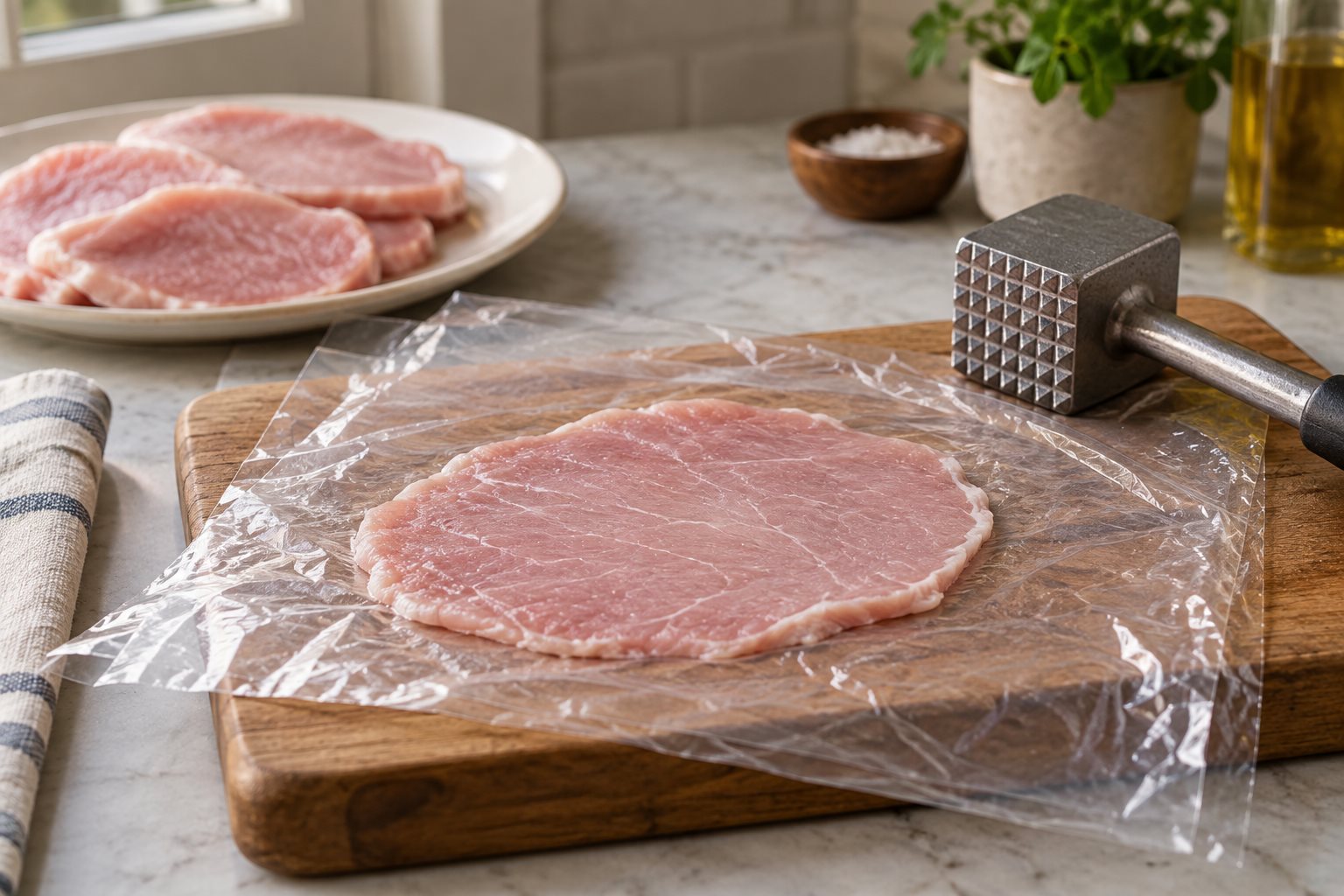
Boneless loin, beaten thin. A real chop cannot be eaten in a bun and a thick cutlet steams inside its own crust. A quarter-inch slice pounded to an eighth cooks through in the time the batter takes to colour, which is two or three minutes, and it comes out of the fryer already the right shape.
Mustard, pickle, onion, and stop. The pork is mild and the batter is mild, so everything else has to be sharp, cold and thin. Yellow mustard for acid and salt, dill pickle for crunch, raw onion for bite. Lettuce and tomato add water and wreck the shell; cheese buries it.
Oil at 365°F and nothing colder. Below about 340°F the batter drinks oil before it sets and you get a grey, greasy cutlet. Fry two pieces at a time and let the oil come back up between batches — this is the single failure point in the whole recipe.